Ukraine's eastern fortress belt is cracking. Russian forces have thrown everything they have at Kostiantynivka, a city that has become the hinge of Kyiv's last line of defense in Donetsk Oblast. If the city falls, the road to Slovyansk and beyond opens wide. And if that happens, the war's entire strategic calculus shifts.
But this isn't just another battle in a war that has already lasted more than two years. It's a moment that could decide whether Ukraine survives as a sovereign state, or whether Russia finally achieves a breakthrough it has spent billions and tens of thousands of lives trying to secure. The stakes extend far beyond the trenches. For South Asia, the ripple effects could reshape energy markets, military alliances, and even the balance of power between global blocs. The question isn't whether Kostiantynivka matters. It's how much damage its fall would do.
Why This Battle Could Redraw the War, and the World's Map
Kostiantynivka isn't just a city. It's a chokepoint. Sitting astride the Bakhmut-Slovyansk highway, it anchors Ukraine's eastern defenses and blocks Russia's path to the regional hub of Slovyansk, a city of 100,000 that has resisted Russian control since 2014. Losing Kostiantynivka would collapse Ukraine's eastern front into a series of isolated pockets, forcing Kyiv to either retreat or face encirclement. That would not only cede Donetsk Oblast, already partially occupied, it would open the door to a Russian advance toward Dnipro or even Zaporizhzhia, threatening Ukraine's industrial heartland and its ability to sustain the war.
But the battle's significance isn't limited to the battlefield. It comes at a moment when Western military aid to Ukraine is faltering. The U.S. Congress has delayed a $60 billion package for months. European unity is fraying. And in Moscow, Vladimir Putin is betting that time, and fatigue, are now on his side. If Russia breaks through at Kostiantynivka, it could force Ukraine into a negotiated settlement on terms favorable to the Kremlin: recognition of territorial gains, a frozen conflict, and the end of Kyiv's NATO aspirations. That would mark the most consequential shift in the war since Russia's full-scale invasion in February 2022, and it would redefine the global security order.
For South Asia, the implications are both economic and strategic. Ukraine is a major global breadbasket. A prolonged Russian advance could disrupt grain exports, already volatile due to climate shocks and trade wars. India and Pakistan, both net importers of edible oils and wheat, would feel the pinch. More critically, the war has already reshaped global arms markets and energy flows. A Russian victory in the east would embolden Moscow to deepen ties with Beijing, Tehran, and Pyongyang, creating a new axis of autocracy that could challenge Western influence in Asia. Pakistan, long a non-aligned state with deep ties to both Russia and the West, would face an impossible choice: align more closely with Washington or hedge toward Moscow in a region where energy and security interests increasingly overlap.
The Eastern Fortress Belt: A History of Siege and Survival
Kostiantynivka has been a frontline city since 2014, when Russian-backed separatists first seized parts of Donetsk Oblast. For eight years, it remained in Ukrainian hands, despite relentless shelling and sporadic assaults. In 2022, as Russia launched its full-scale invasion, Kostiantynivka became a symbol of resistance. Its defenders, local Territorial Defense units, regular army brigades, and international volunteers, dug trenches, built anti-tank barriers, and turned the city into a fortified node in what became known as Ukraine's "eastern fortress belt."
This belt stretches from Kharkiv in the north to Mariupol in the south, a 600-kilometer arc of resistance. But it is not a continuous wall. It is a chain of strongpoints connected by supply routes and artillery coverage. Kostiantynivka sits near the center, where the belt narrows. If it falls, the chain breaks. The last time a similar breach occurred was during the Battle of Bakhmut in early 2023, when Russian forces, after months of brutal urban combat, finally captured the city. The loss didn't immediately collapse the front, but it exposed Ukraine's vulnerability to sustained attrition. Bakhmut became a meat grinder, draining Ukrainian manpower and morale while inflicting heavy losses on Wagner Group mercenaries. Yet, paradoxically, it also became a rallying cry for Kyiv. "Bakhmut holds, and everything holds," President Volodymyr Zelensky declared at the time. But Kostiantynivka is different. It is not a symbolic prize. It is a strategic one.
Ukraine's military leadership has long known that the eastern front is unsustainable without Western air defense systems, long-range missiles, and fresh troops. In 2024, Ukraine launched a counteroffensive aimed at piercing Russian lines near Robotyne and Verbove, hoping to cut off Russian supply routes into southern Ukraine. That offensive failed to achieve a breakthrough. Since then, Russia has regrouped, built layered defenses, and launched localized offensives to whittle down Ukrainian forces. Kostiantynivivka is now the focal point of that strategy. According to reporting by The Independent, Russian troops have massed artillery, drones, and infantry near the city, supported by Wagner-linked units and Chechen special forces. Ukrainian commanders have warned that without immediate reinforcements, especially air defense and artillery ammunition, the city could fall within weeks.
What Happened: The Assault on Kostiantynivka
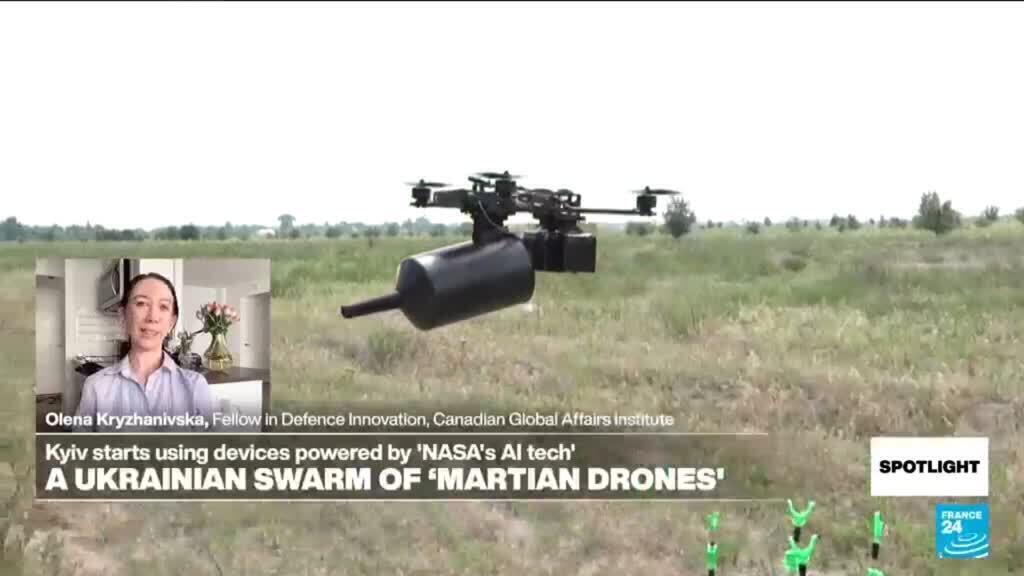
Russian forces began their push toward Kostiantynivka in late June 2026, according to reporting by The Independent. Using a mix of motorized rifle brigades, artillery barrages, and drone swarms, they advanced from the north and east, targeting Ukrainian supply lines and command posts. Satellite imagery analyzed by independent groups shows Russian columns moving along secondary roads to avoid Ukrainian minefields and ambushes. The assault has been characterized by intense artillery duels, with both sides firing hundreds of shells per hour in some sectors.
Ukrainian forces, already stretched thin after months of attrition warfare, have struggled to hold the line. Social media posts from soldiers and local residents describe relentless shelling of residential areas, power cuts, and water shortages. The city's mayor, Andriy Filonenko, told local media that "every street is a frontline now." Civilian casualties have risen sharply, with hospitals overwhelmed and evacuation routes frequently targeted. The Ukrainian General Staff reported that Russian forces had breached outer defensive belts in at least three locations around Kostiantynivka, forcing Ukrainian units to fall back toward the city center. Ukrainian drones and long-range missiles have struck Russian command posts and ammunition depots, but the scale of Russian reinforcements, reportedly including fresh conscripts from occupied territories, has overwhelmed local defenders.
International observers warn that if Kostiantynivka falls, the entire eastern front could unravel. Russian forces would then be positioned to threaten Slovyansk, a city that has served as a rear-area logistics hub for Ukrainian forces. Slovyansk's capture would cut off supply routes to the northern Donbas, isolating Ukrainian units in the region. Worse, it would open a corridor toward the Dnipro River, a natural barrier that has so far held Russian advances. A Russian crossing of the Dnipro would threaten Zaporizhzhia, Ukraine's third-largest city and a key industrial center. The psychological impact of such a loss could be devastating for Ukrainian morale, and for Western support.
The World Reacts: From Washington to New Delhi
The escalation around Kostiantynivka has triggered a flurry of diplomatic activity. In Washington, the Biden administration has warned that a Russian breakthrough would "fundamentally alter the course of the war" and called on Congress to pass the stalled $60 billion aid package immediately. U.S. Secretary of State Antony Blinken stated that "Ukraine's survival as a sovereign state is at stake," echoing similar remarks made by NATO Secretary General Jens Stoltenberg, who said that "the alliance's credibility is on the line."
In Europe, reactions have been mixed. French President Emmanuel Macron reiterated France's "unwavering support" for Ukraine, while German Chancellor Olaf Scholz faced criticism from opposition parties for delaying delivery of Taurus long-range missiles. Italy and Spain have both pledged additional air defense systems, but Poland and the Baltic states have urged the EU to prepare for a "worst-case scenario" in which Ukraine is forced into negotiations. The European Commission has warned that a Russian victory in the east could lead to "mass displacement, economic instability, and a resurgence of Russian influence in Eastern Europe."
In Asia, the response has been more cautious. China, which has maintained a policy of "neutrality" while deepening ties with Russia, called for "dialogue and restraint" and blamed the U.S. for "prolonging the conflict." Indian Prime Minister Narendra Modi, in a rare public statement on the war, said that "the sovereignty and territorial integrity of all nations must be respected," a formulation widely seen as a nod to Ukraine's position. But India has also abstained from multiple UN votes condemning Russia, and its defense ministry has continued to purchase discounted Russian oil and military equipment. Pakistan, meanwhile, has not issued a formal statement, but diplomatic sources in Islamabad tell GlobalFrontNews.News that the government is monitoring the situation closely, especially given its own energy needs and historical ties to Moscow.
The Kremlin, for its part, has framed the assault as a "liberation" of "Russian lands." Putin's spokesman, Dmitry Peskov, said that "the operation in Kostiantynivka is proceeding according to plan" and that Russian forces are "fulfilling their duty to protect the motherland." Russian state media has amplified claims of Ukrainian "atrocities" and "Nazi collaborators," a narrative designed to justify the offensive to domestic audiences. But behind the propaganda, there are signs of strain. Independent Russian media outlets report that mobilization orders have been extended to new regions, and that conscripts are being sent to the front with minimal training, a sign that Russia's manpower reserves are dwindling.
South Asia Impact: The War's Quiet Repercussions Across the Subcontinent
For South Asia, the war in Ukraine is not a distant conflict. It is a pressure point on food security, energy prices, and strategic alliances. The most immediate impact is on global grain markets. Ukraine and Russia together account for nearly 30% of the world's wheat exports. A prolonged Russian advance in Donetsk Oblast could disrupt planting and harvesting cycles, especially in southern Ukraine, which is a major grain-producing region. In 2022, the blockade of Black Sea ports led to a 20% spike in global wheat prices. A similar disruption now could push food inflation higher in Pakistan and India, both of which are already grappling with high import bills for edible oils and pulses.
The war has also reshaped energy flows. Russia, facing Western sanctions, has redirected oil and gas exports to Asia, particularly to China and India. India has become the world's top buyer of Russian crude, snapping up discounted barrels to fuel its economic growth. But this comes at a cost: New Delhi's growing dependence on Moscow for energy and military hardware has strained its relationship with Washington. For Pakistan, which imports nearly 40% of its oil from the Middle East, the war's impact is indirect but real. Higher global oil prices, driven by uncertainty over Black Sea shipping lanes, could strain Islamabad's foreign reserves and force austerity measures. Meanwhile, the war has accelerated Russia's pivot to South Asia. Moscow has deepened ties with Islamabad in recent years, signing defense cooperation agreements and exploring energy projects, including a proposed gas pipeline from Turkmenistan via Afghanistan. A Russian victory in Ukraine would embolden Moscow to expand its influence in the region, offering Pakistan an alternative to its traditional reliance on Washington.
Security implications are equally significant. The war has already altered the calculus of non-aligned states. Pakistan, which has historically balanced between the U.S. and Russia, now faces a dilemma: continue hedging, or align more closely with one bloc. A Russian breakthrough in Kostiantynivka could push Islamabad toward Moscow, especially if Washington's support for Ukraine wavers. That shift would have ripple effects across the region, from Afghanistan, where Russia has growing influence, to the Indian Ocean, where China's naval ambitions intersect with Pakistan's strategic interests. For Bangladesh, already grappling with rising fuel costs and debt distress, the war's economic fallout could delay development projects and strain relations with Western donors.
There's a historical parallel here, and it's not just the Cold War. In 2014, when Russia annexed Crimea and fomented conflict in eastern Ukraine, South Asia watched from the sidelines. But today, the stakes are higher. The world is more multipolar, and South Asia's role in global supply chains is more central. The fall of Kostiantynivka could mark the moment when the subcontinent is forced to choose sides, not just rhetorically, but in trade, energy, and security. The question for Islamabad is no longer whether to engage with Moscow, but how far to go, and what it will cost.
What Happens Next: Three Scenarios for the Eastern Front
Analysts see three plausible trajectories for the battle of Kostiantynivka, and each carries profound implications for the war and the world.
Scenario One: Ukrainian Breakthrough
The most optimistic outcome for Kyiv would be a sudden Ukrainian counteroffensive that pushes Russian forces back from Kostiantynivka. This would require a combination of fresh Western aid, including air defense systems, long-range missiles, and artillery ammunition, as well as a surge in Ukrainian troop morale and tactical innovation. Ukrainian forces would need to exploit gaps in Russian lines, possibly using newly delivered F-16 fighter jets to target command posts and supply routes. A successful counterattack could restore Ukrainian control over the Bakhmut-Slovyansk highway, forcing Russia to regroup and potentially opening a window for further advances toward occupied territories. But this scenario is unlikely without a dramatic shift in Western policy, and even then, it would require luck as much as strategy. The last major Ukrainian counteroffensive, in 2023, failed to achieve a breakthrough despite high expectations.
Scenario Two: Frozen Conflict
If neither side can achieve a decisive victory, the battle could settle into a prolonged stalemate, with Kostiantynivka becoming another frontline city like Bakhmut or Avdiivka. In this scenario, Russia would consolidate its gains in the east, while Ukraine would struggle to retake lost territory. The war would effectively freeze, with sporadic fighting but no major shifts. This would suit Russia, which has the advantage of time and manpower. It would also suit Western governments eager to reduce their exposure to the conflict. But for Ukraine, a frozen conflict would mean accepting territorial losses and a de facto partition of the country. It would also embolden Russia to launch further offensives in the future, possibly targeting Odesa or even Moldova. For South Asia, a frozen conflict would mean prolonged economic instability, with food and energy prices remaining elevated. It could also lead to a new arms race in the region, as India and Pakistan reassess their defense postures.
Scenario Three: Russian Breakthrough
The most dangerous outcome would be a Russian breakthrough at Kostiantynivka, leading to the collapse of Ukraine's eastern front. Russian forces would push toward Slovyansk, then toward the Dnipro River. If they cross the Dnipro, they could threaten Zaporizhzhia and even Kherson, cutting off Ukraine's access to the Black Sea. This would force Ukraine into a negotiated settlement, with Kyiv likely ceding Donetsk, Luhansk, Kherson, and Zaporizhzhia to Russia in exchange for a ceasefire. Such an outcome would mark the most significant shift in the war since 2022, and it would reshape the global balance of power. Russia would emerge emboldened, with a strengthened alliance with China, Iran, and North Korea. The West would face a crisis of credibility, with NATO's eastern flank exposed. For South Asia, the implications would be profound. A Russian victory would accelerate Moscow's pivot to Asia, offering Pakistan and other non-aligned states an alternative to Western influence. It could also lead to a new wave of sanctions against Russia, disrupting global energy markets and forcing South Asian countries to scramble for alternative suppliers. The most immediate impact would be on food security, as Ukraine's grain exports, critical for South Asian diets, are cut off indefinitely.The most likely outcome, according to analysts, is a combination of Scenarios Two and Three: a prolonged stalemate with localized Russian advances. Russia lacks the manpower for a full-scale blitzkrieg, but Ukraine lacks the resources to push Russia back. In the absence of a dramatic shift, such as a collapse in Western support or a sudden Ukrainian innovation, the front is likely to remain static, with Kostiantynivka becoming another symbol of attrition. But even a static front carries risks. The longer the war drags on, the greater the strain on Ukraine's economy and society. And the greater the strain, the harder it becomes for Kyiv to maintain Western support. The real question is not whether Kostiantynivka will fall, but whether Ukraine can survive long enough to prevent the entire eastern front from collapsing.
GlobalFrontNews.News Analysis: The Domino Effect of a Ukrainian Collapse
If Kostiantynivka falls, the consequences will ripple far beyond the battlefield. The first domino to fall would be Ukraine's economy. The loss of Donetsk Oblast, home to coal mines, steel plants, and chemical factories, would cripple Ukraine's industrial base. The country's GDP, already shrinking, would contract further, forcing Kyiv to rely even more on Western aid. The second domino would be Western unity. A Russian breakthrough would expose the fragility of transatlantic support for Ukraine. The U.S. Congress, already divided, could become even more reluctant to approve further aid. European governments, facing their own economic and political crises, might seek a way out of the conflict, even if it means pressuring Ukraine to negotiate. The third domino would be global security. A Russian victory would embolden other authoritarian states, from Beijing to Tehran, to test the limits of Western resolve. It would also accelerate the formation of a new axis of autocracy, with Russia, China, and Iran coordinating on energy, military technology, and geopolitical strategy. For South Asia, this axis would pose a direct challenge. Pakistan, already balancing between Washington and Moscow, could face pressure to align more closely with the Kremlin. India, meanwhile, would be forced to reassess its defense posture, especially as China's influence grows in the Indian Ocean.
There's a historical parallel here, and it's not just the Cold War. In 1971, the U.S. and China began a rapprochement that reshaped global politics. The catalyst was the Bangladesh Liberation War, which exposed the limits of U.S. influence in South Asia. Today, the catalyst could be the fall of Kostiantynivka. If Russia achieves a breakthrough, it could force South Asian states to recalibrate their alliances, not out of choice, but out of necessity. The war in Ukraine is no longer just a European conflict. It is a global inflection point, and Kostiantynivka is the pivot.
Related Coverage
Russia-Ukraine War Coverage → — In-depth analysis, background context, and continuous updates on this developing story.
Key Takeaways
- Kostiantynivka is the hinge of Ukraine's eastern defenses; its fall could collapse the entire front and force Kyiv into negotiations.
- A Russian breakthrough would disrupt global grain markets, strain South Asian food security, and accelerate Moscow's pivot to Asia.
- For Pakistan and India, the war's escalation forces a choice: align with the West or hedge toward Moscow in a reshaped global order.