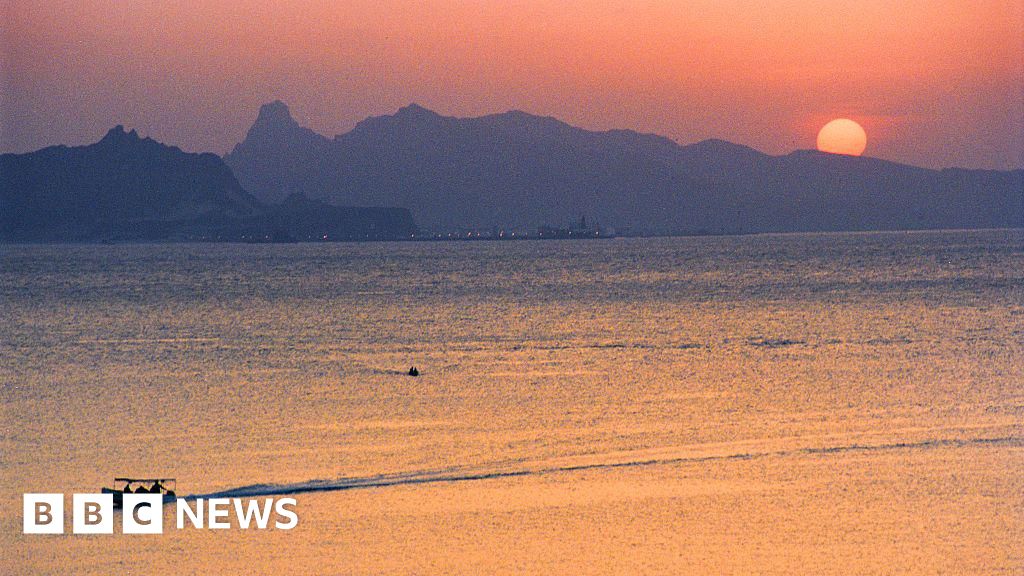
Early on July 10, 2026, gunmen from a remote stretch of Somalia's Puntland coast boarded the MT Eureka, a Togolese-flagged oil tanker, in the Gulf of Aden. By dawn, the vessel was racing toward Somali waters, the fourth merchant ship seized in as many weeks. The hijacking follows the April 22 abduction of the Honor 25, carrying 18,500 barrels of crude bound for Mogadishu. According to BBC News, the pirates departed from Qandala and Caluula, towns that have become staging posts for a resurgent piracy network exploiting a widening security vacuum in the Gulf of Aden. The surge comes as international navies, including the European Union Naval Force (EUNAVFOR), remain fixated on Houthi attacks in the Red Sea, leaving Somali waters lightly patrolled and increasingly lawless.
The Gulf of Aden's Piracy Resurgence Is No Maritime Footnote, It's a Supply Chain Earthquake
This is not a rerun of the 2008-2012 piracy crisis that once cost the global economy $7 billion a year in ransoms and rerouted shipping. It is something more dangerous: a piracy crisis nested inside a broader regional conflict architecture. The Gulf of Aden is the southern gate to the Bab el-Mandeb strait, where 12% of the world's seaborne oil and 8% of LNG transits. When Houthi missile and drone strikes forced Maersk, Hapag-Lloyd, and Mediterranean Shipping Company to reroute around the Cape of Good Hope in late 2023, the commercial cost was immediate, shipping rates tripled, and delivery times stretched by two weeks. Now, with pirates operating with near-impunity in Somali waters, the risk is compounding. Insurers have already flagged the Gulf of Aden as a "high-risk zone" for hull war policies, a classification that can trigger automatic surcharges of up to 1.5% of a vessel's insured value, enough to wipe out thin-margin oil trades. For South Asia, which imports 60% of its crude through the Gulf of Aden via the Arabian Sea route, the stakes are existential. Any sustained disruption could reroute tankers toward the longer, and pricier, Cape route, adding $4 to $6 per barrel in freight alone. That's before accounting for war-risk premiums, which could push total uplift costs past $8 per barrel in a market already trading near $90. The real question for Islamabad, New Delhi, and Dhaka is whether their naval assets in the Arabian Sea are prepared for a two-front threat: Houthi missiles in the north and Somali pirates in the south.
But the economic shock is only half the story. The Gulf of Aden is also the maritime spine of China's Maritime Silk Road ambitions. Over 300 Chinese-flagged vessels transit the strait annually, many carrying oil destined for Gwadar and Karachi under the China-Pakistan Economic Corridor (CPEC). A single pirate hijacking of a VLCC (Very Large Crude Carrier) could delay a shipment by weeks, triggering demurrage penalties that Chinese state traders are already factoring into their risk models. The CPEC corridor, which was supposed to reduce China's dependence on the Malacca Strait, now faces a new bottleneck: a lawless Gulf of Aden where pirates can hold a ship for ransom while Beijing's diplomats scramble to secure safe passage. The irony is stark. Beijing invested billions in Gwadar to bypass piracy hotspots, yet now finds its energy lifeline vulnerable to the same threat it sought to escape.
The Collapse of Somali State Authority Meets the Houthi Distraction, A Lethal Combination
The piracy surge is not an accident. It is the predictable outcome of state failure intersecting with geopolitical distraction. Since late 2023, Houthi attacks on commercial shipping in the Red Sea have drawn US, UK, and EU naval assets away from Somali waters. EUNAVFOR's Operation Atalanta, once the bulwark against Somali piracy, has seen its operational tempo drop by 40% as vessels and aircraft are redeployed to counter Houthi missile threats. Meanwhile, Somalia remains a patchwork of clan-based administrations, with Puntland and Somaliland asserting de facto control over coastal zones. The pirates operating out of Qandala and Caluula are not freelancers. They are embedded in local power structures, paying "protection fees" to regional warlords who, in turn, negotiate with Mogadishu's fragile federal government. The last time Somali piracy reached this scale was during the 2009-2011 famine, when ransoms averaged $5 million per vessel. Today, the going rate is closer to $3 million, a sign that the market has matured, and that the pirates have learned to operate with greater efficiency.
The historical parallel is the 1991-1995 collapse of Somalia's central government, which created the conditions for the first piracy wave. But this crisis is worse. In the 1990s, the international community treated piracy as a law-and-order issue. Today, it is a hybrid threat: part criminal enterprise, part political bargaining chip. The pirates' ability to operate from Qandala, just 130km from where the MT Eureka was hijacked, shows how deeply they have infiltrated coastal communities. A security official from Puntland told BBC News that "there are increasing movements (of armed groups) all over the coast." That understatement masks a reality in which entire villages have become logistics hubs for piracy networks, complete with fuel depots, safe houses, and lookout towers. The Gulf of Aden is no longer a transit zone. It is a contested maritime frontier where the writ of Mogadishu barely extends beyond the airport tarmac.
The collapse of state authority in Somalia is not new, but the international response is. Unlike the 2009 piracy surge, which prompted NATO and the EU to launch anti-piracy missions, today's crisis unfolds against a backdrop of great-power distraction. The US is pivoting to the Pacific. Europe is consumed by Ukraine. China, despite its investments in Gwadar, has limited naval reach in the Indian Ocean beyond its base in Djibouti. The result is a security vacuum that pirates are filling with alarming speed. The MT Eureka's hijacking is not an isolated incident. It is the opening salvo in what could become a sustained campaign to disrupt the Gulf of Aden's already fragile stability.
What Happened: A Chronology of the Latest Hijacking and Its Immediate Aftermath
According to BBC News, the MT Eureka, a Togolese-flagged oil tanker, was boarded by armed pirates at 5:00 AM local time on July 10, 2026, in the Gulf of Aden near the Yemeni port of Qana. The attack occurred roughly 20 nautical miles off the coast, placing it within the high-risk zone where Houthi missile strikes and Somali pirate skiffs operate with overlapping impunity. The pirates, believed to have departed from the Puntland coastal town of Qandala, overpowered the vessel's crew and redirected it toward Somali waters. By mid-morning, the tanker was sailing between Yemen and Somalia, with maritime tracking data showing it on a course toward the Somali port of Bosaso. The European Union Naval Force (EUNAVFOR) and Somali authorities have yet to issue a formal statement on the incident, a silence that underscores the institutional paralysis gripping the region's security architecture.
In a separate but related incident reported by the United Kingdom Maritime Trade Operations (UKMTO) on the same day, "armed persons" on a skiff approached a bulk carrier near Al-Mukala, Yemen. The skiff originated from Caluula, a fishing town in Puntland that has emerged as a secondary pirate staging area. The proximity of the two incidents, one a successful hijacking, the other a near-miss, highlights the expanding operational radius of Somali pirate networks. The bulk carrier managed to evade the attackers, but the incident underscores the growing boldness of pirate groups, who are now operating in waters previously considered too risky even for Houthi missile threats. The Gulf of Aden, once a corridor for safe passage, is rapidly becoming a no-go zone for commercial shipping.
The MT Eureka's capture marks the fourth successful pirate hijacking in the Gulf of Aden in two weeks. The previous incident, the April 22 abduction of the Honor 25, a vessel carrying 18,500 barrels of oil bound for Mogadishu, remains unresolved. Somali pirates have not released a ransom demand for either vessel, a tactic that suggests they are waiting for the market to tighten before naming a price. Insurers and shipowners are already bracing for the worst. The London-based Joint War Committee, which sets war-risk insurance premiums, is expected to reclassify the Gulf of Aden as a "Listed Area" within 48 hours, a move that would trigger automatic surcharges for vessels transiting the zone. The last time the Gulf of Aden was placed on the Listed Area roster was in 2011, during the height of the Somali piracy crisis. The reclassification would be a de facto admission that the international community has lost control of the maritime domain.
Global and Regional Reaction: From Silence to Panic in 72 Hours
The international response to the MT Eureka hijacking has been fragmented and slow. The United Nations Security Council, which has passed multiple resolutions on Somali piracy since 2008, has yet to convene an emergency session. The US State Department issued a generic statement condemning "maritime violence" but stopped short of calling for a naval surge to retake the Gulf of Aden. The European Union, whose Operation Atalanta has been the cornerstone of anti-piracy efforts, has remained conspicuously silent. EUNAVFOR's flagship frigate, the Italian Navy's ITS Federico Martinengo, is currently deployed in the Red Sea, providing air cover for commercial vessels targeted by Houthi missiles. The diversion of EU assets has left Somali waters effectively unpatrolled, a reality that pirate networks have exploited with ruthless efficiency.
The silence from Mogadishu is even more telling. Somalia's federal government, already struggling to assert control over its own security forces, has neither condemned the hijacking nor offered a plan to retake the MT Eureka. The absence of a coordinated Somali response reflects the country's fractured political landscape. Puntland, where the pirates are believed to have originated, operates with de facto autonomy, while Somaliland maintains its own coast guard. The federal government in Mogadishu, meanwhile, is locked in a power struggle with regional administrations over revenue-sharing from port fees. The result is a security vacuum that pirates are filling with impunity.
Regional powers are beginning to stir. The United Arab Emirates, which operates a military base in Berbera, Somaliland, has offered to deploy additional forces to protect its commercial interests in the Gulf of Aden. Saudi Arabia, which has invested heavily in the Red Sea port of Jeddah, has called for an emergency meeting of the Arab League to address the piracy surge. But neither country has the naval capacity to single-handedly secure the Gulf of Aden. The most likely outcome is a patchwork of bilateral arrangements, UAE ships escorting Emirati-flagged vessels, Saudi patrol boats protecting Saudi-bound tankers, while the rest of the commercial fleet is left to fend for itself. The Gulf of Aden is becoming a maritime version of the Wild West, where the law is whatever the strongest player can enforce.South Asia Impact: When the Gulf of Aden Becomes a Chokepoint for Islamabad, New Delhi, and Dhaka
The immediate impact on South Asia will be felt in three interconnected ways: energy prices, trade routes, and naval posturing. Pakistan, which imports 80% of its oil through the Gulf of Aden, is particularly exposed. The country's strategic oil reserve in Karachi is already stretched thin, and any delay in crude deliveries could trigger fuel shortages within 30 days. The Pakistan Navy, which has been expanding its presence in the Arabian Sea under the CPEC security framework, may now be forced to divert assets to the Gulf of Aden, a move that would thin its defenses along the Makran coast and leave Gwadar vulnerable to asymmetric threats. The last time Pakistan faced a similar maritime crisis was during the 2008-2012 piracy surge, when the navy had to escort over 1,200 vessels through the Gulf of Aden. Today, the fleet is smaller, and the threats are more complex: Houthi missiles in the north, Somali pirates in the south, and Indian naval patrols in the middle. The real question for Islamabad is whether its naval doctrine can pivot from counterterrorism to convoy protection in a single operational cycle.
For India, the stakes are equally high. New Delhi imports 75% of its oil through the Gulf of Aden, and any disruption could force refiners to tap into strategic reserves, a move that would strain the country's already tight fiscal space. The Indian Navy's deployment of the INS Vikramaditya carrier group to the Gulf of Aden in 2021 was a response to the Houthi threat, not Somali piracy. Today, the carrier is likely to be reassigned to convoy duties, leaving the Arabian Sea's northern reaches underprotected. The result could be a strategic gap that China's PLAN (People's Liberation Army Navy) might exploit, particularly in the Andaman and Nicobar Islands, where Beijing has been expanding its submarine presence. The 2020 Galwan Valley clash already exposed the fragility of the India-China border détente. A maritime crisis in the Gulf of Aden could become the next flashpoint in a relationship already teetering on the edge.
Bangladesh, which imports 90% of its oil through the Gulf of Aden, faces a different but equally existential threat. The country's lone deep-water port, Chittagong, is already congested, and any rerouting of tankers would exacerbate delays at a time when Dhaka is trying to revive its post-pandemic economy. The Bangladesh Navy, which has been expanding its submarine fleet, may now be forced to prioritize convoy protection over blue-water deterrence, a shift that could weaken its ability to counter Chinese submarine incursions in the Bay of Bengal. The 2022 Bangladesh-China submarine deal, which saw Beijing supply two diesel-electric subs to Dhaka, now looks less like a strategic asset and more like an insurance policy against a maritime crisis neither country anticipated.
But the most immediate threat to South Asia is economic. The Gulf of Aden is not just a transit zone, it is a price-setting corridor. Any disruption in the flow of crude could trigger a supply shock that ripples through regional refineries, power plants, and transportation networks. The last time the Gulf of Aden became a chokepoint, in 2019, when Houthi attacks forced Maersk to reroute around the Cape, the regional oil price spike added $12 billion to South Asia's import bill. Today, with global oil prices already elevated, the cost could be double. The real question for South Asian policymakers is whether they can coordinate a regional response before the piracy crisis metastasizes into a full-blown energy shock.
What Happens Next: Three Scenarios for the Gulf of Aden's Future
Analysts expect the MT Eureka hijacking to accelerate three possible outcomes, each with distinct consequences for South Asia's energy security and regional stability. The first, and most likely, scenario is a "controlled escalation," in which the pirates secure ransoms for the MT Eureka and Honor 25 while international navies scramble to restore patrols. Under this model, the London insurance market would reclassify the Gulf of Aden as a Listed Area, triggering automatic war-risk premiums that could add $2 to $3 per barrel to the cost of crude. The Pakistan Navy would deploy additional frigates to the Gulf of Aden, but only on a convoy-by-convoy basis, leaving large swaths of the maritime domain unprotected. The result would be a temporary stabilization of the crisis, but at a steep economic cost for South Asian importers. The last time this model was tested, in 2011, it took 18 months for piracy rates to fall back to pre-crisis levels. Today, with Houthi attacks still raging in the Red Sea, the timeline could be even longer.
The second scenario is a "fragmented crackdown," in which regional powers, UAE, Saudi Arabia, and Turkey, deploy unilateral naval assets to protect their commercial interests while ignoring the broader crisis. Under this model, Emirati and Saudi warships would escort UAE- and Saudi-flagged vessels through the Gulf of Aden, but leave the rest of the commercial fleet to fend for itself. The result would be a de facto balkanization of the maritime domain, where the law is whatever the strongest player can enforce. For South Asia, this would mean higher insurance costs, longer delivery times, and a heightened risk of collateral damage from misidentification or miscalculation. The last time this model was attempted, in 2017, when China deployed its first naval base in Djibouti, it triggered a naval arms race in the Indian Ocean. Today, the risk is even greater: a localized conflict in the Gulf of Aden could spiral into a broader regional crisis involving India, Pakistan, and China.
The third scenario is the most dangerous: a "piracy-state nexus," in which Somali pirate networks formalize their ties with regional warlords and, ultimately, with Mogadishu's federal government. Under this model, the pirates would no longer operate as freelancers but as an auxiliary force for a de facto autonomous administration in Puntland or Somaliland. The result would be a stable piracy ecosystem, where ransoms are negotiated through official channels and the international community is forced to deal with a recognized authority. For South Asia, this would be a nightmare scenario. The Gulf of Aden would become a lawless zone where commercial shipping is subject to extortion by a hybrid criminal-political entity. The last time this model emerged was in the 1990s, when warlord Mohamed Farrah Aidid's faction controlled Mogadishu's port and levied "taxes" on incoming vessels. Today, the stakes are higher: a piracy-state nexus could disrupt the flow of oil to South Asia for months, if not years. The real question is whether the international community can prevent this outcome before it becomes a fait accompli.
A key question is whether the Pakistan Navy can pivot from its current counterterrorism posture to a convoy protection mission in the Gulf of Aden. The navy's primary focus has been on securing the Makran coast and Gwadar port under the CPEC framework, with only limited assets deployed to the Arabian Sea's southern reaches. The MT Eureka hijacking may force a rapid reassessment. The Pakistan Navy's fleet of eight frigates and three submarines is already stretched thin, and the addition of convoy duties could leave the country's maritime flank exposed. The last time Pakistan faced a similar crisis, in 2009, when pirates hijacked the MV Faina off the coast of Somalia, the navy had to charter private security teams to escort vessels through the Gulf of Aden. Today, the private security market is saturated, and the cost of contracting armed guards has tripled. The real question for Islamabad is whether it can afford to pay the price of maritime security in a region where the threats are multiplying.
Related Coverage
Middle East Conflict Analysis → — In-depth analysis, background context, and continuous updates on this developing story.
Key Takeaways
- The hijacking of the MT Eureka signals the return of Somali piracy as a systemic threat to the Gulf of Aden, a corridor that carries 12% of the world's seaborne oil and 60% of South Asia's crude imports.
- For South Asia, the crisis could reroute tankers around the Cape of Good Hope, adding $4-$6 per barrel in freight costs and weeks to delivery schedules, a supply shock that could push regional oil prices past $100 per barrel.
- The Pakistan Navy's limited assets and the India-China naval rivalry in the Indian Ocean mean South Asia lacks the coordinated response needed to secure the Gulf of Aden, leaving the region vulnerable to a prolonged maritime crisis.