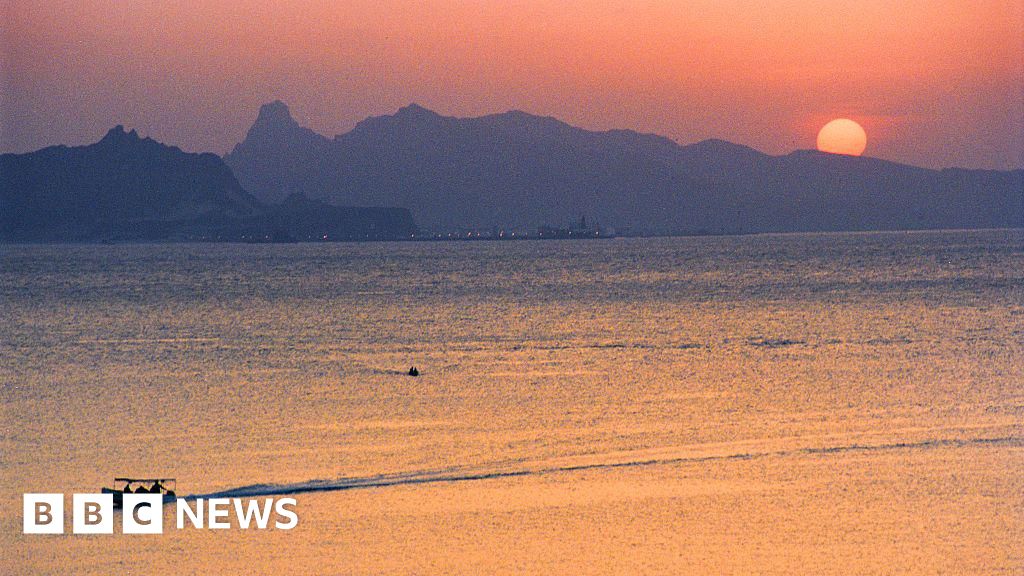
For the first time since 1991, Kuwait's crude exports vanished from global markets in April 2026. Not because of war in its own deserts, but because the Strait of Hormuz, a 21-mile-wide chokepoint that carries one-fifth of the world's oil, was choked by blockade. Tankers sat idle, pipelines filled storage tanks, and refiners burned through domestic crude instead of shipping it abroad. The shutdown lasted a month, but its implications stretch from the Gulf to the Arabian Sea, and straight into the energy security calculations of Pakistan, India, and Bangladesh. This is not a temporary hiccup. It is a preview of what happens when the world's most critical maritime corridor becomes a pressure valve for geopolitical conflict.
Why the Strait of Hormuz Still Holds the Global Economy Hostage
The Strait of Hormuz is not just a waterway; it is the world's most dangerous energy tripwire. Every day, 21 million barrels of crude pass through its narrow lanes, more than twice the daily exports of Saudi Arabia. When that flow stalls, the shock radiates from Houston to Hanoi. The April blockade wasn't an accident. It was a deliberate escalation in the shadow war between Israel and Iran, a conflict that has turned the Gulf into a maritime minefield. According to reporting by Middle East Eye, the disruption forced Kuwait to reroute its entire production inland, diverting oil to storage caverns and refineries instead of tankers. The result? Zero exports for a nation that still pumps nearly 3 million barrels per day. This wasn't a supply shock, it was a logistics collapse. And it revealed a brutal truth: the global oil market is only as resilient as the Strait of Hormuz allows it to be. When that artery clots, even the most disciplined producers become prisoners of geography.
What makes this moment different from past disruptions, like the 2019 attacks on Saudi Aramco facilities or the 2021 tanker crisis in the Gulf, is the scale of the blockade. Earlier incidents were localized, quickly contained, and followed by rapid repairs. But the April 2026 shutdown was systemic. It wasn't just a few tankers hit by drones or missiles. It was a coordinated interdiction of the entire corridor, forcing every Gulf producer to confront a single question: How do we export oil if we can't use the Strait? The answer, for Kuwait, was to stop exporting altogether. For others, it may mean rerouting through longer, costlier, and riskier paths, like the East-West pipeline in Saudi Arabia, the Habshan-Fujairah route, or even the risky detour around the Cape of Good Hope. Each option adds days to delivery times, tens of millions in extra costs, and new layers of vulnerability to piracy or sabotage. The Strait of Hormuz isn't just a bottleneck. It's a geopolitical guillotine hanging over the global economy.
The Historical Parallel: When the Strait Last Froze Over, and How It Changed the Gulf
Kuwait's April shutdown echoes a darker chapter in Gulf energy history: the 1984-1988 Tanker War during the Iran-Iraq conflict. Back then, both sides targeted each other's oil exports, turning the Strait of Hormuz into a shooting gallery. Iran mined the waters, Iraq struck tankers, and neutral ships, including Kuwaiti vessels, were repeatedly hit. The result? A 40% drop in Gulf oil exports at the war's peak. That crisis forced the Reagan administration to launch Operation Earnest Will, the largest naval convoy operation since World War II, to protect Kuwaiti tankers. But even that didn't restore full flow. The Tanker War proved a grim lesson: when the Strait of Hormuz becomes a battleground, the world's energy system doesn't adapt, it fractures. Kuwait's April 2026 halt is not the Tanker War's return. It is the Tanker War's evolution. Today's blockade isn't fought with mines and missiles alone. It's fought with cyberattacks, drone swarms, and economic warfare. And this time, the Gulf's producers are not just victims, they are hostages.
There's another parallel closer to home. In 2017, Qatar, one of the world's top LNG exporters, faced a Saudi-led blockade that cut off its only land route to the outside world. Doha survived by rerouting everything through the Strait of Hormuz and expanding its LNG fleet. But what if the Strait itself had been closed? The 2017 crisis was a dry run for what April 2026 delivered. Kuwait's zero-export month shows that the Gulf's energy architecture is not built for systemic shocks. It is built for incremental risk. And incremental risk is no longer enough.
What Happened in April, and Why It Matters Beyond Kuwait
According to reporting by Middle East Eye, Kuwait's crude exports dropped to zero in April 2026 after the Strait of Hormuz blockade disrupted tanker traffic. The country continued producing oil, nearly 3 million barrels per day, but instead of shipping it to global markets, it diverted output to storage and refining. TankerTrackers.com, the shipping monitor cited in the report, confirmed that no Kuwaiti crude left the country by sea during the entire month. This wasn't a production failure. It was a logistics failure. The Strait of Hormuz, which normally handles 21 million barrels daily, became impassable. The blockade wasn't just a temporary disruption. It was a deliberate interdiction, part of the broader US-Israel campaign against Iran. The result? Kuwait's oil, which typically fuels refineries in India, China, and Europe, stayed in the ground. Storage tanks filled. Refineries ran on emergency rations. And the global market, already tight from years of underinvestment, felt the squeeze.
The blockade didn't just affect Kuwait. It sent shockwaves through the entire Gulf Cooperation Council (GCC). Saudi Arabia, the world's top oil exporter, was forced to reroute some of its crude through the East-West pipeline to the Red Sea port of Yanbu. The UAE, another top producer, leaned harder on its Habshan-Fujairah pipeline, bypassing Hormuz entirely. But even those routes have limits. The East-West pipeline can handle only 5 million barrels per day. The Habshan-Fujairah line tops out at 1.5 million. Neither can replace the Strait's full capacity. Meanwhile, Iran, already under heavy sanctions, used the blockade to tighten its grip on the corridor, threatening to close it entirely if its demands weren't met. The message was clear: the Strait of Hormuz is no longer just a chokepoint. It is a pressure point. And whoever controls it, controls the flow of oil.
Global and Regional Reactions: From Rhetoric to Reality
The April blockade triggered a flurry of responses from governments and energy markets. The United States, already deeply involved in the US-Israel campaign against Iran, dispatched an additional carrier strike group to the Gulf to "protect freedom of navigation." The USS Gerald R. Ford arrived in the Arabian Sea in early May, joining the USS Eisenhower and a flotilla of destroyers. The message was clear: Washington would not tolerate a full closure of the Strait. But the deployment also underscored a harsh reality. The US Navy can deter a full blockade. It cannot prevent a partial one. And it certainly cannot guarantee the safe passage of every tanker.
China, the world's top oil importer, reacted with characteristic caution. Beijing summoned Iranian and Saudi envoys to Beijing for emergency talks, urging restraint. But China's options are limited. It has no military presence in the Gulf and relies on the Strait for 80% of its oil imports. Any prolonged disruption would force Beijing to draw down its strategic petroleum reserves or accelerate its pivot to Russian and Central Asian suppliers. Neither is a quick fix. Meanwhile, the European Union, already grappling with energy shortages from the Ukraine war, scrambled to secure alternative supplies. EU energy commissioner Maroš Šefčovič warned that a "prolonged disruption" in the Strait could trigger a "supply emergency" across the bloc. The bloc's energy ministers met in emergency session in Brussels on May 12, 2026, to discuss contingency plans. But contingency plans are not solutions. They are stopgaps.
Within the Gulf itself, reactions were mixed. Saudi Arabia, despite its rivalry with Iran, found itself in a bind. Riyadh cannot afford a full closure of the Strait, its economy depends on oil revenues. But it also cannot afford to be seen as caving to US pressure. Crown Prince Mohammed bin Salman's response was characteristically cautious: he called for "dialogue" while quietly accelerating the East-West pipeline project. The UAE, meanwhile, took a more pragmatic approach. Abu Dhabi allowed its Habshan-Fujairah pipeline to operate at full capacity, rerouting as much crude as possible. But even that wasn't enough to offset the loss of Kuwaiti exports. The message from the Gulf was clear: the energy architecture of the 21st century is built on sand. And the sand is shifting.
GFN Editorial: For South Asian energy buyers, Kuwait's April shutdown isn't just a Gulf problem, it's a preview of systemic risk. Pakistan, India, and Bangladesh have spent years diversifying suppliers away from the Middle East, but none have built infrastructure resilient enough to survive a Hormuz blockade. Islamabad's reliance on Iranian gas imports via the IP pipeline and India's growing dependence on Middle Eastern crude make both vulnerable to the same geopolitical guillotine. The real question isn't whether the Strait will close again. It's whether South Asia's energy planners are ready for the day it does.
South Asia Impact: When the Strait Closes, Who in the Region Pays the Price?
The Strait of Hormuz doesn't just connect the Gulf to the world. It connects South Asia to its energy lifeline. Pakistan, India, and Bangladesh import nearly 60% of their oil and gas from the Middle East, with most of it transiting through the Strait. Kuwait's April shutdown exposed the fragility of that dependence, and the lack of alternatives. For Pakistan, the stakes are highest. The country imports nearly 80% of its oil from the Gulf, with Kuwait supplying around 15% of its crude. When Kuwait stopped exporting, Islamabad was forced to dip into its strategic reserves and accelerate plans to import from Russia and Central Asia. But those routes are longer, costlier, and politically sensitive. The Turkmenistan-Afghanistan-Pakistan-India (TAPI) pipeline, already delayed by security concerns in Afghanistan, remains a distant dream. And the Iran-Pakistan (IP) gas pipeline, despite its potential, is hobbled by US sanctions and regional instability.
For India, the impact is more muted but no less real. New Delhi imports about 60% of its oil from the Middle East, with Kuwait supplying around 10%. The April shutdown forced Indian refiners to tap into their inventories and accelerate purchases from Russia and Latin America. But India's refining sector, built for Middle Eastern crude, struggled to process heavier, sour grades from alternative sources. The result? Higher refining costs, lower margins, and the risk of fuel shortages in key states. Bangladesh, the region's most energy-vulnerable economy, felt the pinch hardest. Dhaka imports nearly 90% of its oil from the Gulf, with Kuwait supplying around 20%. When Kuwait's exports stopped, Bangladesh was forced to ration fuel and delay critical infrastructure projects. The government in Dhaka scrambled to secure emergency supplies from Singapore and Malaysia, but the costs were prohibitive. The April shutdown wasn't just an economic shock. It was a wake-up call.
But the real vulnerability in South Asia isn't just about oil. It's about the corridors that carry it. The Strait of Hormuz is the first domino. The next is the Strait of Malacca, the second-most critical chokepoint for global energy. If the Hormuz blockade persists, the pressure will shift eastward, straight into the Indian Ocean. And that's where South Asia's energy security truly frays. Pakistan's Gwadar port, touted as a future hub for CPEC trade, sits just 300 miles from the Strait of Hormuz. If the corridor closes, Gwadar's strategic value collapses. The China-Pakistan Economic Corridor (CPEC) was supposed to diversify Pakistan's trade routes away from the Gulf. But CPEC's success depends on the Gulf's stability. Without it, the corridor becomes a liability, not an asset. The GFN editorial desk assesses that South Asia's energy planners have been lulled into a false sense of security. They have diversified suppliers, but not corridors. They have built pipelines, but not alternatives. And they have assumed the Strait of Hormuz would always remain open. Kuwait's April shutdown proves that assumption wrong.
What Happens Next: The Unfolding Energy Crisis in Slow Motion
The most immediate question is whether the Strait of Hormuz blockade will persist. Analysts expect the disruption to ease in the coming weeks as the US-Israel campaign against Iran reaches a temporary stalemate. But the underlying tensions won't disappear. Iran has repeatedly threatened to close the Strait if its nuclear program is attacked. And with Israel and its allies continuing to target Iranian proxies in Syria, Lebanon, and Yemen, the risk of escalation remains high. The April shutdown was a warning shot. The next one could be a full-scale blockade. And if that happens, the global oil market won't just stumble, it will seize up.
For South Asia, the implications are even more severe. Pakistan, India, and Bangladesh have spent years trying to reduce their dependence on the Middle East. But none have built the infrastructure to survive a Hormuz closure. Pakistan's emergency oil reserves, for example, are enough to cover just 20 days of demand. India's reserves are slightly better, at 90 days. But neither is sufficient for a prolonged disruption. The most likely outcome is a scramble for alternative suppliers, Russia, Central Asia, Africa, and even Latin America. But those routes are longer, costlier, and politically fraught. Russia, for example, can supply crude, but at a premium and with sanctions risks. Central Asia's pipelines are underdeveloped and vulnerable to sabotage. And African suppliers, while growing, lack the scale to replace the Gulf's 21 million barrels per day.
A key question is whether South Asia's governments will finally treat energy security as a strategic priority. Pakistan's recent push to fast-track the Turkmenistan-Afghanistan-Pakistan-India (TAPI) pipeline is a step in the right direction. But TAPI's completion is still years away, and its security remains uncertain. India, meanwhile, is accelerating its strategic petroleum reserve expansion and diversifying suppliers. But diversification isn't resilience. Resilience requires multiple, redundant corridors, not just multiple suppliers. The April shutdown exposed a brutal truth: South Asia's energy security is still hostage to the Strait of Hormuz. And until that changes, the region will remain vulnerable to the next blockade, the next crisis, the next geopolitical guillotine.Related Coverage
Middle East Conflict Analysis → — In-depth analysis, background context, and continuous updates on this developing story.
Key Takeaways
- Kuwait's April 2026 zero-export month proves the Strait of Hormuz is the world's most dangerous energy tripwire, not just a chokepoint. When it closes, even disciplined producers like Kuwait become prisoners of geography.
- South Asia's energy security is still built on a single corridor. Pakistan, India, and Bangladesh import 60-90% of their oil from the Gulf, with no fully operational alternatives if the Strait closes again.
- The real vulnerability isn't just oil, it's the corridors that carry it. Pakistan's CPEC and India's refining sector both assume Gulf stability. A prolonged Hormuz blockade would collapse that assumption overnight.