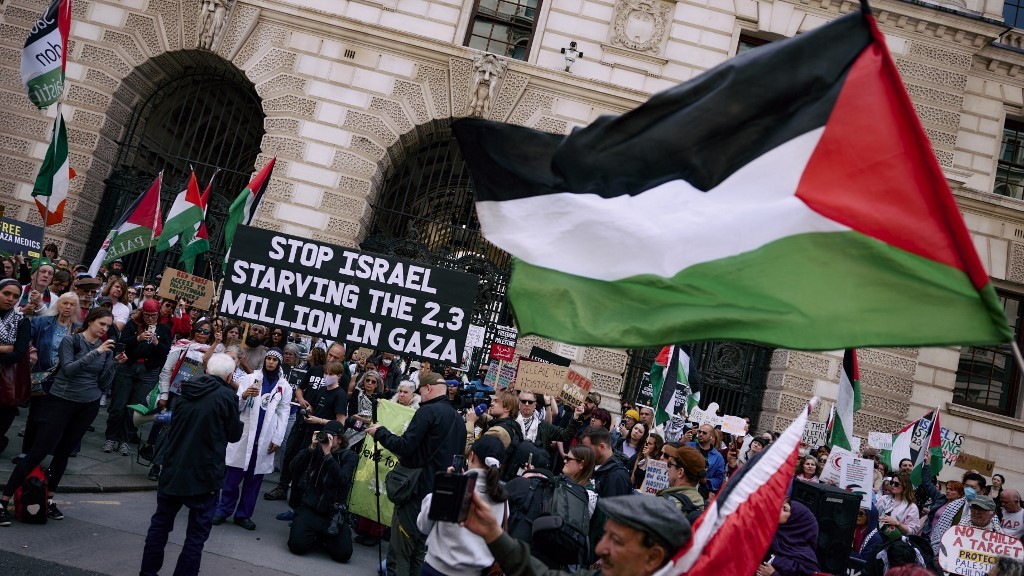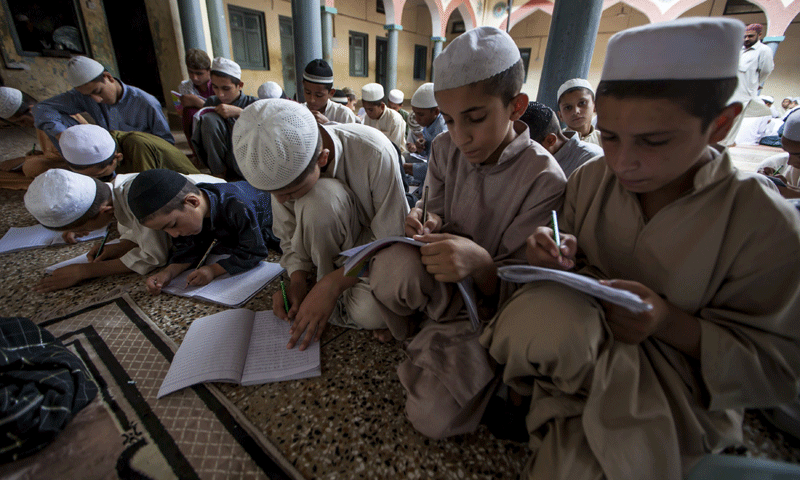
In a province already simmering with separatist unrest and militant violence, the Jamiat Ulema-i-Islam-Fazl (JUI-F) has drawn a line in the sand over Balochistan's seminaries. The hardline religious party's threat to shut down the province, march on Quetta, and disrupt the assembly isn't just a political stunt, it's a direct challenge to the state's authority in a region where Islamist groups have long operated with near-impunity. But this time, the JUI-F isn't just demanding apologies or policy reversals. It's testing the limits of Islamabad's tolerance for street power in a province where the writ of the government is already thin. And if the protests turn violent, they could hand Baloch separatists a propaganda victory they've long sought: proof that the Pakistani state is at war with Islam itself.
Why This Could Redraw Balochistan's Already Shaky Peace
For years, Balochistan's government has balanced precariously between cracking down on militants and avoiding sectarian backlash. The JUI-F's campaign over the raids on seminaries isn't just about religious freedom, it's about who controls the narrative in a province where the military's counterinsurgency operations have already fueled resentment. If the protests spiral, they could force Islamabad to choose between alienating hardline Islamists or emboldening separatists who have spent decades arguing that Pakistan's secular state is inherently hostile to Baloch identity. The stakes aren't just local. They're national. A province-wide shutdown in Balochistan could disrupt CPEC's western route, already plagued by attacks. It could also give cover to Baloch militant groups like the Baloch Liberation Army (BLA) to escalate attacks under the guise of defending Islam. And for the federal government, already grappling with economic instability and political fractures, the last thing it needs is a new front in a province where its control is already contested.
The Long Shadow of Sectarian Politics in Balochistan
Balochistan's relationship with Islamist parties has always been uneasy. The province has been a stronghold of the JUI-F for decades, but its appeal has waxed and waned with the tides of sectarian violence. The last major flare-up came in 2017, when a suicide attack on a Sufi shrine in Sehwan Sharif killed over 80 people. The military's subsequent crackdown on seminaries, many of which were accused of harboring militants, sparked protests led by the JUI-F, which accused the state of targeting Islam. That standoff ended with a fragile truce, but the underlying tensions never faded. Fast forward to 2026, and the same dynamics are playing out again, but with higher stakes. The government's decision to raid seminaries, ostensibly to enforce the Societies Act, has given the JUI-F a rallying cry. Maulana Abdul Wasey's warning that seminaries are a "red line" isn't just rhetoric. It's a reminder that in Balochistan, religion and politics are inseparable, and the state's attempts to regulate either can quickly spiral into crisis. The 26th Constitutional Amendment, which the JUI-F cites as justification for its demands, is a double-edged sword. It devolved power to the provinces, but it also gave hardline parties like the JUI-F a legal framework to challenge federal policies they oppose. The amendment's passage in 2019 was seen as a victory for provincial autonomy, but in Balochistan, it's become a tool for Islamists to resist state authority.
What Dawn News Reported: The JUI-F's Escalation Playbook
According to reporting by Dawn News, the JUI-F's protest campaign is a carefully calibrated escalation designed to test the government's resolve. The party's announcement of a province-wide shutter-down strike on May 6, followed by a march on Quetta on May 10, isn't just about the raids, it's about the JUI-F's broader grievances. Maulana Wasey's allegations of election rigging, withheld development funds, and the government's failure to fulfill commitments on the Mines and Minerals Act are all part of a pattern of political marginalization that the JUI-F has long complained about. But the seminary raids are the flashpoint. The JUI-F's refusal to accept the Societies Act, which mandates seminaries registration, is a direct challenge to the state's ability to regulate religious institutions. The party's demand for an apology from Chief Minister Sarfraz Bugti, and its threat to disrupt the assembly if amendments aren't made, shows how quickly a local dispute can become a constitutional crisis. The JUI-F's insistence that the protests remain peaceful is a tactical move, but one that could unravel if the government's response is seen as heavy-handed. The party's warning that it won't tolerate any damage to property is a nod to the risks of escalation. But in Balochistan, where protests have a history of turning violent, the line between peaceful resistance and chaos is thin.
Global and Regional Reactions: A Test for Islamabad's Diplomacy
So far, the international response to the JUI-F's protests has been muted, but that could change if the crisis deepens. The United States, which has long pressured Pakistan to crack down on militant groups, will be watching closely to see if the JUI-F's campaign emboldens Islamist factions that have ties to the Taliban or al-Qaeda. China, whose investments in CPEC are already at risk from Balochistan's instability, has a direct stake in how this plays out. Beijing's patience with Pakistan's security challenges is wearing thin, and a province-wide shutdown in Balochistan could delay or derail key projects. Iran, which shares a porous border with Balochistan, has its own concerns about sectarian spillover. The JUI-F's protests could give Tehran an excuse to meddle in Pakistani affairs, further complicating Islamabad's already strained regional relationships. Closer to home, Afghanistan's Taliban government has a complicated relationship with the JUI-F. While the Taliban shares the JUI-F's hardline views on religion, it also has its own interests in Balochistan, where it has allegedly provided sanctuary to militants. The Taliban's response to the JUI-F's protests will be telling, will it see them as an opportunity to expand its influence, or will it distance itself to avoid complicating its own relations with Islamabad? The most immediate regional concern, however, is India. New Delhi has long accused Pakistan of using proxies in Balochistan to destabilize its western flank. If the JUI-F's protests lead to a security crackdown, India could use the crisis as further evidence of Pakistan's inability to govern its own territory. That, in turn, could escalate tensions along the Line of Control, where ceasefire violations have already been on the rise.
South Asia Impact: The Domino Effect on CPEC and Regional Security
GFN Ground Context: Balochistan's history of sectarian violence provides a cautionary tale for how quickly protests can escalate. In 2017, the military's crackdown on seminaries after the Sehwan Sharif attack led to weeks of protests led by the JUI-F, which accused the state of waging war on Islam. Those protests, though ultimately contained, fueled recruitment for groups like Lashkar-e-Jhangvi, which carried out retaliatory attacks on Shia Muslims. The 2017 standoff also coincided with a surge in Baloch separatist attacks, as militants exploited the distraction to target security forces. Today, the JUI-F's campaign risks repeating that cycle. The government's decision to raid seminaries, ostensibly to enforce the Societies Act, has already drawn comparisons to the 2017 crackdown. If the JUI-F's protests turn violent, Baloch separatists could use the chaos to launch new attacks, further destabilizing the province. For Islamabad, the stakes are clear: a mishandled response could turn a political dispute into a full-blown security crisis, with repercussions for CPEC, regional stability, and Pakistan's already fragile relationship with its neighbors.
What Happens Next: The Three Possible Paths Ahead
Analysts expect three potential outcomes from the JUI-F's protest campaign, each with its own risks and consequences. The first, and most desirable, is a negotiated settlement. If the government agrees to some of the JUI-F's demands, such as delaying the enforcement of the Societies Act or releasing detained seminarians, the protests could fizzle out. But this would come at a cost. The government's concessions could be seen as a sign of weakness, emboldening other hardline parties to make similar demands. It could also set a precedent for future standoffs, where religious parties use street power to extract concessions from the state. The second possibility is a managed escalation, where the government cracks down on the protests but avoids excessive force. This could prevent the crisis from spiraling out of control, but it risks radicalizing the JUI-F's supporters and fueling further unrest. The third, and most dangerous, outcome is a violent crackdown. If the government responds with heavy-handed tactics, the JUI-F's peaceful protests could turn into riots. That, in turn, could give Baloch separatists an opening to escalate their attacks, further destabilizing the province. The government's response will also depend on the military's stance. The army has historically been wary of Islamist parties, but it also has a vested interest in maintaining stability in Balochistan. If the JUI-F's protests threaten to spiral out of control, the military could intervene to broker a deal, or to impose its own solution. The most likely outcome, however, is a prolonged standoff, where the JUI-F's protests drag on for weeks or even months, draining the government's resources and further eroding public confidence in its ability to govern.
Could This Be Balochistan's 2017 Moment, Or Something Worse?
In 2017, Balochistan's sectarian tensions boiled over after the Sehwan Sharif attack, leading to a military crackdown on seminaries and weeks of protests. The crisis ended with a fragile truce, but the underlying issues were never resolved. Today, the JUI-F's campaign over the seminary raids feels like a deja vu moment, but with higher stakes. The government's decision to enforce the Societies Act has given the JUI-F a rallying cry, but it's also a reminder of how quickly a local dispute can become a national crisis. The difference this time is that Balochistan's separatist groups are stronger, CPEC's western route is more critical to Pakistan's economy, and the federal government is more politically fragile. If the JUI-F's protests turn violent, they could hand the separatists a propaganda victory they've long sought. It could also give Islamabad an excuse to escalate its crackdown on Baloch militants, further alienating the province's population. The real question is whether the government can avoid repeating the mistakes of 2017. Back then, the military's heavy-handed response fueled resentment and played into the hands of separatists. Today, the stakes are even higher. A mishandled response could turn Balochistan into a new front in Pakistan's war on terror, one where Islamist militants and separatists find common cause against the state.
What the JUI-F's Protests Mean for Pakistan's Fragile Democracy
At its core, the JUI-F's protest campaign is a test of Pakistan's democratic resilience. The party's demands, apologies, policy reversals, and the withdrawal of regulations, are classic examples of how hardline groups use street power to undermine elected governments. But in Balochistan, the stakes are higher. The province has long been a battleground for competing visions of Pakistan, secular nationalism vs. Islamist ideology, federal authority vs. provincial autonomy. The JUI-F's protests aren't just about seminaries. They're about who gets to define the province's future. If the government caves to the JUI-F's demands, it could set a dangerous precedent for other hardline parties to use protests as a tool to extract concessions. If it resists, it risks radicalizing the JUI-F's supporters and fueling further unrest. Either way, the outcome will shape Balochistan's trajectory for years to come. For Islamabad, the challenge is clear: it must balance the need to enforce the law with the risk of provoking a backlash. The JUI-F's warning that seminaries are a "red line" is a reminder that in Balochistan, religion and politics are inseparable. The government's response will determine whether that line holds, or whether it becomes a chasm that swallows the province's fragile peace.
Related Coverage
Global Economy Analysis → — In-depth analysis, background context, and continuous updates on this developing story.
Key Takeaways
- Balochistan's sectarian fault lines are back in play. The JUI-F's protests over seminary raids risk reigniting the same tensions that fueled violence in 2017, when a military crackdown on seminaries led to weeks of unrest and a surge in militant attacks.
- CPEC's western route is a ticking time bomb. A province-wide shutdown in Balochistan could disrupt key CPEC projects, further straining Pakistan's economy and giving China another reason to question Islamabad's ability to secure its investments.
- Islamabad faces a no-win scenario. Whether it cracks down on the JUI-F's protests or negotiates with the party, the government's response will either embolden hardline Islamists or fuel separatist resentment, both of which could destabilize Balochistan further.