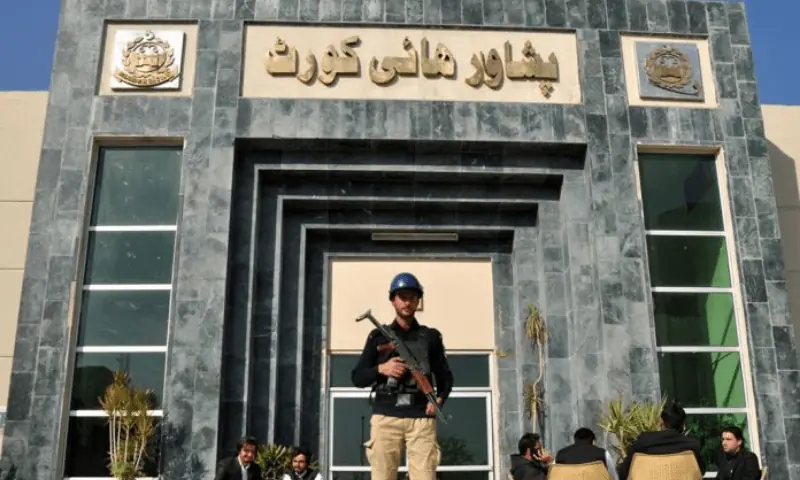
The transfer of three Islamabad High Court judges to provincial benches isn't just a personnel shuffle, it's a constitutional earthquake whose tremors could reach every courtroom in Pakistan. By the time the Peshawar High Court hears Advocate Hastham Khan Khalil's petition, the fate of judicial independence, federalism, and the separation of powers may already be decided in the corridors of Rawalpindi and Islamabad. The stakes are existential: if the petition succeeds, it could redefine how judges are appointed, transferred, and protected across Pakistan's fractious judicial landscape. If it fails, the precedent will embolden executive interference in a branch meant to check it. Either way, the judiciary's credibility, already battered by years of political meddling, faces its most dangerous test in decades.
Why This Could Break Pakistan's Judicial Backbone
At first glance, the transfer of three Islamabad High Court judges to Lahore, Peshawar, and Karachi seems like routine administrative housekeeping. But beneath the surface lies a constitutional Rubik's Cube whose solution could either stabilize Pakistan's judiciary or accelerate its slide into executive captivity. The Judicial Commission of Pakistan (JCP), a body dominated by the executive and senior judges, approved the transfers on April 28, 2026, and President Asif Ali Zardari rubber-stamped them the next day. The move was made under Article 200 of the Constitution, which empowers the federal government to transfer judges between high courts. But the petition argues that this power was exercised without regard to judicial independence, fundamental rights, or the court's own precedents. The real danger isn't just the transfer itself, it's the signal it sends: that the executive can reshuffle judges like civil servants whenever it pleases. If the judiciary accepts this as lawful, the door opens wider for political interference in sensitive cases, from corruption probes to election disputes. For a country where coups, assassinations, and military rule have punctuated civilian governance, judicial autonomy isn't a luxury, it's the last firewall against authoritarianism. And that firewall is now cracking.
The Long Shadow of Judicial Subjugation in Pakistan
Pakistan's judiciary has never enjoyed the sacrosanct status of its Indian or Bangladeshi counterparts. Since the country's founding in 1947, the courts have oscillated between defiance and subjugation, often at the whim of generals and prime ministers. The most notorious episode came during General Zia-ul-Haq's martial law in the 1980s, when judges were coerced into validating military rule through the infamous Doctrine of Necessity. But even after civilian rule returned, the judiciary remained vulnerable. In 2007, President Pervez Musharraf attempted to sack Chief Justice Iftikhar Muhammad Chaudhry, sparking the Lawyers' Movement that became the largest pro-democracy uprising in Pakistan's history. The movement forced Musharraf to reinstate Chaudhry and resign, proving that an independent judiciary could mobilize public opinion against authoritarianism. Yet the victory was short-lived. In 2012, the Supreme Court disqualified Prime Minister Yousaf Raza Gilani on flimsy contempt charges, setting a precedent for judicial overreach that blurred the line between accountability and political engineering. The current crisis echoes these past struggles, but with a twist: the judiciary is now being reshaped not by a general or a populist leader, but by a Judicial Commission that includes both serving judges and executive appointees. This blurring of roles risks turning the judiciary into an extension of the state rather than its counterweight. The 1996 case Al-Jehad Trust v. Federation of Pakistan established that judicial appointments must prioritize seniority and merit, but the current transfers appear to bypass these principles. The petition's invocation of Articles 2-A (Islamic provisions) and 175(3) (judicial independence) suggests that the transfers violate not just procedure, but the very spirit of constitutionalism that Pakistan's founders sought to enshrine. The question now is whether the courts will enforce those principles, or surrender them to political convenience.
What Exactly Happened, And Who Decided What
According to reporting by Dawn News, the crisis began on April 28, 2026, when the Judicial Commission of Pakistan (JCP) met in Islamabad and approved the transfer of three Islamabad High Court (IHC) judges to provincial high courts. The JCP, a 12-member body chaired by the Chief Justice of Pakistan and including the federal law minister, attorney general, and senior judges, signed off on the transfers. The next day, President Asif Ali Zardari, acting on the JCP's recommendation, formally notified the transfers under Article 200 of the Constitution. The three judges affected were Justice Mohsin Akhtar Kayani (sent to the Lahore High Court), Justice Babar Sattar (to the Peshawar High Court), and Justice Saman Rafat Imtiaz (to the Sindh High Court). The federal law ministry issued the notification on April 29, giving the transfers immediate legal effect. But the process was opaque: the JCP's deliberations were not made public, and the federal government did not consult the Islamabad High Court or its chief justice before announcing the transfers. The transfers left the IHC with only seven judges, including Chief Justice Sardar Mohammad Sarfraz Dogar. The court's seniority list remains unpublished, creating confusion over case assignments and judicial hierarchy. Meanwhile, the Peshawar High Court, where the petition was filed, has been asked to rule on whether the transfers violate constitutional guarantees of judicial independence and fundamental rights. The petitioner, Advocate Hastham Khan Khalil, argues that the transfers contravene Articles 2-A (Islamic provisions) and 175(3) (judicial independence), as well as several Supreme Court judgments. He has sought interim relief to suspend the transfers until the case is decided, but no ruling has been issued yet. The respondents, including the federal government and the JCP secretary, have not publicly responded to the petition's merits. The silence is deafening: it suggests that the executive and the judiciary are both waiting for the Peshawar High Court to set the tone for how Pakistan's constitutional order will function in the years ahead.
Global and Regional Reactions: A Quiet Alarm Spreads
The international response to Pakistan's judicial crisis has been muted but telling. The United States, through its embassy in Islamabad, has reiterated its support for judicial independence as a cornerstone of democratic governance. A State Department spokesperson said in late April that Washington expects Pakistan to uphold constitutional norms, though no direct criticism of the transfers was issued. The European Union, in its annual report on Pakistan released in June 2026, expressed concern over what it called "increasing executive influence over judicial appointments and transfers," though it stopped short of linking the transfers directly to the report's findings. Within South Asia, reactions have been equally cautious. India's Ministry of External Affairs declined to comment on the transfers, but Indian legal scholars have privately expressed alarm at the erosion of judicial autonomy in Pakistan, seeing it as a sign of creeping authoritarianism. Bangladesh, which has its own history of judicial politicization, has not issued a formal statement, though Dhaka-based analysts have drawn parallels to Bangladesh's 2017 judicial crisis, when the Supreme Court struck down a constitutional amendment restoring parliament's power to remove judges. The Commonwealth Secretariat, of which Pakistan is a member, has not publicly intervened, but its 2025 report on judicial independence in Commonwealth countries flagged Pakistan as a "country to watch" due to its volatile political environment. The most pointed criticism has come from within Pakistan's legal fraternity. The Pakistan Bar Council, the country's top lawyers' body, has condemned the transfers as a violation of judicial independence and called for a boycott of courts presided over by transferred judges. The Lahore High Court Bar Association has passed a resolution demanding the restoration of the transferred judges to Islamabad, while the Karachi Bar Association has warned of "judicial anarchy" if the transfers stand. The Supreme Court Bar Association, however, has remained conspicuously silent, a silence that speaks volumes about the judiciary's internal divisions. The global silence, in other words, is not indifference. It's a recognition that Pakistan's judicial crisis is not just a domestic affair, it's a test case for whether constitutional democracy can survive in a country where the military, the executive, and the judiciary are locked in a perpetual struggle for supremacy.
South Asia Impact: When Judges Become Pawns in a Larger Game
In Pakistan, the transfers have reignited long-standing fears that the judiciary is being weaponized to target political opponents. Justice Babar Sattar, one of the transferred judges, is known for his rulings against the military establishment in cases involving enforced disappearances and extrajudicial killings. His transfer to Peshawar High Court, a jurisdiction with strong ties to the military, has fueled speculation that the move was politically motivated. Similarly, Justice Mohsin Akhtar Kayani has presided over cases involving corruption allegations against high-ranking officials, raising concerns that his removal from Islamabad could shield powerful figures from accountability. The Islamabad High Court, often seen as the most cosmopolitan and independent of Pakistan's high courts, has been a thorn in the side of both the military and civilian governments. Its judges have ruled against enforced disappearances, granted bail to political activists, and even questioned the legality of military courts. By dispersing these judges to provincial benches, the executive may be attempting to dilute the court's influence and bring it under tighter control. This strategy mirrors tactics used during the Musharraf era, when judges were transferred to remote districts to weaken their ability to challenge military rule. The difference today is that the transfers are being carried out by a Judicial Commission that includes sitting judges, blurring the line between the judiciary and the executive. If the Peshawar High Court upholds the transfers, it will set a precedent that could be used to remove any judge deemed inconvenient by the powers that be. For Pakistan's neighbors, the implications are stark. A judiciary that cannot resist executive pressure is a judiciary that cannot protect minority rights, enforce contracts, or uphold the rule of law, all prerequisites for regional stability. Bangladesh's 2018 judicial crisis, when the Supreme Court struck down a constitutional amendment restoring parliament's power to remove judges, led to a sharp decline in foreign investment and a brain drain of legal talent. Pakistan risks the same fate if its courts become extensions of the state rather than its watchdogs.
What Happens Next: Three Possible Paths for Pakistan's Judiciary
Analysts are divided on how the Peshawar High Court will rule, but three scenarios stand out, each with profound consequences for Pakistan and South Asia.
Scenario 1: The Court Strikes Down the Transfers If the Peshawar High Court rules that the transfers violate constitutional guarantees of judicial independence, it will be a historic victory for the rule of law. The judgment could cite the Supreme Court's 2010 decision in Sindh High Court Bar Association v. Federation of Pakistan, which struck down a presidential order transferring judges without consultation. The ruling would force the JCP to revisit its April 28 decision and could lead to the reinstatement of the transferred judges. But the victory would come at a cost: it could deepen tensions between the judiciary and the executive, potentially triggering a constitutional crisis. President Zardari, who approved the transfers, may refuse to comply, setting up a showdown with the courts. The military, which has historically intervened in such disputes, could be drawn into the fray, raising the specter of another indirect coup. For South Asian investors, the ruling would signal that Pakistan's institutions are capable of self-correction, potentially unlocking stalled CPEC projects and boosting investor confidence. But for the military and political elite, it would be a humiliating defeat, one that could prompt retaliatory measures against the judiciary.
Scenario 2: The Court Upholds the Transfers If the Peshawar High Court rules that the transfers are constitutional, it will embolden the executive to use Article 200 as a tool for judicial engineering. The judgment could cite the Supreme Court's 2012 decision in Federation of Pakistan v. Haji Muhammad Saifullah Khan, which upheld the president's power to transfer judges. But the ruling would also be a tacit admission that the judiciary is no longer an independent branch of government. The transfers would stand, and the Islamabad High Court would lose three of its most independent-minded judges. The court's seniority list would remain unpublished, creating ongoing confusion over case assignments. The Pakistan Bar Council and other legal bodies would likely escalate their protests, potentially leading to strikes and boycotts. The international community, already concerned about Pakistan's democratic backsliding, would view the ruling as a green light for further executive overreach. For CPEC, the ruling could trigger a reassessment by Chinese investors, who may conclude that Pakistan's legal environment is too unpredictable to justify long-term commitments. The message to South Asia would be clear: in Pakistan, the executive trumps the judiciary, and by extension, the rule of law.
Scenario 3: The Court Ducks the Issue The Peshawar High Court could avoid a definitive ruling by dismissing the petition on technical grounds, for example, by arguing that the petitioner lacks standing or that the issue is non-justiciable. This would kick the can down the road, allowing the transfers to stand while avoiding a direct confrontation with the executive. But the longer the court delays, the more the transfers will reshape the Islamabad High Court's composition and culture. Judges who know their positions are precarious may avoid ruling against the government, creating a chilling effect on judicial independence. The court's inaction would also signal to the public that the judiciary is either too weak or too complicit to challenge the executive. For Pakistan's political opposition, the ruling would be a signal to abandon legal strategies and pursue extra-constitutional avenues, such as mass protests or alliances with the military. For South Asia, the message would be that Pakistan's institutions are incapable of self-correction, pushing the country further toward authoritarianism and isolation. The only winners would be those who benefit from a weakened judiciary: corrupt officials, military hardliners, and foreign actors who prefer dealing with pliable governments.
Will Pakistan's Judiciary Survive the Transfer Tsunami?
The transfer of three Islamabad High Court judges is not an isolated incident, it's part of a broader pattern of executive encroachment on judicial autonomy that has accelerated since the 2024 elections. In 2025, the federal government attempted to amend the Constitution to give the president unilateral power to appoint judges, a move that was blocked by the Supreme Court after mass protests. The current transfers represent a subtler but no less dangerous strategy: using administrative tools to reshape the judiciary without triggering a constitutional crisis. The JCP's role in approving the transfers is particularly troubling. The commission, which includes the federal law minister and attorney general, is supposed to act as a buffer between the executive and the judiciary. But in practice, it has become a vehicle for executive influence. The inclusion of senior judges on the commission does not change the fact that the body is dominated by appointees of the president and prime minister. This structural flaw risks turning the judiciary into a rubber stamp for the executive, eroding public trust in the courts and undermining Pakistan's fragile democratic institutions. The real question for Pakistan is not whether the transfers are legal, it's whether the judiciary can reclaim its autonomy before it's too late. The Peshawar High Court's ruling will be a litmus test. If it sides with the executive, Pakistan will have taken a decisive step toward authoritarianism. If it sides with the petitioner, it could spark a constitutional crisis, but one that, paradoxically, might strengthen the judiciary in the long run. The stakes could not be higher: for Pakistan, for South Asia, and for the millions of citizens who depend on the courts to protect their rights.
Related Coverage
Global Economy Analysis → — In-depth analysis, background context, and continuous updates on this developing story.
Key Takeaways
- Pakistan's judicial independence is hanging by a thread. The transfer of three Islamabad High Court judges to provincial benches is not just a personnel issue, it's a direct assault on the constitutional separation of powers, with the executive using the Judicial Commission to reshape the judiciary in its image.
- The Peshawar High Court's ruling could determine whether Pakistan's courts remain watchdogs or become lapdogs. If the court upholds the transfers, it will set a precedent that could be used to remove any judge deemed inconvenient. If it strikes them down, it could trigger a constitutional crisis, but one that might force the judiciary to reclaim its autonomy.
- South Asia's stability depends on Pakistan's judicial resilience. A weakened judiciary in Islamabad risks destabilizing CPEC, spooking foreign investors, and emboldening authoritarian forces across the region. For South Asian readers, the real question is whether Pakistan's institutions can still correct themselves, or if the country is sliding into irreversible decline.