For the first time in years, the White House is holding a document that could either avert a wider war in West Asia or accelerate it into uncharted territory. On the evening of 9 July 2026, Iran delivered a 14-point proposal to Washington, outlining conditions for a ceasefire with Israel and a phased withdrawal of regional proxies. Within hours, US President Donald Trump announced he would review the plan but expressed deep skepticism about reaching a deal. The message was clear: diplomacy remains on life support, and the region's powder keg is still primed to explode.
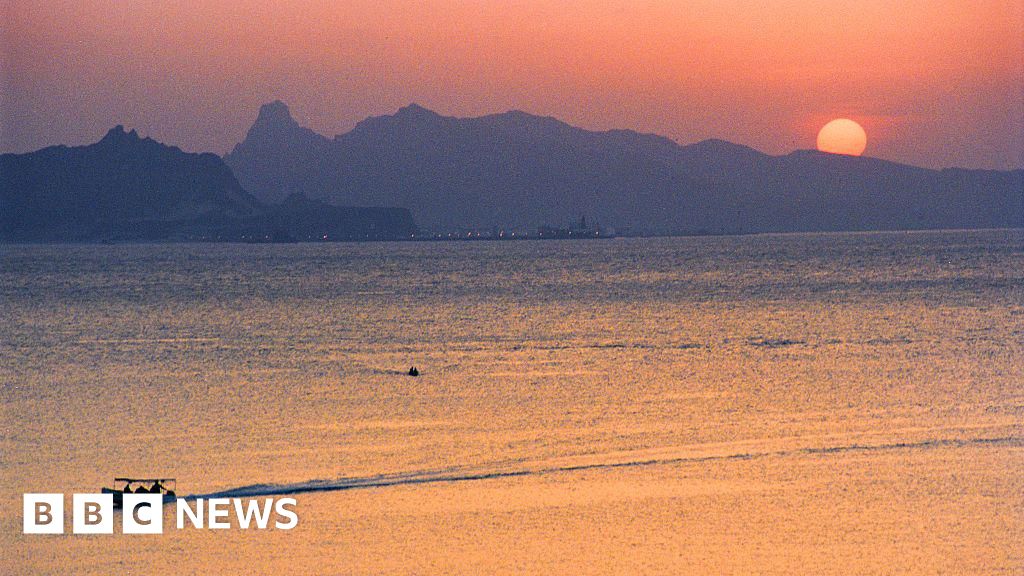
But the real stakes are not just in Beirut or Jerusalem. They stretch eastward to the energy corridors of the Arabian Sea, the militant networks of Balochistan, and the fragile balance of power in Islamabad. A misstep in Washington's response, or a rejection of Tehran's overture, could force South Asian capitals to recalibrate alliances, reroute trade flows, and brace for the next wave of regional spillover. The question now is whether Trump's hesitation is a tactical delay or the beginning of a policy unraveling that leaves no capital untouched.
Why This Could Shatter the Fragile Ceasefire in West Asia
The 14-point plan is more than a peace overture; it is a test of whether Washington and Tehran can still talk without the gunfire of the past decade dictating the terms. According to reporting by Al Jazeera, the proposal includes an immediate halt to cross-border attacks between Israel and Lebanon, a phased withdrawal of Iranian-backed militias from Syria, and a commitment to indirect talks mediated by Qatar and Oman. Crucially, it demands a US pledge to lift sanctions on Iran's oil exports by the end of 2026, a demand that directly threatens the economic leverage Washington has wielded since 2018.
Yet Trump's public skepticism suggests the plan may be dead on arrival. His administration has spent the past two years tightening the screws on Tehran, from expanding sanctions to greenlighting Israeli strikes on Iranian nuclear sites. A sudden pivot toward diplomacy would require a reversal so sharp it could fracture the fragile coalition of Arab states, Israel, and hardline factions in Washington that have backed Trump's hardline approach. The risk is not just that the plan fails, but that its rejection triggers a new wave of Iranian retaliation, one that could drag Lebanon, Syria, and even Iraq back into the crosshairs.
For South Asia, the implications are immediate. Any escalation in West Asia would send shockwaves through the Strait of Hormuz, where 40% of India's oil imports pass. Pakistan, already grappling with a fragile economy and militant violence in Balochistan, would face renewed pressure to either crack down on anti-Iran groups or risk Tehran's wrath. And for New Delhi, the specter of a US-Iran détente, even a failed one, could force a reckoning with its own energy security and strategic alignments in the Indian Ocean.
The Historical Fault Lines That Brought Us to This Point
The current standoff is the culmination of decades of mistrust, punctuated by moments of near-catastrophe. The 2015 nuclear deal, the Joint Comprehensive Plan of Action (JCPOA), was supposed to be the breakthrough that reined in Iran's nuclear ambitions in exchange for sanctions relief. But Trump's 2018 withdrawal from the accord, and his subsequent "maximum pressure" campaign, unleashed a cycle of escalation that has only intensified. By 2024, Iran had enriched uranium to near-weapons-grade levels, Israel had launched preemptive strikes on Iranian nuclear facilities, and proxies from Yemen to Syria were trading fire with Israeli and US forces.
The 2020 assassination of Qasem Soleimani, Iran's top military strategist, marked a turning point. Tehran responded with a direct missile strike on US bases in Iraq and accelerated its support for militias across the region. The cycle of retaliation and counter-retaliation has since become a permanent feature of West Asian security, with no clear off-ramp in sight. The 14-point plan is the first serious attempt to break that cycle, but its success hinges on whether Washington can move beyond the zero-sum logic that has defined its Iran policy for nearly a decade.
Yet the regional landscape has shifted in ways that make compromise harder. Saudi Arabia and the UAE, once eager to engage with Iran after the 2023 China-brokered détente, have since realigned with Israel under US pressure. Meanwhile, Iran's proxies in Lebanon and Yemen have gained unprecedented military capabilities, making any Israeli withdrawal from Lebanon or Saudi de-escalation in Yemen a non-starter for Tehran. The 14-point plan may be the most detailed proposal yet, but it arrives at a moment when the region's factions are more entrenched, and more willing to fight, than at any point since the Iran-Iraq War.
What Just Happened: The Plan, The Rejection, and the Regional Dominoes
According to reporting by Al Jazeera, Iran's 14-point proposal was delivered to Washington through backchannel negotiations in Muscat and Doha. The document outlines a three-phase process: an immediate ceasefire in southern Lebanon and the Golan Heights, followed by a withdrawal of Iranian-backed forces from Syria within six months, and finally, a US commitment to lift sanctions on Iran's oil sector by December 2026. In exchange, Iran would freeze its uranium enrichment at current levels and halt attacks on shipping in the Strait of Hormuz.
The proposal was met with skepticism in Washington. Trump, speaking to reporters on 10 July 2026, said he would "soon be reviewing the plan" but added, "I don't think we can make a deal." His comments echoed the stance of his national security team, which has argued that Iran cannot be trusted to honor any agreement. The White House's position is that Iran's proposal is a tactical move to buy time while it continues to develop its nuclear program and expand its military footprint in Syria and Iraq.
Meanwhile, Israel has shown no signs of easing its campaign in Lebanon. Since the start of July 2026, Israeli airstrikes have targeted Hezbollah positions in southern Beirut and the Bekaa Valley, killing at least 47 militants and 12 civilians. Hezbollah, for its part, has responded with rocket barrages into northern Israel, raising fears of a full-scale ground invasion. The escalation has drawn condemnation from the UN Security Council, but no concrete action to de-escalate the crisis. The US, despite its rhetorical support for Israel, has yet to broker a ceasefire, or even a pause in hostilities.
The deadlock has left regional actors scrambling. Saudi Arabia, which had been pushing for a diplomatic solution, has quietly urged both sides to avoid further escalation. But its leverage is limited, given its own tensions with Iran and its dependence on US security guarantees. Meanwhile, Turkey has positioned itself as a mediator, hosting talks between Lebanese and Israeli officials in Ankara. Yet Ankara's influence is constrained by its own economic woes and its strained relations with both Washington and Tehran.
Global and Regional Responses: Who Stands Where, and Why It Matters
The 14-point plan has exposed deep divisions among global powers. The European Union, which had been pushing for a revival of the JCPOA, welcomed the proposal as a "step in the right direction." EU foreign policy chief Josep Borrell called on Washington to engage seriously with Tehran's offer, warning that a rejection could "plunge the region into a spiral of violence with no end in sight."
Russia and China, meanwhile, have adopted a more cautious stance. Moscow, which has deepened its military and economic ties with Iran in recent years, has signaled support for the plan but stopped short of endorsing it outright. Chinese foreign minister Wang Yi called the proposal "a positive signal" but emphasized that any deal must respect Iran's "legitimate security concerns." The muted response from Beijing and Moscow reflects their broader strategy of balancing engagement with Iran while avoiding direct confrontation with the US.
In the Middle East, reactions have been equally mixed. Saudi Arabia's crown prince, Mohammed bin Salman, has privately urged Trump to engage with the plan, fearing that a prolonged conflict could destabilize oil markets and threaten the kingdom's economic recovery. But Saudi officials have also warned that any deal must include guarantees that Iran will halt its support for Houthi rebels in Yemen, a demand Tehran has so far rejected.Israel, for its part, has dismissed the plan as a "smokescreen" for Iran to rebuild its military capabilities. Prime Minister Benjamin Netanyahu, in a televised address on 10 July 2026, accused Iran of using the proposal to "buy time while it prepares for the next war." His government has insisted that any ceasefire must include the disarmament of Hezbollah and the withdrawal of Iranian forces from Syria, a demand that Tehran has called "unrealistic and provocative."
The UN Security Council has been paralyzed by the divide. The US has vetoed two resolutions calling for an immediate ceasefire, arguing that such measures would reward "terrorist groups" like Hezbollah. Russia and China, in turn, have blocked a US-backed resolution that would have condemned Iran's nuclear program without addressing Israel's military actions in Lebanon. The deadlock has left the international community with little leverage to prevent further escalation.
South Asia Impact: The Domino Effect on Trade, Security, and Alliances
The 14-point plan's fate could also reignite militant networks in Balochistan and Pakistan's tribal areas. Iran has long accused Pakistan of harboring anti-Iran Baloch separatists, and a US-Iran détente, even a failed one, could embolden Tehran to launch cross-border strikes into Pakistani territory. The last time such tensions flared was in 2023, when Iran conducted missile strikes on what it claimed were "terrorist hideouts" in Balochistan, killing nine civilians. Islamabad's response was muted, but the episode exposed the fragility of Pakistan's border security and its limited ability to deter Iranian aggression.
For India, the stakes are equally high. The country imports nearly 60% of its oil from the Gulf, and any disruption in supplies could send fuel prices soaring, a political liability for Prime Minister Narendra Modi ahead of the 2027 elections. New Delhi has already begun diversifying its energy sources, signing long-term deals with Russia and the US to reduce its dependence on Gulf oil. But these alternatives are costly and logistically complex, making a sudden supply shock a nightmare scenario for Indian policymakers. Meanwhile, India's strategic partnership with Israel, built on defense cooperation and intelligence sharing, could force New Delhi to take sides in a crisis that risks destabilizing its neighborhood.
The economic fallout would extend beyond energy. The China-Pakistan Economic Corridor (CPEC), already struggling with security threats and debt concerns, could become a target if Iran retaliates against US-aligned states. In 2021, Baloch separatists targeted Chinese engineers working on CPEC projects, killing two and forcing Beijing to temporarily suspend work. A renewed wave of violence, fueled by regional tensions, could derail Pakistan's economic recovery and deepen its reliance on Chinese loans, a scenario that would further tilt Islamabad toward Beijing's orbit.
Public sentiment in South Asia would also be affected. In Pakistan, where anti-American and anti-Israel sentiment runs high, a US rejection of the 14-point plan could fuel protests and anti-Western rhetoric. In India, where the government has maintained a delicate balance between its strategic partnerships with the US and its energy ties with Iran, the crisis could expose the limits of New Delhi's hedging strategy. The real question for Islamabad and New Delhi is whether they can insulate themselves from the fallout, or whether they will be forced to choose sides in a conflict that neither can control.
What Happens Next: Three Scenarios That Could Redraw the Map
Analysts expect the next 72 hours to be decisive. Three scenarios stand out, each with profound implications for South Asia and beyond.
Scenario 1: The Plan Fails, Escalation Accelerates
If Trump rejects the 14-point plan, or imposes new preconditions that Tehran cannot accept, Tehran may respond by accelerating its nuclear program and stepping up attacks on Israeli and US targets. The most likely flashpoint is southern Lebanon, where Hezbollah's arsenal has grown to include precision-guided missiles capable of striking deep into Israel. A full-scale Israeli invasion of Lebanon could trigger a regional war, drawing in Iran, Syria, and possibly even Turkey. For South Asia, the immediate impact would be a spike in oil prices and a surge in militant activity along the Iran-Pakistan border. Pakistan's military, already stretched thin by domestic insurgencies, could face renewed pressure to crack down on Baloch separatists, a move that risks further destabilizing the province.
Scenario 2: A Half-Measure Deal Emerges
Under intense pressure from the EU and Gulf allies, Trump could agree to a temporary freeze on sanctions in exchange for a limited Iranian de-escalation. Such a deal would likely exclude the lifting of oil sanctions, instead focusing on a six-month pause in uranium enrichment and a halt to attacks on shipping in the Strait of Hormuz. While this would avert an immediate crisis, it would do little to address the underlying tensions between Washington and Tehran. For South Asia, the deal could stabilize oil prices but leave regional proxies like Hezbollah and the Houthis in a stronger position. Pakistan, caught between its US ally and its Iranian neighbor, would face a delicate balancing act, one that could further strain its already frayed relations with Riyadh.
Scenario 3: A Regional Mediation Effort Takes Hold
Turkey and Qatar, leveraging their ties with both Washington and Tehran, could broker a face-saving compromise. Under this scenario, Iran would agree to a phased withdrawal of its proxies from Syria and Lebanon in exchange for a partial lifting of sanctions and a commitment from Israel to halt its strikes on Iranian targets. The deal would be fragile, but it could buy time for deeper negotiations. For South Asia, the most significant impact would be on CPEC. A de-escalation in West Asia could reduce the risk of militant attacks on Chinese projects in Pakistan, easing pressure on Islamabad to renegotiate its debt with Beijing. Meanwhile, India could see a temporary reprieve in oil prices, but its strategic dilemmas, balancing ties with the US, Israel, and Iran, would remain unresolved.
The common thread in all three scenarios is uncertainty. The 14-point plan is not a silver bullet, but its rejection, or even its partial acceptance, could set off a chain reaction that no capital in South Asia is fully prepared for. The region's leaders must ask themselves: Can they afford to wait for Washington and Tehran to reach a deal, or do they need to start preparing for a world where the old rules no longer apply?
Related Coverage
Middle East Conflict Analysis → — In-depth analysis, background context, and continuous updates on this developing story.
Key Takeaways
- Trump's skepticism toward Iran's 14-point plan is not just a diplomatic misstep, it's a gamble that could reignite a region-wide conflict. A rejection of the proposal risks pushing Iran toward a nuclear breakout or a new wave of proxy attacks, with direct consequences for South Asia's energy security and militant networks.
- For South Asia, the crisis is a stress test of its fragile alliances and economic resilience. Pakistan faces a no-win scenario between US pressure and Iranian retaliation, while India must navigate the fallout of a US-Iran standoff that could disrupt its oil supplies and strategic partnerships.
- The 14-point plan's failure could accelerate a shift in regional power dynamics, with China and Russia filling the void left by a distracted Washington. For Islamabad and New Delhi, the question is no longer whether to hedge, but how far they can push their hedging before the ground shifts beneath them.