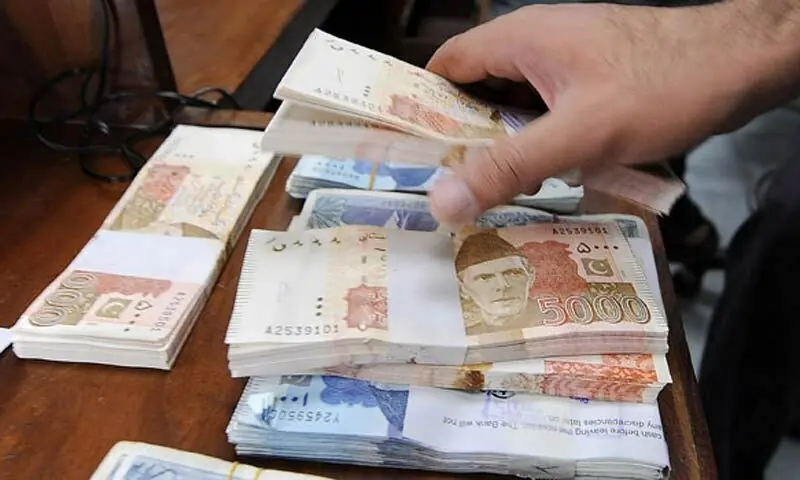
Pakistan's Treasury Bills, once the darling of foreign investors for their outsized returns, now stand abandoned. The hemorrhage is total: over 94% of foreign holdings have evaporated since the Middle East conflict flared, leaving domestic bonds as a ghost market. For a country that has spent years courting global capital to stabilize its shaky finances, this is more than a liquidity crunch, it's a geopolitical alarm bell.
Why This Financial Rout Could Redefine South Asia's Economic Order
The stakes extend far beyond Karachi's trading floors. Pakistan's ability to attract foreign capital has long been a bellwether for investor confidence across South Asia, where economies from Sri Lanka to Bangladesh vie for the same scarce dollars. The collapse of T-bill inflows isn't just a local liquidity shock; it's a structural shift in how global investors now price risk in the region. With the Middle East conflict still simmering and Iran-US talks deadlocked, the uncertainty has triggered a capital flight that could force Islamabad into a brutal fiscal reckoning. The State Bank of Pakistan's (SBP) desperate move to hike T-bill yields to nearly 12%, a level last seen during the 2022 balance-of-payments crisis, has failed to stem the tide. Foreign investors, it turns out, aren't just chasing yield anymore. They're fleeing geopolitical contagion.
The numbers tell the story. Between July 1, 2025, and April 17, 2026, Pakistan saw $975 million in T-bill inflows but $917 million in outflows, netting a meager $58 million. The outflow peaked at $291 million to the UK, followed by $271 million to the UAE, signaling that even traditional allies are retrenching. Meanwhile, the oil import bill has ballooned to $800 million per week, up from $300 million pre-conflict, draining reserves and forcing Islamabad to burn through foreign exchange at a pace that risks a replay of the 2022 crisis. The question now is whether Pakistan's financial system can survive the storm, or if this exodus marks the beginning of a new normal where South Asian markets are permanently priced for instability.
The Long Shadow of Regional Conflict: How Wars Rewrite Capital Markets
To understand the scale of the collapse, it's worth revisiting Pakistan's last brush with financial isolation. In 2019, after the Pulwama crisis and India's retaliatory strikes, foreign investors pulled $1.2 billion from local bonds within months. But the current exodus dwarfs that episode. This time, the trigger isn't a bilateral standoff, it's a regional war whose ripple effects have upended everything from oil prices to trade corridors. According to Dawn News, the Middle East conflict has disrupted supply chains and sent energy costs soaring, leaving fragile economies like Pakistan particularly exposed. The SBP's data confirms that the war's psychological impact has been as damaging as its economic fallout: even with yields spiking to 12%, foreign investors aren't biting.
The historical parallel here isn't just regional, it's global. During the 1991 Gulf War, Asian markets from Thailand to South Korea saw capital flight as investors sought safe havens. But Pakistan's situation is more precarious. Unlike its neighbors, Islamabad has relied heavily on short-term debt to plug fiscal gaps, a strategy that works only if confidence holds. The war in the Middle East has shattered that confidence. The fact that Chinese investors, typically the most risk-tolerant in Pakistan's market, have stayed away entirely underscores the depth of the crisis. Instead, Pakistan is now eyeing China's domestic bond market, attempting to issue a $250 million Panda bond, a move that would have been unthinkable just two years ago when Beijing was flooding Pakistan with investment. The shift from Chinese capital to Chinese debt markets is a stark reversal, one that speaks to the reordering of risk perceptions in the region.
What Happened: The Numbers Behind the Flight
According to reporting by Dawn News, the State Bank of Pakistan's latest data reveals a financial hemorrhage of historic proportions. By April 17, 2026, foreign holdings in T-bills had collapsed to just 6% of their pre-conflict levels. The central bank's decision to raise yields by up to 83 basis points to nearly 12%, a move designed to lure back skittish investors, has backfired. Instead of stabilizing the market, the hike has highlighted the depth of the distrust. Foreign investors, it seems, are no longer swayed by higher returns alone. They're demanding stability, and Pakistan isn't delivering.
The outflows have been concentrated among traditional partners. The UK led the exodus with $291 million, followed by the UAE ($271 million), Bahrain ($218 million), and Singapore ($77 million). Even the US, Pakistan's erstwhile strategic ally, saw $32 million exit. The only notable absentee from the flight has been domestic investors, who snapped up Rs3.8 trillion in the SBP's latest auction, a sign that while foreign capital is fleeing, local savers are still betting on Pakistan's resilience. But this is a fragile equilibrium. If the war drags on, even domestic confidence could waver, leaving Islamabad with few options beyond deeper austerity or emergency IMF talks.
Meanwhile, Pakistan's external obligations are piling up. In the first nine months of FY26 alone, Islamabad repaid $3.5 billion to the UAE, $1.4 billion on Eurobond maturities, and allowed $1.8 billion in profit and dividend outflows to foreign investors. These payments, while necessary to maintain credibility, have drained reserves at a time when the country can least afford it. The SBP's attempt to signal strength by raising rates has only underscored its desperation. The irony is that Pakistan's T-bills were once a regional safe haven, now, they're a liability.
Global and Regional Reaction: A World That's Moved On
The international response to Pakistan's bond crisis has been muted, reflecting a broader shift in global risk appetite. The US, despite its strategic ties to Islamabad, has shown little inclination to intervene beyond routine diplomatic statements. The UAE, Pakistan's largest creditor and a key Gulf partner, has not announced any new financial support packages, despite Islamabad's repayment of $3.5 billion. This silence speaks volumes. The Gulf's financial institutions, once eager to park capital in Pakistan's high-yield bonds, are now redirecting funds to safer havens like US Treasuries or European bonds.
Within South Asia, the reaction has been equally telling. India, Pakistan's arch-rival, has largely ignored the crisis, focusing instead on its own economic ambitions. Bangladesh, grappling with its own forex shortages, has little capacity to extend a lifeline. Sri Lanka, still recovering from its 2022 default, is in no position to help. The only regional actor with potential leverage is China, but Beijing's absence from Pakistan's T-bill market suggests it's hedging its bets. Instead of doubling down on Pakistani debt, China is exploring alternative financial instruments, like the proposed Panda bond, while keeping its exposure limited. This isn't just a loss of confidence in Pakistan's bonds; it's a loss of confidence in Pakistan's economic narrative.
The exception to this global indifference is the IMF, which has reiterated its commitment to supporting Pakistan but has tied any new program to stringent fiscal reforms. The Fund's stance reflects a harsh reality: without structural changes, no amount of yield hikes or emergency loans will restore investor trust. The question now is whether Pakistan's leadership will accept the IMF's conditions, or gamble on unorthodox solutions that could further destabilize the economy.
South Asia Impact: The Domino Effect on Trade, Security, and CPEC
For Pakistan, the stakes are existential. The country's foreign exchange reserves are under severe pressure, and the weekly oil import bill of $800 million is a ticking time bomb. The war in the Middle East has already disrupted trade routes through the Strait of Hormuz, forcing Islamabad to reroute imports at higher costs. This has direct implications for CPEC, Pakistan's flagship infrastructure project with China. If Islamabad is forced to divert funds from CPEC to cover import bills, Beijing's patience could wear thin, especially if the security situation in Balochistan worsens, as it has in recent months. The last time Pakistan faced a similar liquidity crunch, in 2019, it turned to Saudi Arabia and the UAE for emergency loans. But this time, the Gulf's financial institutions are preoccupied with their own economic challenges, leaving Islamabad with few options beyond the IMF or Beijing.
The crisis also has security implications. A weakened Pakistan is a less stable Pakistan, and instability in Islamabad could embolden militant groups along its western border. The Afghan Taliban, already a source of tension, may see an opportunity to escalate attacks in the hope of extracting concessions from a distracted government. Meanwhile, India will likely watch the crisis unfold with a mix of schadenfreude and strategic calculation. A financially crippled Pakistan is less of a threat, but it's also a less predictable neighbor, one that could lash out in desperation. For Bangladesh and Sri Lanka, the lesson is clear: diversification is key. Relying too heavily on a single source of capital or trade partner is a recipe for disaster.
The GFN editorial desk notes that Pakistan's bond exodus mirrors a broader trend in South Asia, where geopolitical risks are increasingly dictating economic outcomes. The 2022 crisis in Sri Lanka, triggered by a collapse in tourism and remittances, was a wake-up call for the region. Pakistan's current turmoil suggests that the region's economic vulnerabilities are far from resolved. The question now is whether South Asian governments will use this moment to build more resilient financial systems, or if they will repeat the mistakes of the past.
What Happens Next: The Three Possible Paths for Pakistan's Economy
Analysts expect Pakistan to face a brutal fiscal reckoning in the coming months, with three potential outcomes, none of them painless. The most likely scenario is a forced IMF program, complete with austerity measures and structural reforms. The Fund's conditions would likely include higher taxes, subsidy cuts, and a freeze on public sector hiring, measures that could trigger political unrest. But without an IMF program, Pakistan's reserves could fall below critical levels, forcing a default on external debt. The third possibility, though less likely, is a last-minute rescue by China or the Gulf states. Beijing has bailed out Islamabad before, but its willingness to do so again is far from guaranteed, especially as its own economy slows and its priorities shift toward domestic stability.
The most immediate threat is a liquidity crunch. If foreign investors continue to flee, the SBP may be forced to impose capital controls, a move that would spook domestic markets and further erode confidence. The central bank's decision to hike rates to 12% is a gamble that higher yields will attract domestic investors, but this risks choking off private sector credit and deepening a recession. Meanwhile, the government's ability to service debt is dwindling. In FY26 alone, Pakistan must repay over $4 billion in Eurobonds and bilateral loans. If it fails to roll over this debt, it could trigger a balance-of-payments crisis reminiscent of 2022.
A key question is whether Pakistan can pivot to domestic financing. The SBP's latest auction, which saw Rs3.8 trillion in local subscriptions, suggests there's still appetite among Pakistani investors. But this is a double-edged sword. While it provides short-term relief, it also crowds out private sector investment and fuels inflation. The government's reliance on domestic debt is a sign of desperation, not strength. For the bond market to recover, Pakistan needs more than just higher yields, it needs stability. And that, in turn, depends on an end to the Middle East conflict, a resumption of IMF talks, and a credible plan to reduce the current account deficit. None of these are guaranteed.
Another wild card is China's role. Beijing has been Pakistan's largest investor for years, but its absence from the T-bill market suggests it's reassessing its exposure. If China decides to cut back on CPEC funding or demand stricter repayment terms, Pakistan's economic outlook could darken further. The proposed $250 million Panda bond is a step toward diversifying funding sources, but it's a drop in the bucket compared to Pakistan's financing needs. The real test will come if Pakistan seeks a larger bailout from Beijing, something that would likely come with strings attached, including greater control over Pakistan's economic policies.
The final variable is the Middle East conflict itself. If the war escalates, oil prices could spike further, pushing Pakistan's import bill even higher. But if the conflict de-escalates, investor confidence could return, albeit slowly. The problem is that Pakistan's economy is now so fragile that even a small shock, like a delay in IMF disbursements or a terrorist attack on a CPEC project, could tip it into crisis. The next six months will be decisive. If Pakistan can stabilize its finances and restore some semblance of investor confidence, it may avoid a full-blown default. But if the war drags on, or if domestic political instability worsens, the country could face a scenario far worse than 2022.
Related Coverage
Global Economy Analysis → — In-depth analysis, background context, and continuous updates on this developing story.
Key Takeaways
- Pakistan's T-bill market has collapsed, with over 94% of foreign investors fleeing since the Middle East conflict began, leaving the country's financial system dangerously exposed.
- The exodus reflects a broader loss of confidence in South Asian markets, where geopolitical risks now outweigh even the highest yields, forcing Islamabad to rely on domestic financing and emergency IMF talks.
- The crisis threatens CPEC projects, regional security, and Pakistan's ability to service debt, with China's role and the IMF's conditions now the deciding factors in whether Islamabad can avoid a balance-of-payments disaster.