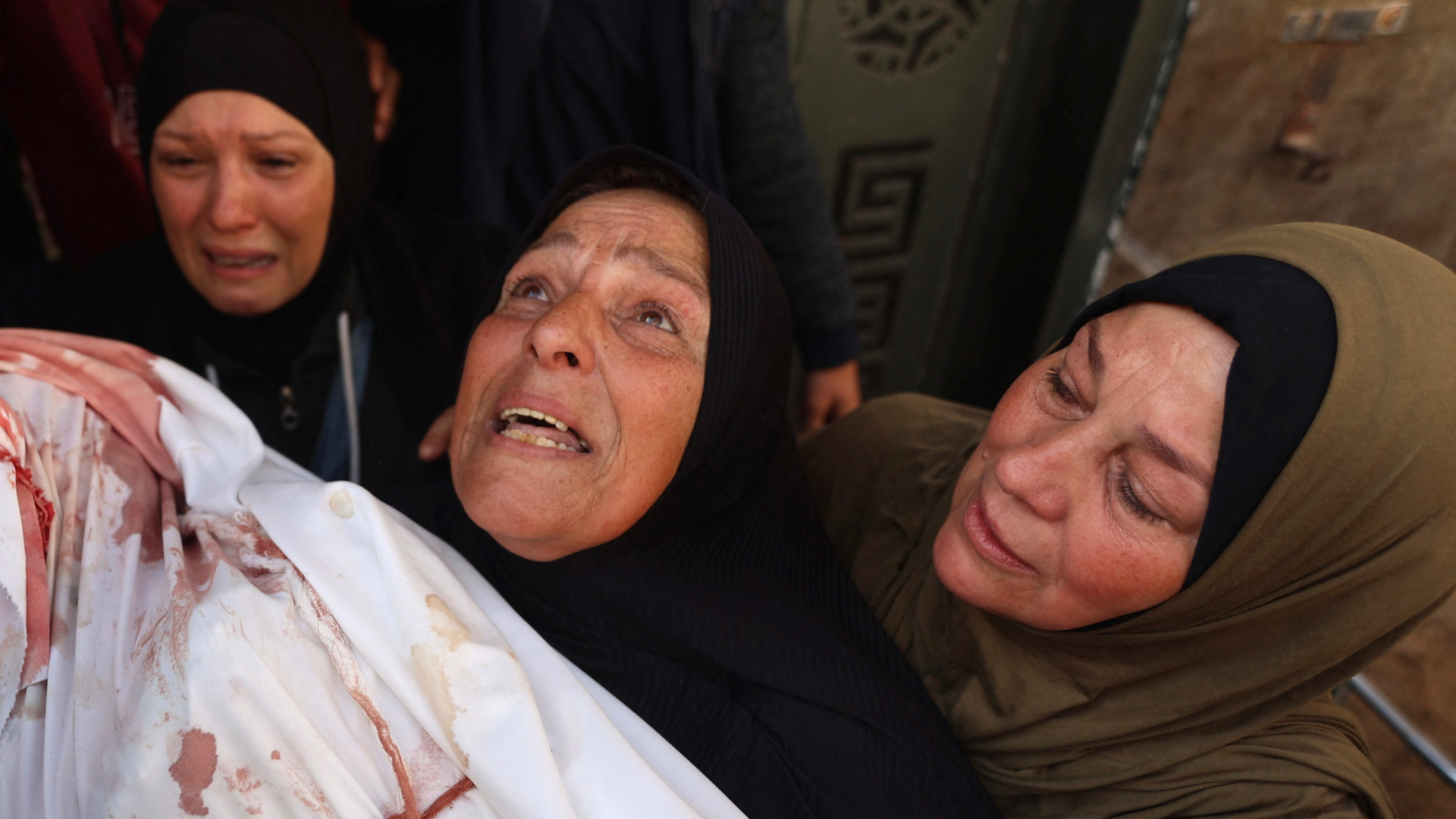
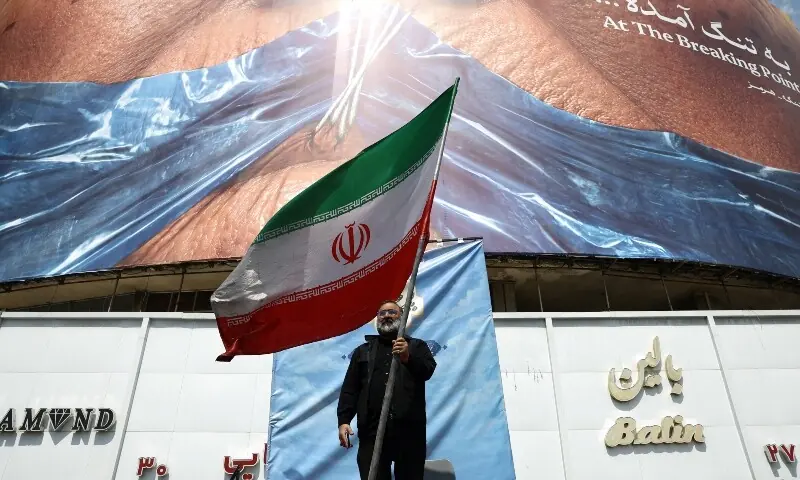
For the first time in decades, a senior United Nations official has declared that the entire territory of Gaza must remain under Palestinian control, a direct rebuke to Israeli Prime Minister Benjamin Netanyahu's plan to expand Israel's footprint to 70% of the strip. But the UN's statement isn't just symbolic. It's a warning that the two-state solution, already on life support, may have flatlined for good.
Why This Matters
The stakes couldn't be higher. If Israel proceeds with its land grab, it would shred the last remnants of Palestinian territorial integrity, torpedo any remaining international consensus on a two-state framework, and force the world to confront a brutal new reality: a de facto Israeli annexation of Gaza, with the West Bank next in line. Economically, the move risks destabilizing the entire Levant, disrupting trade routes through the Suez Canal and the Red Sea, and triggering a humanitarian catastrophe that could spill into Europe via mass migration. Militarily, it risks dragging Hezbollah, Iran, and even non-state actors in South Asia into a wider conflict. And politically, it could fracture the already fragile alliances between Arab states and the West, particularly in South Asia, where countries like India and Pakistan are grappling with their own domestic pressures over the Israel-Palestine issue.
Background & Context
The current crisis didn't emerge in a vacuum. It's the latest chapter in a decades-long struggle over land, identity, and sovereignty that dates back to the 1948 Nakba, when 700,000 Palestinians were displaced during Israel's founding. The 1967 Six-Day War saw Israel occupy Gaza and the West Bank, a situation that has persisted ever since, despite multiple UN resolutions demanding withdrawal. The Oslo Accords of the 1990s were supposed to pave the way for a Palestinian state, but the process collapsed amid settlement expansion, violence, and mutual distrust. Fast forward to 2005, when Israel unilaterally withdrew from Gaza, only to impose a crippling blockade in 2007 after Hamas took control. The 2008-2009 Gaza War, the 2014 conflict, and the 2021 escalation all followed the same pattern: Israeli military operations, Hamas rocket fire, civilian casualties, and a fragile ceasefire that never addressed the root cause, Israel's occupation and settlement policies.
Netanyahu's latest gambit isn't just about Gaza. It's about the West Bank, where settlement expansion has accelerated under his watch, with over 700,000 Israeli settlers now living in occupied territory. The Israeli government's National Security Minister, Itamar Ben-Gvir, has openly called for the annexation of the West Bank, while Finance Minister Bezalel Smotrich has proposed a plan to "encourage" Palestinians to emigrate. These statements aren't fringe rhetoric; they reflect a growing consensus within Israel's far-right coalition that the two-state solution is dead, and that Israel must assert permanent control over all Palestinian land.
What Happened
On October 27, 2023, Israeli Prime Minister Benjamin Netanyahu announced plans to expand Israel's control over Gaza to 70% of its territory, a move that would effectively annex large swathes of the strip. The announcement came amid Israel's ongoing military campaign in Gaza, which has already killed over 11,000 Palestinians, according to Gaza health officials, and displaced more than 1.5 million people. Netanyahu framed the expansion as a necessary security measure, arguing that Israel cannot afford to allow Hamas to retain any territorial foothold. But the plan goes far beyond targeting Hamas. It envisions Israel taking control of key strategic areas, including the Philadelphi Corridor along the Gaza-Egypt border, the Rafah crossing, and large parts of northern Gaza, where some of the most intense fighting has occurred.
The plan has drawn immediate condemnation from the international community. UN Secretary-General António Guterres stated that "100% of Gaza" must remain under Palestinian control, a position echoed by the European Union, which warned that any unilateral annexation would violate international law. The Arab League, in an emergency meeting, described the plan as a "declaration of war" against the Palestinian people. Even the United States, Israel's closest ally, has expressed concern, with Secretary of State Antony Blinken stating that "Israel must take greater steps to protect civilians" and avoid actions that could further destabilize the region.
But Netanyahu's government shows no signs of backing down. In a speech to the Knesset, Netanyahu declared that Israel would "determine its own security needs" and that any future Palestinian state would have to meet strict conditions, including demilitarization and recognition of Israel as a Jewish state. These conditions, analysts note, are effectively a death knell for Palestinian statehood, as they would strip any future Palestinian entity of sovereignty, borders, and security.
Global & Regional Reaction
The international response has been swift and unequivocal. The United Nations, through its spokesperson Stéphane Dujarric, reiterated that "100% of Gaza" must remain under Palestinian control, a stance that aligns with decades of UN resolutions demanding an end to Israel's occupation. The UN's position is backed by a majority of member states, including many in the Global South, who see the plan as a blatant violation of international law. The European Union, in a joint statement, warned that any unilateral annexation would have "serious consequences" for Israel's relations with the EU, including potential sanctions and a suspension of trade agreements.
In the Middle East, the reaction has been one of outrage and defiance. The Arab League, in an emergency summit, condemned the plan as a "flagrant violation of Palestinian rights" and called for an immediate halt to Israel's military campaign. Egypt, which shares a border with Gaza, has warned that any Israeli move to seize the Philadelphi Corridor would violate its 1979 peace treaty with Israel and could lead to a breakdown in relations. Jordan, which has a peace treaty with Israel and is home to a large Palestinian refugee population, has recalled its ambassador to Tel Aviv in protest. Even traditionally moderate states like Saudi Arabia and the UAE, which have been normalizing relations with Israel under the Abraham Accords, have expressed "deep concern" over the plan, signaling that their engagement with Israel may be at risk.
In the West, the reaction has been more cautious but no less critical. The United States, while reiterating its support for Israel's right to defend itself, has urged restraint and warned against actions that could further destabilize the region. President Joe Biden, in a phone call with Netanyahu, reportedly expressed concern over the humanitarian crisis in Gaza and the potential for a wider regional war. But the U.S. has stopped short of threatening to withhold military aid, a move that would risk a backlash from pro-Israel factions in Congress. Meanwhile, in Europe, countries like France and Germany have called for an immediate ceasefire and a return to negotiations, but their influence over Israel appears limited. The UK, which has historically been a strong supporter of Israel, has also expressed concern, with Prime Minister Rishi Sunak stating that "the situation in Gaza is unsustainable" and calling for a political solution.
South Asia Impact
The fallout from Israel's land grab in Gaza isn't confined to the Middle East. It's already sending ripples across South Asia, where countries like India, Pakistan, and Bangladesh are grappling with their own domestic pressures over the Israel-Palestine issue. For India, the crisis presents a delicate balancing act. On one hand, India has deepened its strategic partnership with Israel over the past decade, particularly in defense and technology. On the other, India's Muslim minority, which makes up 14% of the population, has been vocal in its support for Palestine, and any perceived alignment with Israel's actions in Gaza risks fueling domestic unrest. Prime Minister Narendra Modi has so far maintained a muted response, calling for "restraint" and a "two-state solution," but the pressure is mounting. Analysts in New Delhi warn that if the crisis escalates, India could face a backlash from its Muslim population, as well as from allies in the Arab world, including Saudi Arabia and the UAE, with whom India has been cultivating closer ties.
For Pakistan, the crisis is a geopolitical opportunity wrapped in a humanitarian tragedy. Pakistan's Prime Minister, Shehbaz Sharif, has been a vocal advocate for Palestine, and his government has already announced plans to send medical aid and supplies to Gaza. But Pakistan's response is also shaped by its rivalry with India. Any perceived weakness in supporting Palestine could undermine Sharif's domestic standing, particularly among the country's religious parties, which have long accused the government of being too soft on Israel. Meanwhile, Pakistan's military, which has close ties with Hamas, may see an opportunity to leverage the crisis to strengthen its influence in the region. But Pakistan's options are limited. The country is facing its own economic crisis, and any move to escalate tensions with Israel risks drawing the ire of the United States, which has been pressing Pakistan to crack down on militant groups operating from its soil.
In Bangladesh, the crisis has reignited long-standing tensions over the country's relationship with Israel. Bangladesh does not recognize Israel and has historically been a strong supporter of Palestine, but its government has also been cautious in its response to avoid alienating Western donors, particularly the United States and the EU. The crisis has exposed the fragility of Bangladesh's balancing act, with protests erupting in Dhaka and other cities demanding that the government take a stronger stance against Israel. Analysts in Dhaka warn that if the crisis escalates, Bangladesh could face pressure to downgrade its diplomatic ties with Israel, a move that could have economic repercussions, given the country's reliance on remittances from migrant workers in the Gulf.
Beyond the immediate diplomatic fallout, the crisis could also disrupt South Asia's trade routes and energy supply chains. The Suez Canal, a critical chokepoint for global trade, lies just 100 miles from Gaza. Any disruption to shipping through the canal could have a ripple effect across South Asia, driving up fuel prices and delaying shipments of essential goods. The crisis could also impact South Asia's energy security, particularly for countries like India and Bangladesh, which rely on imported oil and gas from the Middle East. A wider regional war could send oil prices soaring, exacerbating inflation and economic instability across the subcontinent.
What Happens Next
The most likely outcome is a prolonged stalemate, with Israel continuing its military campaign in Gaza while facing growing international condemnation. Analysts expect that Netanyahu's government will proceed with its land grab, but in a piecemeal fashion, seizing control of key strategic areas while avoiding a full-scale annexation that could trigger a wider regional war. The plan is likely to face resistance from the international community, particularly from the EU and the UN, but Israel's military superiority and the lack of a unified global response mean that its actions will go largely unchecked.
A key question is whether the crisis will force the U.S. to reconsider its unconditional support for Israel. The Biden administration has so far resisted calls to condition military aid on Israel's adherence to international law, but the humanitarian crisis in Gaza and the risk of a wider regional war could force a shift in U.S. policy. Analysts in Washington suggest that the U.S. may push for a temporary ceasefire and a return to negotiations, but any deal would likely be a non-starter for Netanyahu, who has repeatedly stated that Israel will not accept a Palestinian state with any sovereignty.
In the Middle East, the crisis could accelerate the fragmentation of the Arab world. Countries like Saudi Arabia and the UAE, which have been normalizing relations with Israel, may find their domestic legitimacy undermined by their perceived complicity in Israel's actions. This could lead to a backlash against normalization, with Arab publics demanding a stronger stance against Israel. Meanwhile, Iran and its proxies, including Hezbollah in Lebanon and Hamas in Gaza, may see an opportunity to escalate tensions, drawing Israel into a wider conflict that could drag in the U.S. and other Western powers.
In South Asia, the crisis could reshape the region's diplomatic landscape. India may find itself caught between its strategic partnership with Israel and its domestic and regional obligations to support Palestine. Pakistan, meanwhile, could use the crisis to rally domestic and international support, but its options are limited by its economic constraints and its reliance on Western aid. Bangladesh, too, may face pressure to take a stronger stance against Israel, but its government will be wary of alienating Western donors. The crisis could also accelerate the shift in South Asia's energy and trade routes, with countries seeking to diversify their supply chains away from the Middle East and towards alternative sources in Southeast Asia and Central Asia.
Related Coverage
Middle East Conflict Analysis → — In-depth analysis, background context, and continuous updates on this developing story.
Key Takeaways
- Netanyahu's land grab in Gaza isn't just about security, it's a death knell for Palestinian statehood. By seizing 70% of the strip and hinting at full annexation, Israel is effectively burying the two-state solution, leaving Palestinians with no viable path to sovereignty and forcing the world to confront a one-state reality that most consider apartheid.
- The crisis risks igniting a wider regional war, with Iran, Hezbollah, and non-state actors in South Asia drawn into the fray. A miscalculation by Israel or a deliberate escalation by its enemies could spiral into a conflict that draws in the U.S., Europe, and beyond, with South Asia's trade routes and energy supplies caught in the crossfire.
- South Asia's diplomatic balancing act is under unprecedented strain. India, Pakistan, and Bangladesh are all grappling with domestic pressures and regional obligations, while their economies remain vulnerable to disruptions in the Middle East. The crisis could force a reckoning in South Asia, with long-term implications for trade, energy security, and geopolitical alignments.