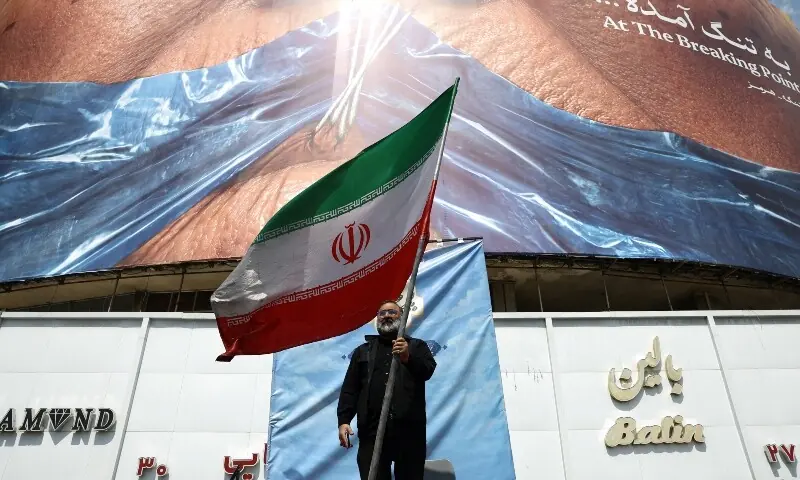
For the first time since the Cold War, the world's most critical chokepoint for oil is being treated like a bargaining chip. The Strait of Hormuz, through which 20% of global seaborne oil passes, is now at the center of a deadly game between Washington and Tehran. Iran has made its move: lift the US blockade and reopen the Strait, while postponing talks on its nuclear program. Washington has not just rejected the offer, it has mocked it, with President Donald Trump comparing US actions to piracy. Now, the question isn't whether diplomacy can work, but whether it will even be given a chance. And for South Asia, the answer could determine whether its economies keep breathing.
The moment that could break, or remake, the global oil order
This isn't just another flare-up in the Middle East. It's a structural shift. The US has imposed a blockade on Iran's oil exports, effectively turning the Strait of Hormuz into a contested zone. Iran's counter is simple: open the Strait and end the blockade, or face the consequences. But the US response, publicly dismissing the offer and boasting of seizing tankers, has turned the Strait into a pressure point, not a transit route. The blockade isn't just about oil; it's about leverage. And for South Asia, which imports 60% of its oil from the Gulf, the stakes couldn't be higher. A prolonged closure or militarization of the Strait would send prices soaring, trigger fuel shortages, and force Islamabad, Delhi, and Dhaka into a desperate scramble for alternatives. The last time the Strait was threatened was during the 1980s Iran-Iraq War, when tankers were routinely attacked. But this time, the stakes are global, and the risk of miscalculation is higher than ever.
Why Washington's choice now will ripple across South Asia's energy arteries
For South Asia, the Strait of Hormuz is not a distant conflict, it's a jugular vein. Pakistan, India, and Bangladesh depend on Gulf oil for 80% of their crude imports. Any disruption would force emergency stockpiling, rationing, and a frantic search for new suppliers. Pakistan, already reeling from inflation and energy shortages, would face a crisis reminiscent of the 2008 oil shock, but this time, with no IMF bailout in sight. India, which imports 65% of its oil from the Gulf, would see its current account deficit balloon overnight. And Bangladesh, with its fragile energy grid, could face blackouts that cripple its garment export industry. The US blockade is not just a diplomatic tool; it's a regional economic threat. And Iran's offer to reopen the Strait is a lifeline, if Washington chooses to take it. But Trump's rejection and his pirate analogy suggest that the US sees the blockade as a tool of coercion, not negotiation. The question for Islamabad, Delhi, and Dhaka is not whether they can survive a closure, but whether they can afford to let Washington and Tehran turn the Strait into a permanent battleground.
The players, the timeline, and the red lines that led to this standoff
The current crisis began on February 28, when the US and Israel launched a coordinated strike on Iran, codenamed Operation Iron Spear. The stated goal was to degrade Iran's nuclear and missile capabilities, but the real target was Iran's ability to project power in the Gulf. Since then, the war has been on hold, with a fragile ceasefire in place since April 8. But the underlying tensions never faded. Iran's nuclear program, frozen since 2015 under the JCPOA, has been a flashpoint for decades. The US withdrawal from the deal in 2018 under Trump's first term set the stage for today's confrontation. Now, with Trump back in office, the US is demanding that Iran not only freeze its nuclear activities but also accept stricter monitoring and limitations on its enrichment capabilities. Iran, in turn, has offered to reopen the Strait of Hormuz and lift the blockade, but only if the US drops its nuclear demands for now. The US has rejected this, insisting that nuclear talks must proceed in parallel. Meanwhile, Israel has escalated its strikes in Lebanon, killing over a dozen people and raising fears of a wider regional war. The Lebanese army chief's meeting with a US general in Beirut suggests that Washington is preparing for a multi-front conflict. And Iran, facing a US blockade and Israeli aggression, has turned to Qatar and South Korea for support, signaling a shift in its diplomatic alliances. The timeline is clear: if the US does not accept Iran's offer by late July, the war could reignite, and the Strait could become a war zone.
What happened in the last 72 hours: the blockade, the rejection, and the ultimatum
According to reporting by Dawn News, the latest escalation began on May 1, when an Iranian-American protester climbed the Frederick Douglass Memorial Bridge in Washington to denounce the US-Israeli war on Iran. His act of defiance was symbolic, but the message was clear: the war is unpopular, even in the US. Meanwhile, in Tehran, Iranian Deputy Foreign Minister Kazem Gharibabadi delivered an ultimatum to diplomats: the ball is now in Washington's court. Iran is prepared to return to war, or to diplomacy, but the choice is Washington's. The US, however, has not reciprocated. President Trump, speaking at a rally in Florida, compared the US blockade of Iran to piracy, boasting that US forces had seized an Iranian oil tanker and taken control of its cargo. "We're like pirates," Trump said. "We land on top of it and we took over the ship. We took over the cargo, took over the oil. It's a very profitable business." The remarks were met with outrage in Tehran, where Iran's Foreign Minister Abbas Araghchi held talks with Qatari and South Korean counterparts to discuss the crisis. Qatar, a key US ally, reaffirmed its support for mediation efforts, while South Korea, a major importer of Gulf oil, engaged in bilateral talks with Iran to explore diplomatic solutions. But the US response has been unambiguous: Iran's offer is insufficient. US envoy Steve Witkoff, according to Axios, has submitted amendments to a previous proposal, demanding that Iran not only freeze its nuclear activities but also allow inspectors to monitor bombed sites and prevent any resumption of enrichment during talks. Iran has rejected these demands, arguing that they violate its sovereignty. The stage is set for a showdown, and the Strait of Hormuz is the battlefield.
Global and regional reactions: who's lining up, and who's hedging
The international response to the crisis has been fragmented. The US, under Trump, has adopted a maximalist stance, rejecting Iran's offer and boasting of its blockade. Israel, meanwhile, has escalated its strikes in Lebanon, killing over a dozen people and raising fears of a wider regional war. The Lebanese army chief's meeting with a US general in Beirut suggests that Washington is preparing for a multi-front conflict. Iran, facing isolation, has turned to Qatar and South Korea for support. Qatar, a key US ally, has reaffirmed its support for mediation efforts, while South Korea, a major importer of Gulf oil, has engaged in bilateral talks with Iran to explore diplomatic solutions. The European Union, traditionally a mediator in such crises, has been conspicuously silent, reflecting its internal divisions and its reliance on US security guarantees. Russia and China, meanwhile, have condemned the US blockade, with Moscow calling it a violation of international law and Beijing warning of "serious consequences" if the Strait is closed. But the most consequential reactions are coming from South Asia. Pakistan, already grappling with economic instability, has called for restraint and a return to diplomacy. India, which imports 65% of its oil from the Gulf, has urged all parties to avoid actions that could disrupt energy supplies. And Bangladesh, with its fragile energy grid, has warned that any disruption to oil flows could trigger a humanitarian crisis. The global reaction is clear: the US is isolated in its rejection of Iran's offer, but its blockade is forcing the world to choose sides. And for South Asia, the choice is not just about oil, it's about survival.
South Asia impact: the Strait's closure would hit Islamabad's economy like a tsunami
GFN Ground Context: Pakistan has long relied on the Strait of Hormuz for 80% of its oil imports, but the route is not the only vulnerability. Islamabad has historically used the Iran-Pakistan gas pipeline as a hedge, but US sanctions have crippled the project. In 2021, when global oil prices surged, Pakistan faced blackouts and fuel shortages that triggered public unrest. A similar crisis today could destabilize the government, especially as the military faces pressure to maintain stability amid economic turmoil. The US, meanwhile, has repeatedly pressured Islamabad to cut ties with Tehran, but Pakistan's energy needs have forced it to maintain a delicate balance. The current standoff could force Islamabad to choose: comply with US demands and risk economic collapse, or defy Washington and face sanctions. Either way, the Strait of Hormuz is the tipping point.
What happens next: three scenarios that could reshape South Asia's future
Analysts expect the next 30 days to be decisive. The most likely outcome is a temporary de-escalation, with both sides agreeing to a monitored reopening of the Strait and a resumption of nuclear talks. But this would require Washington to drop its demand for immediate nuclear concessions, a move that would be politically toxic for Trump. A second scenario is a prolonged blockade, with Iran retaliating by targeting US ships in the Strait. This would force South Asian nations to seek alternative routes, such as the East Africa-Middle East corridor, but at a steep cost. A third scenario is a full-scale war, with Israel expanding its strikes into Iran and the US imposing a naval blockade. This would send oil prices soaring, trigger fuel shortages across South Asia, and force Islamabad, Delhi, and Dhaka into emergency rationing. The key question for Islamabad is whether it can broker a deal with Tehran to ensure safe passage for its ships, or whether it will have to comply with US demands and risk economic collapse. For Delhi, the challenge is finding alternative suppliers without alienating Washington. And for Dhaka, the crisis could trigger a humanitarian disaster, with fuel shortages crippling its export-driven economy. The next move is Washington's. But the consequences will be felt across South Asia.
The domino effect: how a Strait closure would fracture South Asia's fragile energy balance
The Strait of Hormuz is not just a chokepoint, it's a domino. A closure would trigger a chain reaction across South Asia's energy grid. Pakistan, already facing a balance-of-payments crisis, would see its import bill double overnight, forcing it to seek emergency loans from the IMF or China. India, which imports 65% of its oil from the Gulf, would face a current account deficit of over $100 billion, triggering a currency crisis and a stock market crash. Bangladesh, with its fragile energy grid, could face blackouts that cripple its garment export industry, triggering mass unemployment. The ripple effects would extend beyond energy. The US blockade would force South Asian nations to seek alternative suppliers, such as Russia or Venezuela, but at a political cost. Pakistan, already under US pressure to cut ties with Tehran, could face sanctions if it continues to import Iranian oil. India, which has maintained a delicate balance with both the US and Iran, could be forced to choose sides. And Bangladesh, with its limited foreign reserves, could face a humanitarian crisis as fuel shortages trigger food price inflation. The Strait of Hormuz is not just a conflict zone, it's a fault line that could fracture South Asia's fragile stability.
Why the US is playing with fire, and why South Asia should be worried
The US blockade of Iran is not just a diplomatic tool, it's a gamble. By rejecting Iran's offer to reopen the Strait, Washington is betting that economic pressure will force Tehran to capitulate. But Iran has shown no signs of backing down. Instead, it has threatened to close the Strait if the blockade continues, a move that would send global oil prices soaring and trigger a recession. The US, meanwhile, is playing a dangerous game. Trump's boasts about seizing Iranian tankers and his pirate analogy suggest that Washington sees the blockade as a tool of coercion, not negotiation. But Iran is not Iraq in 2003. It has a capable military, regional allies, and a willingness to escalate. The last time the US imposed a blockade on a Gulf state, in 1990, against Iraq, it triggered a war that reshaped the region. The parallels are chilling. And for South Asia, the stakes are even higher. The Strait of Hormuz is not just a chokepoint, it's a lifeline. A closure would force Islamabad, Delhi, and Dhaka into a desperate scramble for alternatives, with no guarantee of success. The US is playing with fire. And South Asia is in the line of fire.
Can diplomacy still win, or is war now inevitable?
The next 72 hours will decide whether diplomacy can still win, or whether war is now inevitable. Iran has made its offer: reopen the Strait and lift the blockade, while postponing nuclear talks. The US has rejected it, insisting on immediate nuclear concessions. The gap is unbridgeable. But the consequences of failure are dire. A war would force South Asia into a desperate scramble for alternatives, with no guarantee of success. A blockade would trigger fuel shortages, blackouts, and economic collapse. And a closure of the Strait would send oil prices soaring, triggering a global recession. The only way out is for Washington to accept Iran's offer, or for Iran to blink. But neither side has shown any willingness to compromise. The last time a similar standoff occurred was during the 1980s Iran-Iraq War, when tankers were routinely attacked and oil prices skyrocketed. But this time, the stakes are higher. The Strait of Hormuz is not just a chokepoint, it's a fault line that could fracture South Asia's fragile stability. And the clock is ticking.
Related Coverage
Global Economy Analysis → — In-depth analysis, background context, and continuous updates on this developing story.
Key Takeaways
- Iran has offered to reopen the Strait of Hormuz and lift the US blockade, but only if Washington drops its nuclear demands for now. The US has rejected the offer, betting that economic pressure will force Tehran to capitulate.
- For South Asia, a closure or militarization of the Strait would trigger fuel shortages, blackouts, and economic collapse, forcing Islamabad, Delhi, and Dhaka into a desperate scramble for alternatives.
- The next 30 days will decide whether diplomacy can still win, or whether war is now inevitable. The US is playing with fire, and South Asia is in the line of fire.


