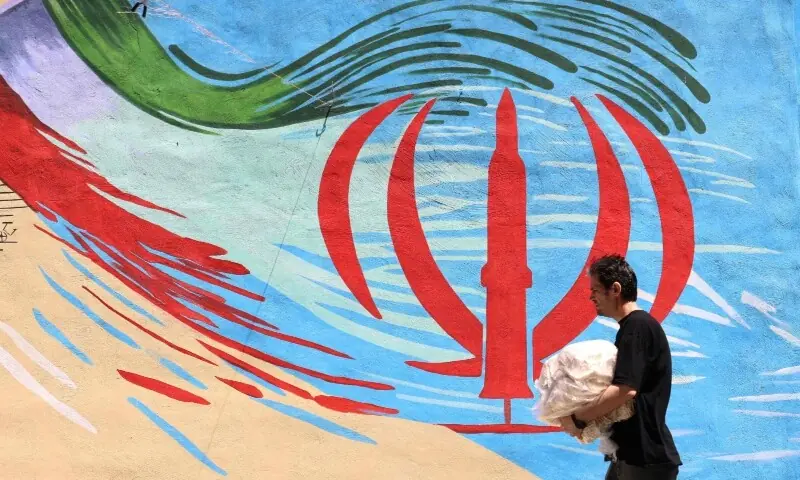
The White House's blunt rejection of Iran's latest peace overture has turned a fragile Gulf ceasefire into a powder keg. By dismissing Tehran's offer, conveyed through Pakistani channels, as "TOTALLY UNACCEPTABLE," President Donald Trump has not only stalled diplomacy but also signaled that the United States is prepared to let the war escalate, possibly dragging Lebanon, Syria, and the Strait of Hormuz back into the flames. The message from Washington is clear: there will be no negotiated exit from a conflict that has already cost thousands of lives and destabilized global energy markets. But Iran's response, framed as a phased approach that prioritizes ending hostilities over contentious issues like sanctions relief and nuclear guarantees, reveals a leadership still seeking an off-ramp, one that the U.S. has now slammed shut.
Why This Could Unravel the Entire Gulf Security Architecture
This isn't just another failed negotiation in a region accustomed to them. The stakes are existential for three reasons. First, the U.S. refusal to engage with Iran's proposal, even as a starting point, risks collapsing the fragile de-escalation that has held since last year's ceasefire. Second, Iran's insistence on a phased process, where ending the war in Lebanon and securing the Strait of Hormuz takes precedence over nuclear talks or sanctions relief, reflects a pragmatic shift within Tehran's leadership. But Trump's rejection suggests Washington is betting on military pressure over diplomacy, a gamble that could push Iran's Revolutionary Guard Corps (IRGC) into a corner, where escalation becomes the only viable option. Third, the regional fallout is already visible: if diplomacy fails, the conflict could reignite in southern Lebanon, where Hezbollah's arsenal remains intact, or in the Strait of Hormuz, where Iran has repeatedly threatened to choke off 20% of the world's oil supply. The Gulf's security architecture, already frayed by years of proxy wars and U.S. retrenchment, now faces its most severe test since the 2019 attacks on Saudi oil facilities.
The question isn't whether the U.S. and Iran will return to the table, it's whether they can avoid a spiral that drags in Russia, China, and regional powers like Saudi Arabia, Turkey, and Pakistan. The clock is ticking. Every day without a deal increases the likelihood of miscalculation, and in a region where a single missile strike can spiral into a full-blown war, the margin for error is razor-thin.
The Backstory: How a Pakistani Mediation Became the Last Hope for Peace
The diplomatic dance that led to Iran's response began not in Washington or Tehran, but in Islamabad. According to Dawn News reporting, Pakistan's military leadership and civilian government played a pivotal role as intermediaries, receiving Iran's formal response to the U.S. proposal and relaying it to Washington. This wasn't the first time Pakistan has inserted itself into a regional crisis, Islamabad has long positioned itself as a bridge between Iran and the West, leveraging its ties with both Tehran and Riyadh. But this mediation effort carries far higher stakes. The U.S. proposal, details of which remain undisclosed, reportedly included terms that Iran found unacceptable, though state media suggested Tehran's counteroffer focused on ending hostilities in Lebanon and securing the Strait of Hormuz before tackling sanctions or nuclear issues.
Iran's approach mirrors its strategy during the 2015 nuclear talks, where it separated technical negotiations from broader political disputes. But this time, the context is far more volatile. The Gulf conflict, which has simmered since 2023, has already drawn in Hezbollah, Houthis, and Iranian-backed militias across Iraq, Syria, and Yemen. The U.S. has maintained a military presence in the region, but its willingness to engage in serious diplomacy has been inconsistent, most notably under Trump's first term, when he withdrew from the Iran nuclear deal in 2018 and imposed crippling sanctions. Now, with Trump back in the White House, the U.S. appears to be doubling down on pressure, even as Iran signals a willingness to de-escalate.
The irony is stark: Pakistan, a country that has spent decades navigating the fallout of U.S.-Iran tensions, is once again at the center of an effort to prevent a wider war. Prime Minister Shehbaz Sharif's public remarks, made during a ceremony marking Pakistan's "victory" over India (a reference to the 2025 ceasefire along the Line of Control), hinted at the delicate balancing act Islamabad is performing. "We have received Iran's response," Sharif told an audience in Islamabad, without elaborating. "I commend the efforts of Deputy Prime Minister Ishaq Dar and congratulate Field Marshal Asim Munir, who has dedicated himself to this cause." The acknowledgment of Munir, Pakistan's army chief, underscores how deeply the military is involved in this mediation, a reflection of Pakistan's long-standing policy of using its security establishment to shape regional outcomes.
What Happened: The Rejection That Could Ignite a Powder Keg
On July 7, 2026, President Donald Trump took to Truth Social to deliver a blunt assessment of Iran's response to the latest U.S. proposal aimed at ending the Gulf conflict. "I have just read the response from Iran's so-called 'Representatives,'" he wrote. "I don't like it TOTALLY UNACCEPTABLE." The post, devoid of specifics, sent shockwaves through diplomatic circles. According to Dawn News reporting, Iran's response, conveyed via Pakistani mediators, proposed a phased approach to ending hostilities, with a focus on Lebanon and the Strait of Hormuz before addressing sanctions relief or nuclear guarantees. Iranian state media confirmed that the response was finalized after internal consultations and approved by Supreme Leader Ayatollah Seyyed Mojtaba Khamenei.
But the rejection wasn't just about the terms. It was about the messenger. Iran's insistence that any agreement must be guaranteed by China and Russia, as well as validated by the United Nations Security Council, reflects a deep-seated distrust of U.S. commitments, a distrust forged over decades of sanctions, covert operations, and perceived betrayals. President Masoud Pezeshkian, Iran's reformist leader, sought to reassure domestic audiences that dialogue did not equate to surrender. "We will never bow our heads before the enemy," he wrote on X. "If talk of dialogue or negotiation arises, it does not mean surrender or retreat. Rather, the goal is to uphold the rights of the Iranian nation and to defend national interests with resolute strength."
The timing of Iran's move was no accident. Hours before the response was conveyed, Major General Ali Abdullahi, commander of Iran's Khatam al-Anbiya Central Headquarters, met with Khamenei to brief him on the military's readiness. Iranian media reported that Abdullahi presented an assessment of the armed forces' combat morale, defensive and offensive capabilities, and strategic plans. The message was clear: Iran is prepared for both war and diplomacy, but it will not accept terms that humiliate it. Meanwhile, Qatari Prime Minister Sheikh Mohammed bin Abdulrahman Al Thani, who had been shuttling between Washington and regional capitals, met with Pakistan's Prime Minister Shehbaz Sharif to discuss the diplomatic impasse. The Qatari role underscores the Gulf's fragmented approach to the crisis, with Doha often serving as an intermediary between Iran and the West.
What happens next depends on whether Washington can temper its maximalist stance or whether Tehran concludes that further concessions will only invite more pressure. The risk is that both sides, locked in a cycle of escalation and mistrust, will find themselves sliding toward a conflict neither truly wants, but one that neither can afford to lose.
Global and Regional Reactions: A Diplomatic Freeze in the Making
The international response to Trump's rejection has been swift, if predictable. European capitals, already alarmed by the prospect of a wider war, have urged restraint. "We call on all parties to return to the negotiating table and avoid any actions that could escalate tensions," a spokesperson for the European Union's foreign policy chief said in a statement. But Europe's leverage is limited. The U.S. has shown little appetite for multilateral diplomacy, and Iran's insistence on guarantees from China and Russia suggests it sees the West as an unreliable partner.
China, meanwhile, has reiterated its support for a "political solution" to the conflict, but its role remains ambiguous. As Iran's largest trading partner and a key backer of its nuclear program, Beijing has a vested interest in preventing a wider war, but it is also wary of being drawn into a U.S.-Iran confrontation. Russia, which has deepened its military and economic ties with Iran in recent years, has taken a more assertive stance. "We urge the U.S. to show flexibility and avoid actions that could destabilize the region further," Russian Foreign Minister Sergei Lavrov said in a press conference. Moscow's involvement is particularly significant given its growing influence in Syria, where Iranian-backed forces operate alongside Russian troops.
In the Gulf, reactions have been mixed. Saudi Arabia, which has been cautiously engaging with Iran since the 2023 rapprochement brokered by China, has called for "calm and restraint." But Riyadh's ability to influence Tehran is constrained by its own tensions with Washington, which has been pushing Gulf states to take a harder line against Iran. The United Arab Emirates, which has sought to maintain economic ties with Iran despite U.S. pressure, has urged both sides to avoid "provocative actions."
Closer to the crisis, Lebanon remains on edge. Hezbollah, which has been in a state of undeclared war with Israel since October 2023, has warned that any Israeli escalation will be met with a "decisive response." The group's arsenal, estimated at over 150,000 rockets, poses a direct threat to Israel, and to any U.S. efforts to de-escalate the conflict. In Iraq, Iranian-backed militias have continued their attacks on U.S. bases, while in Yemen, the Houthis have maintained their blockade of the Red Sea, disrupting global shipping. The Strait of Hormuz, through which 20% of the world's oil passes, remains a tinderbox. Iran has repeatedly threatened to close it in response to sanctions or military strikes, a move that could send global oil prices soaring and trigger a global recession.The most consequential reaction, however, may come from Islamabad. Pakistan's mediation effort, though praised by some quarters, is now at risk of collapsing under the weight of U.S. intransigence. Field Marshal Asim Munir, Pakistan's army chief, has staked his reputation on brokering a deal, but if Washington continues to reject Iran's overtures, Islamabad may find itself forced to choose between its strategic partnership with the U.S. and its historical ties with Iran. That choice could reshape South Asia's security landscape in ways that reverberate for decades.
South Asia Impact: Pakistan's Mediation Hangs by a Thread
For South Asia, the fallout from this diplomatic rupture could not be more immediate, or more dangerous. Pakistan's role as a mediator between Iran and the U.S. is not just a diplomatic gambit; it is a reflection of Islamabad's long-standing policy of balancing its relationships with Washington and Tehran. But this balancing act is now under unprecedented strain. If the U.S. continues to reject Iran's terms, Pakistan may be forced to recalibrate its approach, potentially siding more openly with Tehran, or risk losing its credibility as a neutral broker.
For India, the crisis presents both risks and opportunities. New Delhi has long viewed Iran as a counterbalance to Pakistan's influence in Afghanistan and a potential partner in energy security. But India's strategic calculus is complicated by its deepening ties with the U.S. and its concerns about Iran's growing military footprint in the region. If the conflict escalates, India could find itself drawn into the fray, either as a mediator or as a target of Iranian-backed proxies in Afghanistan or Kashmir. The real question for Islamabad is whether it can salvage its mediation role, or whether it will be forced to align more closely with Tehran, a move that could further strain its already fraught relationship with Washington.
The historical parallel here is instructive. In 2019, Pakistan faced a similar crossroads when then-Prime Minister Imran Khan attempted to mediate between Iran and Saudi Arabia after attacks on Saudi oil facilities. Khan's efforts ultimately failed, but they demonstrated Islamabad's willingness to play a constructive role in regional crises. This time, the stakes are higher. A U.S.-Iran war would not only destabilize the Gulf but also threaten Pakistan's internal security, particularly in Balochistan, where separatist groups have long accused Iran of supporting militants. The CPEC corridor, which runs through Balochistan, could become a flashpoint if tensions rise. Meanwhile, Pakistan's energy security, already fragile due to economic crises and climate-induced shortages, would face severe disruption if Gulf oil supplies are cut off.
What Happens Next: Three Possible Paths to Escalation or De-escalation
The coming weeks will determine whether the Gulf conflict spirals into a wider war or whether cooler heads can prevail. Analysts see three possible trajectories, each with profound implications for South Asia and beyond.
First: A Frozen Conflict. If the U.S. maintains its rejection of Iran's terms and Tehran concludes that further diplomacy is futile, the conflict could enter a prolonged stalemate. Iran may ramp up its proxy attacks in Iraq, Syria, and Yemen, while the U.S. continues its military pressure, including sanctions and covert operations. This scenario would leave Lebanon in a state of perpetual low-intensity war, with Hezbollah and Israel trading sporadic strikes. For Pakistan, this would mean a prolonged diplomatic headache, as Islamabad struggles to maintain its mediation role while managing its own security concerns in Balochistan and along the Afghan border. The risk of miscalculation, whether in the Strait of Hormuz or along the Israel-Lebanon border, would remain high, with the potential to drag in regional powers like Turkey, Saudi Arabia, and even India.
Second: A Phased Deal with Hidden Concessions. Despite Trump's public rejection, there may still be room for backchannel negotiations. Iran's phased approach, focusing first on ending hostilities in Lebanon and securing the Strait of Hormuz, could provide a framework for incremental de-escalation. The key would be for both sides to find a face-saving compromise: perhaps a temporary freeze on sanctions in exchange for a halt to Iranian proxy attacks. China and Russia could play a critical role here, offering guarantees that would reassure Iran while giving the U.S. plausible deniability. For Pakistan, this scenario would allow Islamabad to claim a diplomatic victory, but only if it can convince both Washington and Tehran that its mediation was instrumental in brokering the deal. The challenge, however, is that neither side currently trusts the other enough to make the first move.
Third: A Sudden Escalation. The most dangerous path is one where a single miscalculation triggers a wider war. Iran's military posturing, including the briefing of Khamenei by Major General Abdullahi, suggests that Tehran is preparing for the possibility of conflict. If the U.S. conducts airstrikes on Iranian-backed militias in Iraq or Syria, or if Israel launches a major operation against Hezbollah, Iran could respond with direct attacks on U.S. bases or Saudi oil facilities. The Strait of Hormuz would become a battleground, and global oil prices could spike overnight. For South Asia, the consequences would be severe. Pakistan's economy, already reeling from inflation and debt crises, would face a catastrophic energy shock. India's energy imports from the Gulf would be disrupted, and its security concerns in Kashmir and Afghanistan would intensify. Even Bangladesh, which imports a significant portion of its energy from the Gulf, could face shortages and economic instability.
The question now is whether any of these paths can be avoided. The U.S. has shown little willingness to compromise, and Iran's leadership, though signaling a desire for dialogue, remains deeply mistrustful of Washington's intentions. Pakistan, meanwhile, is caught in the middle, its mediation efforts hanging by a thread. The coming days will reveal whether diplomacy can still prevail, or whether the region is hurtling toward a conflict that will reshape the Middle East and South Asia for generations to come.
Related Coverage
Middle East Conflict Analysis → — In-depth analysis, background context, and continuous updates on this developing story.
Key Takeaways
- Trump's rejection of Iran's peace offer risks collapsing the fragile Gulf ceasefire and reigniting conflicts in Lebanon, the Strait of Hormuz, and beyond, with global oil supplies and regional stability hanging in the balance.
- Pakistan's mediation effort, though praised, is now at risk of collapsing under U.S. intransigence, forcing Islamabad to choose between its ties with Washington and Tehran, a decision that could reshape CPEC and South Asian security.
- Three possible futures loom: a frozen conflict, a phased deal with hidden concessions, or a sudden escalation triggered by miscalculation, each carrying severe consequences for energy supplies, trade routes, and regional security.


