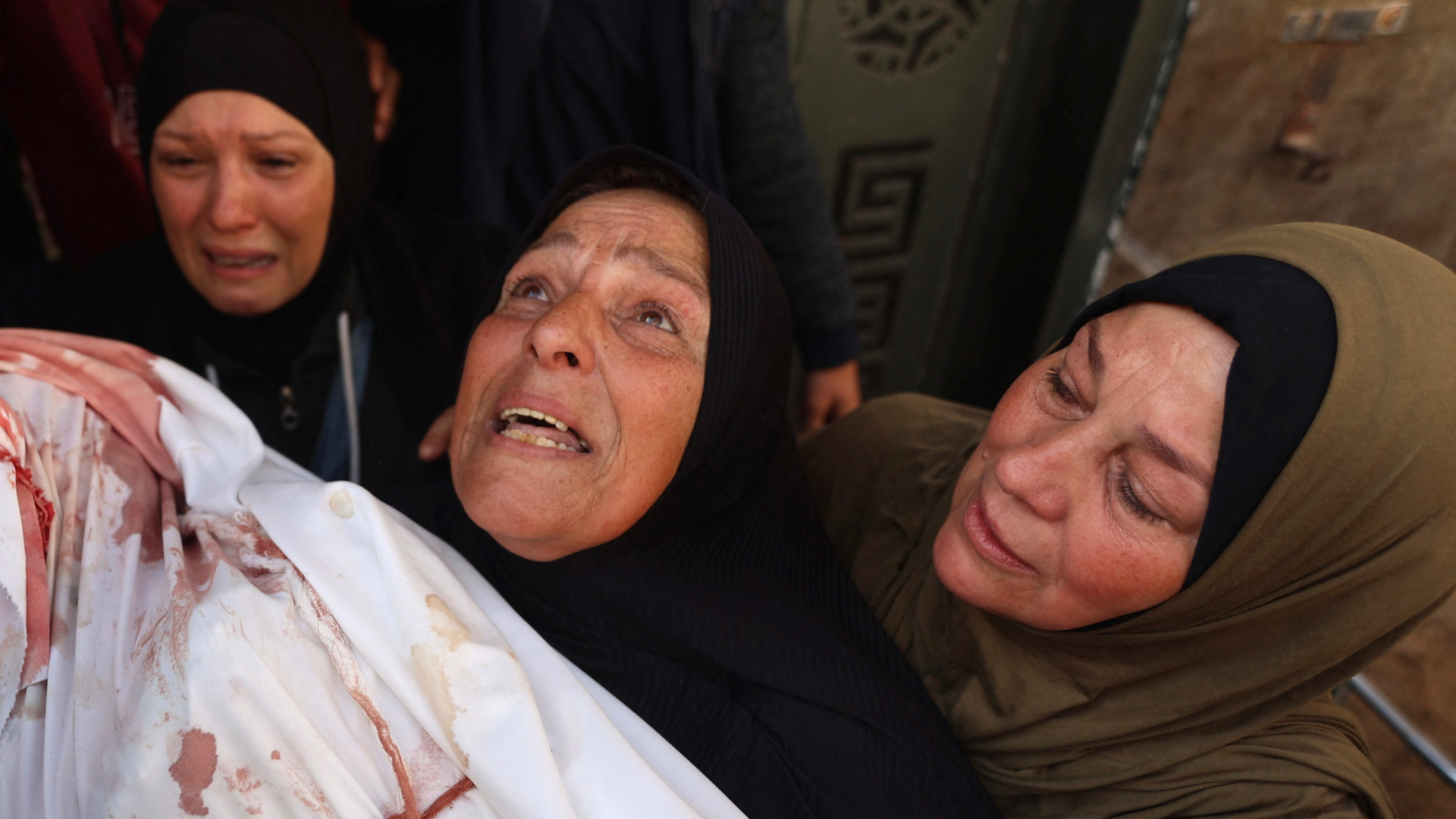
Children in Havana are dying because the lights went out in a hospital. Not from a hurricane or an earthquake, but from a deliberate policy choice made 1,500 miles away in Washington.
Why This Matters
This isn't just a humanitarian crisis in a small Caribbean nation. It's a geopolitical earthquake waiting to happen. The Trump administration's decision to weaponize oil sanctions against Cuba isn't just tightening the screws on a communist regime. It's pushing an already isolated island into the arms of America's rivals, Russia, China, and Iran, at a time when Washington is struggling to hold its hemispheric coalition together. The ripple effects could redraw trade routes, redefine alliances, and even shift the balance of power in the Western Hemisphere. And if history is any guide, when the US squeezes Cuba this hard, it doesn't just hurt Havana, it reshapes the map of Latin America.
Background & Context
The US embargo on Cuba isn't new. It began in 1960, a year after Fidel Castro's revolution, and was codified into law in 1962. For six decades, Washington has used economic pressure as a tool to isolate Havana, hoping to force political change. But the current tightening isn't just another chapter in a Cold War playbook. It's a radical escalation.
The Trump administration's move to cut off Cuba's oil supply in early 2026 marks the first time the US has directly targeted the island's energy lifeline since the 1990s, when the collapse of the Soviet Union left Cuba in a "Special Period" of blackouts and scarcity. Back then, the crisis led to mass protests and a brief opening to foreign investment. This time, the stakes are higher. Cuba isn't just facing an energy shortage, it's facing a financial siege. The January 29 executive order declaring Cuba an "unusual and extraordinary threat" to US national security wasn't just rhetoric. It triggered secondary sanctions that punish any country or company that supplies oil to Havana. That means even allies like Mexico or Canada could face penalties if they trade with Cuba. The May sanctions against Cuba's Interior Ministry, National Police, and Directorate of Intelligence were designed to cripple the regime's ability to govern. But they also cut off lifelines to international financial systems, making it harder for Cuba to buy medicine, food, or spare parts for its crumbling infrastructure.
The last time the US squeezed Cuba this hard, in the late 1990s, it backfired. The island turned to Europe and Canada for trade and investment. Today, with the US alienating even traditional allies over trade wars and security disputes, Cuba has fewer options. That's why this escalation could push Havana into the waiting arms of Moscow, Beijing, and Tehran, a bloc that's already making inroads across Latin America.
What Happened
On Monday, Volker Turk, the UN High Commissioner for Human Rights, issued one of the strongest condemnations of US policy toward Cuba in decades. His statement wasn't just a critique, it was an indictment. "Children are dying because doctors lack access to essential medical supplies and medicines," Turk said. "This is unacceptable." His words carried weight because they weren't coming from a Cuban dissident or a Venezuelan ally, but from the UN's top human rights official.
The timing of Turk's statement was no accident. It came just days after the Trump administration announced sanctions against Cuban President Miguel Díaz-Canel and members of his family, labeling them "responsible for repression." The move was part of a broader strategy to isolate Cuba diplomatically and economically. But the oil blockade, which began in January, is the real game-changer. By cutting off Venezuela's oil supply to Cuba and then threatening tariffs on any country that fills the gap, the US has effectively turned Cuba into a pariah in the global energy market. The result? Hospitals running on generators, public transport grinding to a halt, and families rationing food because trucks can't run without diesel.
The sanctions aren't just about Cuba's human rights record, though that's part of the justification. They're about sending a message to the region: defy Washington, and you'll pay the price. But the message is being received differently in Caracas, Managua, and even Brasília. Instead of isolating Cuba, the US may be isolating itself.
Global & Regional Reaction
The international response to Turk's statement has been swift and divided. The European Union, which has long opposed the US embargo, called for an immediate easing of sanctions. "The suffering of the Cuban people cannot be a tool of political pressure," said EU foreign policy chief Josep Borrell. Canada, which has maintained trade ties with Cuba despite US pressure, echoed the call. Even Mexico's President Claudia Sheinbaum, who has sought to balance relations with Washington and Havana, warned that the sanctions risked destabilizing the region.
But the most consequential reaction came from Russia. Kremlin spokesman Dmitry Peskov didn't just criticize the US sanctions, he framed them as part of a broader strategy to weaken Latin America's sovereignty. "The United States is using economic coercion to impose its will on sovereign nations," Peskov said. "This is not just about Cuba. It's about the future of international law." The message was clear: Moscow sees an opportunity to deepen its influence in the Western Hemisphere at Washington's expense.
China, too, has stepped up its engagement with Cuba. In April, Beijing and Havana signed a new trade agreement that includes oil shipments and infrastructure investments. The deal was announced just days after the US tightened its sanctions, a not-so-subtle signal that Beijing is willing to fill the void left by Washington. Iran, meanwhile, has offered technical assistance to Cuba's energy sector, further embedding itself in the island's economy.
The divide isn't just between the US and its allies, or between Washington and its rivals. It's also within Latin America. While right-wing governments in Colombia and Ecuador have largely aligned with US policy, leftist leaders in Mexico, Argentina, and Bolivia have condemned the sanctions. The split reflects a broader shift in the region, where anti-American sentiment is rising and the US is losing its once-unquestioned dominance. The question now is whether Washington's Cuba policy will accelerate that shift, or whether it will force the region to choose sides in a new Cold War.
South Asia Impact
At first glance, Cuba and South Asia seem worlds apart. But the US sanctions on Cuba could have ripple effects that reach as far as Delhi and Islamabad. Here's why: the crisis in Havana is part of a larger pattern of US economic coercion that's reshaping global trade. And South Asia, with its growing energy needs and strategic location, is caught in the middle.
First, the sanctions are accelerating a shift in Cuba's trade patterns that could disrupt global supply chains. Cuba has long relied on Venezuela for oil, but with Caracas under US sanctions itself, Havana has turned to Russia and Iran for energy. That's a problem for India, which has been a major buyer of Venezuelan oil in recent years. If Venezuela's oil is diverted to Cuba, India may struggle to secure its energy needs, driving up prices and complicating Delhi's energy diplomacy. The last time India faced a similar squeeze was during the 2008 oil crisis, when global prices spiked and Delhi had to scramble for alternative suppliers. This time, the crisis is man-made, and it's happening at a time when India is already grappling with a slowdown in its economy.
Second, the US sanctions could push Cuba into deeper engagement with China, which is already expanding its footprint in South Asia through projects like the China-Pakistan Economic Corridor (CPEC). If Beijing becomes Cuba's primary oil supplier, it could use that leverage to strengthen its ties with Havana, and, by extension, with Latin America. That would give China a foothold in a region where the US has long dominated, and it could complicate India's efforts to balance its relations with Washington and Beijing. The last time China made inroads in Latin America was during the 2000s, when it invested heavily in resource-rich countries like Venezuela and Ecuador. Today, with the US distracted by its own crises, Beijing sees an opening to expand its influence, and Cuba could be the gateway.
Third, the humanitarian crisis in Cuba could fuel migration flows that reach South Asia. If the sanctions continue to cripple Cuba's economy, thousands of Cubans may seek to flee to the US, Mexico, or even farther afield. The last major wave of Cuban migration came in the 1980s, when the island's economy collapsed during the "Special Period." Today, with the US tightening its borders and Latin American countries struggling with their own economic crises, the exodus could take a different route, one that leads to South Asia. India and Pakistan, already grappling with their own migration challenges, could find themselves on the front lines of a new humanitarian crisis. The last time the region faced a similar influx was during the 1971 Bangladesh war, when millions fled to India. The difference this time? The crisis isn't a war, it's a policy choice made in Washington.
But the South Asia impact isn't just about economics or migration. It's also about geopolitics. The US sanctions on Cuba are part of a broader strategy to contain China and Russia in the Western Hemisphere. If those rivals respond by deepening their ties with Cuba, they could gain a foothold in a region that's strategically important to South Asia. The last time the US and the Soviet Union clashed over Latin America was during the Cuban Missile Crisis of 1962. Today, the stakes are different, but the dynamics are eerily familiar. And if South Asia gets pulled into the fray, the consequences could be far-reaching.
What Happens Next
Analysts expect the humanitarian crisis in Cuba to worsen before it gets better. The oil blockade has already crippled the island's energy grid, and the sanctions against its leadership have frozen its access to global financial systems. The result is a perfect storm: hospitals without power, schools without supplies, and families without food. The question isn't whether the crisis will deepen, it's how far it will go. Will the death toll rise to levels that force the US to reconsider its policy? Or will Washington double down, betting that the suffering will eventually force Cuba's government to collapse?
The most likely outcome is a prolonged stalemate. The US isn't about to lift its sanctions, and Cuba isn't about to surrender. That means the humanitarian crisis will continue, and the geopolitical fallout will grow. The biggest question is whether Latin America will tolerate the US squeezing Cuba this hard. If leftist governments in Mexico, Argentina, and Bolivia continue to condemn the sanctions, Washington could find itself isolated in its own hemisphere. The last time the US faced a similar backlash was during the 1970s, when its support for dictatorships in Latin America fueled anti-American sentiment across the region. Today, with the US struggling to maintain its influence, the risk of a hemispheric realignment is real.
But the crisis in Cuba isn't just about Latin America. It's about the future of US global leadership. The Trump administration's decision to weaponize sanctions against Cuba sends a message to the world: the US is willing to use economic coercion to achieve its goals. That message may play well in Miami, but it's ringing alarm bells in capitals from Beijing to Brasília. The question now is whether the US will double down on this strategy, or whether it will recognize that the costs of isolation are starting to outweigh the benefits. The last time the US tried to isolate Cuba this aggressively, in the 1990s, it backfired. Today, with the world more interconnected than ever, the stakes are even higher. Will Washington learn from history? Or will it repeat the same mistakes?
A key question is whether Russia and China will seize the opportunity to deepen their ties with Cuba. Both countries have already signaled their willingness to fill the void left by the US. If they do, they could gain a foothold in a region where the US has long dominated. That would reshape the global balance of power, and it could force South Asia to recalibrate its own foreign policy. The last time China made inroads in Latin America was during the 2000s, when it invested heavily in resource-rich countries like Venezuela and Ecuador. Today, with the US distracted by its own crises, Beijing sees an opening to expand its influence, and Cuba could be the gateway. The question is whether India and Pakistan will stand on the sidelines or find themselves drawn into the fray.
Another critical factor is the role of the UN. Volker Turk's statement wasn't just a moral condemnation, it was a legal one. By framing the sanctions as a violation of international human rights law, Turk has given the crisis a new dimension. The UN Human Rights Council could take up the issue, and if it does, the US could find itself on the defensive. The last time the UN condemned US sanctions was during the 1990s, when it ruled that the embargo violated international law. Today, with the US already facing criticism over its human rights record at home and abroad, the risk of further isolation is real. The question is whether Washington will ignore the UN, or whether it will recognize that the costs of defiance are starting to outweigh the benefits.
Related Coverage
Global Economy Analysis → — In-depth analysis, background context, and continuous updates on this developing story.
Key Takeaways
- US sanctions are pushing Cuba into the arms of US rivals. The oil blockade and financial restrictions are isolating Havana and driving it toward Moscow, Beijing, and Tehran, a bloc that's already making inroads across Latin America. That could reshape the region's geopolitics and challenge US dominance in its own hemisphere.
- The humanitarian crisis in Cuba is a direct result of US policy. Hospitals are running on generators, public transport is grinding to a halt, and children are dying because doctors lack access to essential medicines. The UN has called the situation a violation of international human rights law, but the US shows no signs of easing its pressure.
- South Asia isn't immune to the fallout. The crisis in Cuba could disrupt global energy markets, fuel migration flows, and draw the region into a new Cold War dynamic. India and Pakistan may find themselves caught in the middle as the US, China, and Russia jockey for influence in Latin America.