For five days in late May, the jagged peaks of Gilgit-Baltistan will play host to a visitor whose arrival has already set in motion a nationwide security operation. Prince Rahim Aga Khan V, the spiritual and temporal leader of the Ismaili community, will traverse the high-altitude valleys of Hunza, Gilgit, and Ghizer as a state guest of Pakistan, drawing tens of thousands into public ceremonies and private audiences. But this is not merely a religious itinerary. Dawn News reported on May 16 that federal and regional authorities are mobilising the National Highway Authority, Frontier Works Organisation, police, and local Ismaili councils to ensure that every bridge, road, and power line is prepared for the visit. The scale of the preparations, bulletproof vehicles, Babusar Road cleared for diversion, Karakoram Highway put on high alert, signals that Islamabad sees more than piety in Rahim Aga Khan's footsteps. It sees geopolitics.
Why this matters beyond the mountain valleys
Gilgit-Baltistan sits at the nexus of three tectonic forces: Pakistan's territorial claim over Kashmir, China's trillion-dollar corridor to the Arabian Sea, and the Ismaili diaspora's quiet but potent soft power. Prince Rahim's visit arrives as Islamabad seeks to reassure both Beijing and its own restless periphery that the region remains stable and integrated. The federal government's decision to accord him state-guest status is not ceremonial flattery; it is a calculated signal to domestic and international audiences that Pakistan's northern territories are secure, governable, and open for business. For China, which has invested over $62 billion in the China-Pakistan Economic Corridor (CPEC) with a critical northern route passing through Gilgit-Baltistan, the visit is a litmus test of Pakistan's ability to manage a high-profile religious event in a region that has seen separatist rumblings and sectarian tensions. For Islamabad, it is a chance to showcase governance in a province where local leaders have long complained of marginalisation. And for the Ismaili community, spread from Canada to Tajikistan, this is a rare moment when their spiritual leader's presence could translate into tangible political and economic influence in the very territory Pakistan administers but has struggled to integrate.
Yet the stakes are not only about optics. The preparations themselves reveal the fragility of Pakistan's control. The fact that authorities are opening Babusar Road as an alternative route to the Karakoram Highway, a lifeline for CPEC, suggests planners do not take smooth passage for granted. The request for a bulletproof vehicle points to genuine security concerns. And the involvement of the Frontier Works Organisation, a military-controlled engineering corps, underscores how deeply security and infrastructure are intertwined in Gilgit-Baltistan. In short, Prince Rahim Aga Khan's visit is not just a religious event. It is a stress test for Pakistan's northern sovereignty.
A land caught between empires, faith, and steel
Gilgit-Baltistan has never been a quiet place. In 1947, as British India partitioned, local forces backed by Pakistan seized the region from the nominal ruler of Jammu and Kashmir, setting off a conflict that continues today. The 1972 Karachi Agreement formalised Islamabad's administrative control, but left the territory without a constitutional status, neither a province nor a state. For decades, the region was governed under the Frontier Crimes Regulation, a colonial-era law that treated locals as subjects rather than citizens. Only in 2020 did Pakistan's Supreme Court order the gradual integration of Gilgit-Baltistan into the federal framework, but implementation has been halting. The territory remains a patchwork of tribal customs, sectarian identities, and competing national narratives.
Enter the Aga Khan. The Ismaili Imamat, led by Prince Rahim's father, the Aga Khan IV, has quietly built schools, hospitals, and microfinance networks across Gilgit-Baltistan. In Hunza, the Aga Khan Rural Support Programme has transformed agriculture and tourism, creating a model of development that contrasts with the neglect many locals feel from Islamabad. The Ismaili community, though a minority, wields disproportionate influence in trade, education, and civil society. Their loyalty to Pakistan is not absolute, many Ismailis in the diaspora support autonomy or even independence for Gilgit-Baltistan, but their institutions are among the few that function smoothly in a region where government services often fail.
This history matters because Prince Rahim's visit comes at a moment when Pakistan's relationship with its peripheries is under scrutiny. In 2022, protests erupted in Gilgit-Baltistan over delays in local elections and perceived economic marginalisation. In 2024, a suicide attack on a police post in Diamer district killed several officers, raising fears of creeping militancy. Against this backdrop, the Aga Khan's presence offers Islamabad a chance to recast the narrative: that Gilgit-Baltistan is not a restive frontier but a thriving crossroads of faith and modernity. But the risk is equally clear: if the visit is marred by violence or mismanagement, it could embolden separatists and deepen mistrust between Islamabad and the people it claims to govern.
What happened: the mechanics of a state-level reception
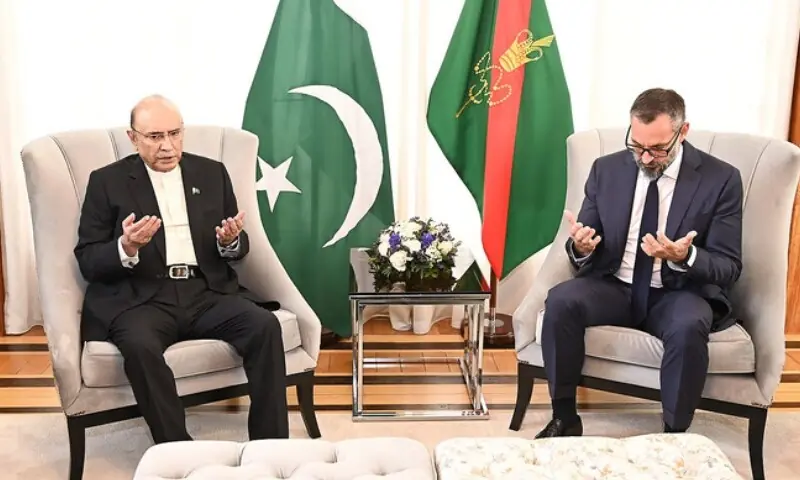
According to reporting by Dawn News on May 16, 2026, Pakistan's federal and regional authorities launched a coordinated campaign to prepare Gilgit-Baltistan for Prince Rahim Aga Khan V's five-day visit from May 21 to 25. The Ministry of Kashmir Affairs and Gilgit-Baltistan, led by Minister Amir Muqam, chaired a high-level meeting to review security, logistics, and public arrangements. The scale of the operation reflects the visitor's dual status: as a spiritual leader and as a symbol of transnational influence.
Key preparations included:
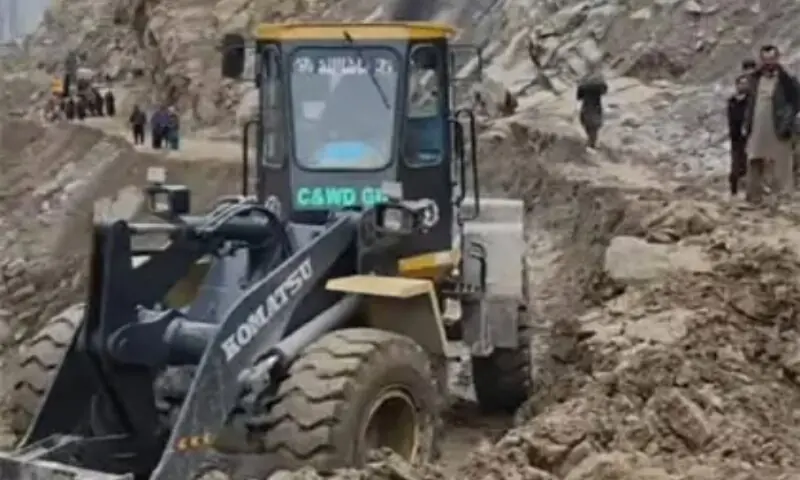
- Security and mobility: The federal government was asked to provide a bulletproof vehicle for the prince, a rare concession that underscores the sensitivity of the visit. The National Highway Authority was placed on alert at sensitive points along the Karakoram Highway, from Nasirabad Bridge to Sost Dry Port. Authorities also recommended opening Babusar Road as an alternative route, effectively creating a contingency corridor in case of disruption on the main highway.
- Infrastructure and logistics: The Frontier Works Organisation, a paramilitary engineering corps, was tasked with road improvements and traffic management on the Karakoram Highway. Police forces were assigned special responsibilities for crowd control and security at venues in Passu Cones (Hunza), Gilgit City, Gahkuch Bala, and Taus Yasin. Extra transport was arranged for visitors, and travel timings were relaxed to facilitate movement.
- Public order and services: Authorities were directed to ensure an uninterrupted power supply in Upper Hunza and adjoining areas. The administration also planned multiple sessions at certain venues to manage expected crowds, indicating an awareness of the logistical challenge posed by large gatherings.
- Institutional coordination: The meeting included the GB chief secretary, administrative secretaries, law enforcement representatives, and office-bearers of the Ismaili Regional Council. The council's representatives expressed satisfaction with the arrangements, while the federal minister assured them of complete cooperation.
Dawn News noted that the scale of mobilisation, spanning military engineering, federal ministries, provincial administration, and local Ismaili institutions, reflects Islamabad's determination to present the visit as a success. But the very need for such a massive operation also reveals the fragility of the state's presence in Gilgit-Baltistan. Every road cleared, every power line secured, every police officer deployed is a reminder that normalcy is not guaranteed.
Global and regional reaction: who is watching, and why
The international response to Prince Rahim Aga Khan's visit has been muted but strategic. Western governments, particularly in the United States and Canada, have long viewed the Aga Khan Development Network (AKDN) as a positive force in South Asia, funding education, healthcare, and poverty alleviation. The US State Department has praised AKDN's work in Gilgit-Baltistan, framing it as a model of grassroots development that complements CPEC's infrastructure projects. But diplomats also privately acknowledge that the Aga Khan's influence could complicate Islamabad's narrative in the disputed territory of Kashmir, where Pakistan accuses India of human rights abuses. A successful visit by the Ismaili leader, who has called for interfaith harmony and pluralism, could embolden separatist voices in Gilgit-Baltistan who argue that their region deserves the same autonomy as Indian-administered Kashmir.
China, by contrast, has a more transactional interest. Beijing views Gilgit-Baltistan as the northern gateway to CPEC, its flagship infrastructure project linking western China to the Arabian Sea. The Karakoram Highway, which will be on full display during the prince's visit, is not just a road; it is a strategic asset. Chinese officials have repeatedly emphasised the need for stability in Gilgit-Baltistan to protect their investments. In 2023, Chinese ambassador to Pakistan Jiang Zaidong told a seminar in Islamabad that the security of CPEC's northern route was "a shared responsibility." Prince Rahim's visit, therefore, is being watched in Beijing as a test of Pakistan's ability to maintain order in a region where Chinese workers and engineers operate.
Within South Asia, India has reacted cautiously. The Ministry of External Affairs in New Delhi has not issued a formal statement, but Indian analysts have framed the visit as an attempt by Islamabad to "instrumentalise" the Aga Khan's spiritual authority to legitimise its control over Gilgit-Baltistan. Some Indian commentators have pointed to the 1947 accession of Gilgit-Baltistan to Pakistan as a violation of the Maharaja of Kashmir's sovereignty, a narrative that resonates with Pakistan's own claims over Indian-administered Kashmir. The visit, from this perspective, is not just a religious event but a geopolitical statement.
In Afghanistan, the Taliban government has shown little public reaction, but the presence of a Shia Ismaili leader in a predominantly Sunni region could stir sectarian tensions. Historically, Gilgit-Baltistan has seen outbreaks of sectarian violence, particularly between Sunni and Shia communities. The Aga Khan's visit, therefore, carries a risk of provoking backlash from hardline Sunni groups who view the Ismailis as heretics. Afghan Taliban-linked media have in the past amplified anti-Shia rhetoric, and there are concerns that such narratives could spill across the border.
South Asia impact: the hidden calculus behind the red carpets
For Pakistan, the stakes are existential. Gilgit-Baltistan is not just a territorial asset; it is a symbolic battleground in the country's struggle to define itself as a modern nation-state. The territory's constitutional limbo, neither fully integrated nor granted autonomy, mirrors Pakistan's broader identity crisis. The Aga Khan's visit offers Islamabad a chance to project strength, but it also risks highlighting the state's weaknesses. If the event passes without incident, it could strengthen Pakistan's narrative of inclusive governance. If violence erupts or crowds turn hostile, it could embolden separatists and deepen mistrust between Islamabad and the people of Gilgit-Baltistan.
For China, the visit is a geopolitical litmus test. CPEC's northern route, which passes through Gilgit-Baltistan, is critical to Beijing's ambitions in South Asia. The Karakoram Highway, which will be on full display during the prince's visit, is not just a road; it is a strategic corridor. Chinese officials have repeatedly emphasised the need for stability in Gilgit-Baltistan to protect their investments. The fact that Islamabad has requested a bulletproof vehicle and alternative routes suggests planners do not take smooth passage for granted. A successful visit could reassure Beijing that Pakistan is capable of managing high-profile events in a region where Chinese workers operate. A failure could prompt China to reconsider its exposure in Gilgit-Baltistan, potentially slowing CPEC's expansion.
For the Ismaili community, the visit is a moment of reckoning. The Aga Khan Development Network has invested heavily in Gilgit-Baltistan, building schools, hospitals, and microfinance networks. But the community's loyalty to Pakistan is not absolute. Many Ismailis in the diaspora support autonomy or even independence for Gilgit-Baltistan. The prince's visit could strengthen the community's integration into Pakistan's national narrative, or it could highlight the limits of their influence. The GFN editorial desk notes that the Ismaili leadership has historically walked a tightrope between asserting local autonomy and maintaining good relations with Islamabad. This visit could tip the balance.
For India, the event is a reminder of Pakistan's narrative control over Kashmir. New Delhi has long accused Islamabad of using Gilgit-Baltistan as a bargaining chip in the Kashmir dispute. The fact that Pakistan is according Prince Rahim state-guest status, while denying similar recognition to Kashmiri leaders, reinforces India's argument that Islamabad's claims to Kashmir are selective. The visit, therefore, is not just a religious event; it is a political statement that could complicate India's diplomatic efforts to isolate Pakistan on the Kashmir issue.
For Afghanistan, the visit carries sectarian risks. Gilgit-Baltistan has seen outbreaks of sectarian violence in the past, and the Taliban's rise in Kabul has emboldened hardline Sunni groups. The Aga Khan's presence could provoke backlash, particularly if local Sunni leaders frame the visit as an attempt by Shia Ismailis to assert dominance. The GFN editorial desk recalls the 2012 sectarian riots in Gilgit-Baltistan, which were triggered by a blasphemy accusation against an Ismaili. The risk of similar unrest during Prince Rahim's visit cannot be discounted.
What happens next: three scenarios for Gilgit-Baltistan after May 25
Analysts expect three possible trajectories for Gilgit-Baltistan in the wake of Prince Rahim Aga Khan's visit. The most likely outcome is a temporary calm, followed by a return to the status quo. The federal government will declare the visit a success, the media will highlight the Aga Khan Development Network's contributions, and life in Gilgit-Baltistan will continue as before. But this outcome is not without risks. If the preparations are seen as heavy-handed or the event is marred by violence, it could deepen resentment among locals who already feel marginalised. The fact that authorities are opening Babusar Road as an alternative route suggests planners do not take smooth passage for granted. A single incident, whether a traffic jam, a power outage, or a security breach, could escalate into a crisis.
A second scenario is a surge in separatist sentiment. If Prince Rahim uses his public addresses to call for greater autonomy or even independence for Gilgit-Baltistan, it could embolden local leaders who have long argued that the region deserves the same rights as Indian-administered Kashmir. The Aga Khan Development Network has historically avoided overt political statements, but the prince's visit is a rare moment when spiritual leadership could intersect with political mobilisation. If this happens, Islamabad could face a dilemma: clamp down on dissent or risk losing control of the narrative. The last time a high-profile religious leader's presence in Gilgit-Baltistan became a flashpoint was during the 2010 AKDN 50th-anniversary celebrations, when protests erupted over delayed elections and economic neglect. A repeat of 2010 could force Islamabad to confront the region's constitutional limbo head-on.
A third scenario is a geopolitical realignment. If the visit is perceived as a success by both Beijing and Washington, it could pave the way for greater international investment in Gilgit-Baltistan. The Aga Khan Development Network's model of development, focused on education, healthcare, and poverty alleviation, could attract funding from multilateral agencies and donor countries. But this outcome would require Islamabad to address local grievances, particularly over delayed elections and economic marginalisation. If the federal government continues to treat Gilgit-Baltistan as a security concern rather than a partner, the region's potential could remain untapped. The GFN editorial desk notes that the key question for Islamabad is whether Prince Rahim's visit will be a one-off event or the start of a new chapter in the region's governance.
For China, the most likely outcome is a continuation of the status quo. Beijing will watch the visit closely, but it is unlikely to alter its investment plans in Gilgit-Baltistan based on a single event. However, if violence erupts or the Karakoram Highway is disrupted, China could reassess its exposure in the region. The fact that Islamabad has requested a bulletproof vehicle and alternative routes suggests planners are aware of the risks. A successful visit could reassure Beijing that Pakistan is capable of managing high-profile events in a region where Chinese workers operate. A failure could prompt China to slow CPEC's expansion or demand greater security guarantees.
For the Ismaili community, the visit could be a turning point. The Aga Khan Development Network has invested heavily in Gilgit-Baltistan, but the community's influence has been limited by Islamabad's reluctance to grant the region full constitutional rights. Prince Rahim's visit could change that. If the prince uses his platform to call for greater autonomy or even independence, it could galvanise local support. But if he avoids political statements, the visit could reinforce the community's integration into Pakistan's national narrative. The GFN editorial desk recalls the 2019 visit of Aga Khan IV to Chitral, where he called for interfaith harmony and pluralism. That visit was widely seen as a success, but it did not translate into political change. Will Prince Rahim's visit be different?
Related Coverage
Pakistan Political Crisis → — In-depth analysis, background context, and continuous updates on this developing story.
Key Takeaways
- Prince Rahim Aga Khan's visit is a geopolitical stress test for Pakistan's northern sovereignty. The scale of federal mobilisation, from military engineering to power grids, reveals Islamabad's insecurity about its grip on Gilgit-Baltistan, a region where constitutional limbo and sectarian tensions simmer beneath the surface.
- For China, the event is a litmus test for CPEC's northern flank. The Karakoram Highway, which will be on full display, is not just a road; it is a strategic corridor. A successful visit could reassure Beijing, while a failure could prompt China to reconsider its exposure in Gilgit-Baltistan.
- The Ismaili community's influence could either stabilise or destabilise Gilgit-Baltistan. The Aga Khan Development Network has built schools and hospitals, but the community's loyalty to Pakistan is not absolute. Prince Rahim's visit could strengthen integration, or highlight the limits of Ismaili influence in a region where many locals feel marginalised.