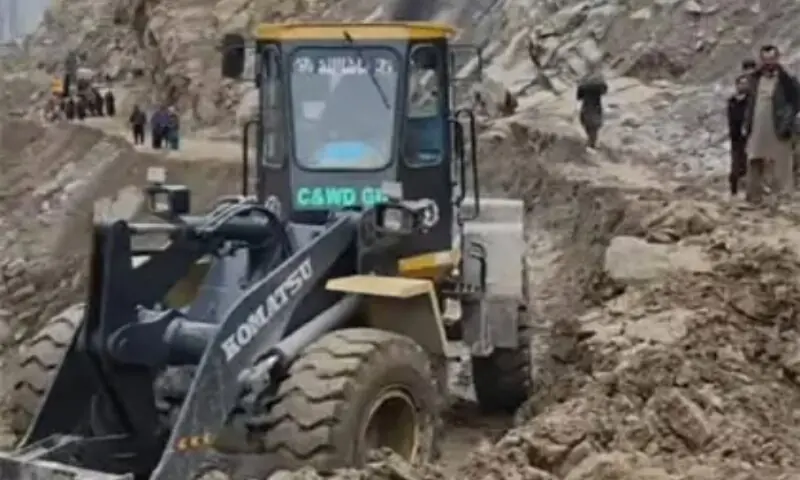
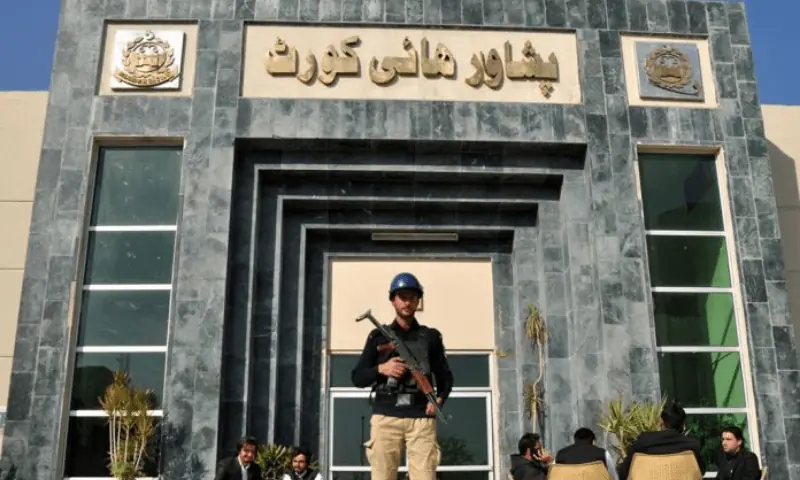
On a sweltering July Sunday in 2026, Pakistan-administered Kashmir erupted. What began as a protest against economic neglect ended in bloodshed: at least eleven civilians were killed in clashes with police as authorities scrambled to suppress a banned group's planned demonstration. The violence, concentrated in Muzaffarabad and Mirpur, was the deadliest single-day unrest in the region since the 2019 Intifada-like uprising over water rights. But this time, the trigger wasn't water or identity, it was the slow collapse of a social contract between Islamabad and its most loyal periphery.
Why This Unfolds Beyond the Valley
These protests aren't just about Kashmir. They are a stress-test for Pakistan's already fragile federal compact. Azad Kashmir, officially the Azad Jammu and Kashmir (AJK) region, has long been treated as a political afterthought by Islamabad, granted autonomy on paper but denied real fiscal and political agency. With inflation at 32% in 2026 and unemployment hovering near 15%, the region's youth have run out of patience. The banned group at the center of the unrest, the Tehreek-e-Hurriyat-e-AJK (THA), has spent years chipping away at the narrative that AJK's loyalty to Pakistan is unconditional. Now, with eleven lives lost in a single day, that narrative risks shattering entirely.
For Islamabad, the stakes are existential. AJK is not just a symbolic front in the Kashmir dispute, it is a geostrategic buffer against India, a source of hydroelectric power, and a corridor for trade routes linking China's CPEC to Central Asia. If the unrest spreads, it could force Pakistan to divert military and economic resources from its eastern front, emboldening New Delhi at a time when cross-border tensions remain volatile. The protests also come as Pakistan's foreign reserves hover near $3 billion, leaving little room for a costly internal crackdown. The question now is whether Islamabad will double down on repression or finally address the root causes of discontent.
The Roots of Discontent: From Autonomy to Alienation
To understand why eleven people died in Muzaffarabad on July 6, 2026, you have to go back to 1974. That year, Pakistan's military ruler, General Zia-ul-Haq, imposed the Interim Constitution Act, a legal framework that granted AJK a semblance of self-rule but kept real power in Islamabad's hands. The arrangement was designed to neutralize Kashmiri nationalism while maintaining AJK's utility as a Pakistani asset. For decades, it worked, partly because AJK's economy was propped up by remittances from the diaspora in the UK and Gulf states, and partly because the region's political elite benefited from patronage networks tied to Islamabad.
But by 2026, those networks were fraying. The global recession of 2024-25 hit AJK's labor exports hard, while Pakistan's own economic crisis, fueled by IMF austerity and debt defaults, forced Islamabad to slash development funds to AJK by 40% in 2025. The THA, which had long operated in the shadows, seized on the moment. Its leaders framed the protests not as a secessionist movement, but as a demand for "economic justice and political dignity." They organized through encrypted apps and local mosques, avoiding the heavy-handed tactics that had doomed previous separatist groups. When the government banned the THA in May 2026, it only amplified its appeal. By July, the group had mobilized thousands, many of them young, educated, and unemployed, who saw no future in a system that had failed them.
This is not the first time AJK has simmered. In 2019, mass protests over water shortages led to dozens of deaths and forced Islamabad to backtrack on a controversial dam project. But the 2019 uprising was localized and contained. The 2026 unrest is different: it is decentralized, leaderless in many ways, and fueled by a generational shift in grievances. The youth of AJK today are digital natives, connected to the world but trapped in a region that feels like a Pakistani colony. Their demands are not for independence, but for inclusion, for a seat at the table where decisions about their lives are made. Islamabad's response, deploying paramilitary forces and shutting down the internet, has only deepened the divide.
What Happened on July 6, 2026
According to reporting by Al Jazeera, the violence began in the early hours of July 6, when police attempted to arrest THA leaders in Muzaffarabad ahead of a planned sit-in. What started as a targeted operation spiraled into clashes after crowds gathered in solidarity. Eyewitness accounts described police firing live rounds into the air before resorting to direct shooting as protesters threw stones and set fire to government buildings. The dead included a 17-year-old student and a local journalist covering the unrest. By evening, the internet was shut off across AJK, and a curfew was imposed in three districts.
The THA denied orchestrating the violence, but its leaders framed the crackdown as "state terrorism." Al Jazeera's Osama Bin Javaid reported that the group had initially called for a peaceful demonstration, but the government's preemptive raids escalated tensions. The crackdown extended beyond Muzaffarabad: in Mirpur, a stronghold of AJK's business elite, protesters burned tires and blocked the main road to the Mangla Dam, a critical hydroelectric facility. The dam, which supplies 20% of AJK's electricity, was temporarily shut down, leaving thousands without power for 12 hours. The economic toll is still being calculated, but analysts estimate the unrest has already cost AJK $50 million in lost trade and tourism.
What makes this episode particularly dangerous is the lack of a clear political exit ramp. Unlike in 2019, when Islamabad negotiated with local elders to defuse the crisis, there are no credible intermediaries left. The AJK government, led by Prime Minister Chaudhry Anwar-ul-Haq, is widely seen as a puppet of Islamabad. His recent decision to deploy the Azad Kashmir Regiment, a local force, against protesters has further eroded his legitimacy. The military, already stretched thin by internal security duties and tensions with India, is now forced to choose between reinforcing AJK or maintaining its posture on the eastern border. Either way, Pakistan's strategic calculus is being rewritten in real time.
Global and Regional Echoes: Who's Watching, and Why
Washington was the first to react. On July 7, a State Department spokesperson called for "restraint and dialogue," framing the unrest as a domestic issue but warning that instability in AJK could "destabilize a critical corridor for regional connectivity." The wording was deliberate: AJK sits at the nexus of China's China-Pakistan Economic Corridor (CPEC) and potential trade routes to Central Asia. Any disruption risks undermining Beijing's investment in Gwadar Port and the Karakoram Highway.
Beijing, meanwhile, has stayed conspicuously silent. Chinese officials have not issued a statement, but analysts in Islamabad report that Beijing has privately expressed concern about the safety of its CPEC workers in AJK. In 2025, Chinese engineers working on the Neelum-Jhelum Hydropower Project were targeted in a series of attacks, which Beijing blamed on "terrorist elements." The 2026 unrest has revived those fears. For China, AJK is not just an economic asset, it is a litmus test for Pakistan's ability to protect its investments. If Islamabad cannot secure AJK, Beijing may reconsider its commitment to CPEC, particularly in the energy and infrastructure sectors.
India, which claims AJK as part of its territory, has seized on the crisis to renew its diplomatic offensive. On July 8, India's Foreign Minister S. Jaishankar told Parliament that the unrest was "evidence of Pakistan's failure to govern its own territory." India has long used AJK as a bargaining chip in talks with Islamabad, and the current instability gives New Delhi fresh ammunition. The timing is particularly sensitive: India is in the midst of a high-stakes election, and the ruling party has framed its Kashmir policy as a success story of integration. The AJK protests threaten to expose the hollowness of that narrative.
Closer to home, Afghanistan's Taliban government has watched the unrest with cautious interest. The Taliban, which shares a porous 2,600-kilometer border with Pakistan, has a history of exploiting instability in AJK to smuggle weapons and militants into Indian-administered Kashmir. While there is no evidence of direct involvement in the 2026 protests, the unrest provides the Taliban with a new opportunity to undermine Pakistan's security posture. Already, reports suggest that Tehreek-e-Taliban Pakistan (TTP) fighters have infiltrated AJK under the guise of protesters, raising fears of a hybrid threat that combines local grievances with transnational jihadism.
South Asia Impact: When a Buffer Zone Turns Into a Powder Keg
For Pakistan, the unrest in AJK is more than a domestic crisis, it is a regional domino waiting to fall. The AJK region is the soft underbelly of Pakistan's Kashmir policy. It is the only part of the disputed territory where Pakistan exercises de facto control, and its stability is critical to Islamabad's claims over the entire Kashmir issue. But AJK is also Pakistan's Achilles' heel: a region that is simultaneously a strategic asset and a liability. The protests have exposed the fragility of that dual role.
For India, the unrest is a gift. New Delhi has long argued that Pakistan's control over AJK is illegitimate, and the current crisis provides fresh evidence of Islamabad's inability to govern its own territory. But India's celebration may be premature. If the unrest spreads to Indian-administered Kashmir, New Delhi could face a backlash of its own. The 2026 protests in AJK have already inspired copycat demonstrations in Kupwara and Baramulla, where youth groups have begun organizing under the banner of "Kashmiriyate" (Kashmiri identity). The Indian government's response, internment without trial and internet shutdowns, risks fueling a new cycle of radicalization. The real question for South Asia is whether the AJK protests will become a model for resistance across the Line of Control, or whether Islamabad's crackdown will drown out the dissent before it spreads.
For Bangladesh, the crisis is a reminder of the fragility of its own peripheries. Dhaka has watched with unease as Pakistan's internal fissures deepen, particularly as the two countries compete for influence in the Bay of Bengal. Bangladesh's Prime Minister Sheikh Hasina has repeatedly warned that "unstable neighbors make for unstable borders," and the AJK unrest has reinforced her caution. Bangladesh's trade routes to Nepal and Bhutan, which pass through India, are already vulnerable to disruptions. Any escalation in Kashmir could force Dhaka to rethink its regional alliances, potentially tilting toward India or China depending on how the crisis unfolds.
And for China, the unrest is a test of its "all-weather friendship" with Pakistan. Beijing has invested billions in CPEC, much of it routed through AJK. The Neelum-Jhelum Hydropower Project, the Karakoram Highway upgrades, and the Gwadar Port expansion all depend on stability in the region. If the protests escalate, China may demand that Pakistan deploy additional security forces to protect its assets, further straining Islamabad's already limited resources. The alternative, pulling investments, would be a humiliation for Beijing, which has framed CPEC as a cornerstone of its global ambitions. The AJK crisis is no longer just a Pakistani problem. It is a litmus test for China's ability to manage its partners in an era of rising instability.
The Most Likely Path Forward, and the Dangers Ahead
Analysts expect Islamabad to pursue a two-track strategy in the coming weeks: a military crackdown to restore order, and a cosmetic political outreach to placate the protesters. The military's playbook is well-rehearsed: deploy the Azad Kashmir Regiment, impose curfews, and arrest THA leaders. But this time, the script may not work. The THA's decentralized structure makes it difficult to decapitate, and the protesters' demands are not for specific policies but for systemic change. A crackdown could suppress the immediate unrest, but it will not address the underlying grievances.
The more dangerous scenario is a prolonged stalemate. If the protests continue despite the crackdown, Islamabad may face a choice between two unpalatable options: grant AJK meaningful autonomy, or risk losing control entirely. The former would require Islamabad to cede real power, something it has resisted for decades. The latter could lead to a collapse of Pakistan's Kashmir narrative, emboldening India and undermining CPEC. Either way, the status quo is no longer tenable.
There is also the question of external actors. If China pressures Pakistan to stabilize AJK, Islamabad may be forced to make concessions that alienate its own security establishment. Alternatively, if India escalates its rhetoric or actions in Kashmir, Pakistan could respond by redirecting troops from its western border to the east, further destabilizing its relationship with Afghanistan and the Taliban. The most likely outcome, analysts say, is a prolonged period of low-intensity conflict in AJK, punctuated by sporadic violence and intermittent negotiations. But the longer the crisis drags on, the greater the risk of a miscalculation, one that could draw in regional powers and reshape the strategic map of South Asia.
The final wildcard is the role of the international community. The United States has already signaled its concern, but its leverage in Islamabad is limited by Pakistan's growing ties with China and Russia. The UN, meanwhile, has been largely silent, reflecting the broader paralysis in the Security Council. The only actor with real influence is China, but Beijing's approach, balancing support for Pakistan with pressure for stability, is unlikely to yield quick results. For South Asian readers, the question is not whether the AJK crisis will be resolved, but how much damage will be done before it is.
Related Coverage
Global Economy Analysis → — In-depth analysis, background context, and continuous updates on this developing story.
Key Takeaways
- Eleven deaths in a single day have exposed the fragility of Pakistan's control over AJK, turning a loyal periphery into a potential liability. The unrest is not about secession but about systemic neglect, and it risks spreading to other Pakistani peripheries if Islamabad does not address the root causes.
- The protests threaten to unravel China's CPEC investments in AJK, forcing Beijing to choose between supporting Pakistan and protecting its economic interests.
- For India, the crisis is a strategic opportunity, but one that could backfire if the unrest inspires copycat movements in Indian-administered Kashmir.