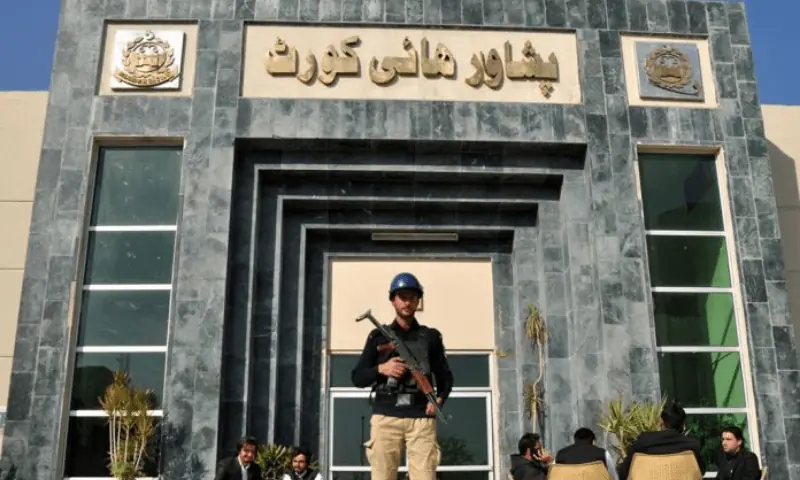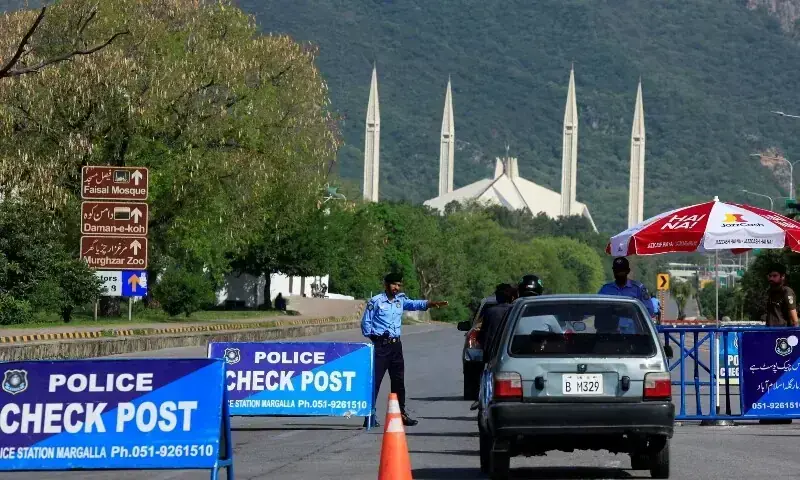
The Islamabad police chief's unannounced inspections of mosques and imambargahs on a single Friday in May exposed a security vacuum that threatens to undo years of Pakistan's counter-terrorism messaging. Not a single armed officer stood guard at Jamia Masjid Bibil in Sector G-6/3. At other sites, seminary students manned entrances while unarmed constables drifted between locations. The inspector general himself declared the arrangements "unsatisfactory and compromised," according to reporting by Dawn News. The failure is not incidental; it is systemic, surfacing just as Pakistan's military claims to have dismantled Tehreek-e-Taliban Pakistan (TTP) networks and rebranded its narrative from "war on terror" to "peace dividend." Yet the absence of boots on the ground during the most vulnerable hour, weekly congregational prayers, suggests the state's security architecture is still calibrated for press releases, not prevention.
How a Security Audit Revealed Islamabad's Counter-Terrorism Illusion
Pakistan's claim to have "degraded" domestic militancy rests on a fragile premise: that the state can protect soft targets without sustained, visible deterrence. The Dawn exposé punctures that claim. The audit, conducted by the Islamabad police's Special Branch, Counter Terrorism Force, and intelligence agencies, classified 64 worship places as Category A, those facing terrorism and sectarian threats, yet none of these high-risk sites had armed police during inspections. Category B locations, plagued by land disputes and sectarian tension, fared no better. Even in the high-security zone, where diplomatic missions and elite residences sit, some mosques relied on untrained seminary students for perimeter control. The categorisation itself reveals a paradox: the state knows which sites are at risk, but its response is a paper plan without enforcement. The IG's show-cause notices to station house officers (SHOs) and supervisory officers are admissions of dereliction, not solutions. If the capital's security apparatus cannot secure its own mosques during daylight hours, how credible is Pakistan's broader counter-terrorism posture?
The Strategic Stakes: Why Worship-Place Security Is Pakistan's Soft Underbelly
For Pakistan, the stakes are existential. The TTP and allied groups have repeatedly targeted mosques, most infamously in 2023 when a suicide bomber killed 52 worshippers in Peshawar's Kocha Risaldar mosque. That attack forced Islamabad to promise "ironclad" protection for religious sites. Yet the May 2026 audit shows the promise is hollow. The categorisation of 43 mosques and 21 imambargahs as Category A, predominantly Deobandi institutions, reflects a sectarian targeting pattern that mirrors the 2017 Sehwan Sharif shrine bombing, which killed 90. The state's inability to protect these sites is not just a policing failure; it is a strategic vulnerability that militants will exploit to reassert their narrative of state impotence. Worse, it undermines Pakistan's efforts to re-enter the global financial mainstream by signalling that its counter-terrorism claims are unenforceable on the ground. If Islamabad cannot safeguard its own capital's mosques, what confidence can foreign investors or allies place in its broader security assurances?
What Happened: The Unannounced Audit and Its Damning Findings
According to Dawn News, Inspector General of Police Syed Ali Nasir Rizvi visited multiple sites on a Friday in May 2026, including Jamia Masjid Bibil in Sector G-6/3, to assess security arrangements during congregational prayers. His findings were categorical: no police presence at several locations, lone unarmed officers at others, and reliance on untrained civilians at critical entry points. The audit also revealed systemic dereliction among supervisory officers, who failed to implement the security plan despite clear directives. Show-cause notices were issued by the office of the Additional Inspector General (Establishment), citing "negligence in connection with security [that] could compromise public safety." The IG did not respond to requests for comment. The episode exposes a disconnect between policy and practice: while the Special Branch and intelligence agencies conducted the audit, the operational failure lay with the police chain of command, which appears to have treated the security plan as a box-ticking exercise rather than a life-or-death mandate. The absence of supervisory officers in the field during the audit further underscores a culture of impunity where mid-ranking commanders avoid accountability until exposed by a surprise inspection.
Global and Regional Reaction: From Brussels to Beijing, the Credibility Gap Widens
Internationally, Pakistan's counter-terrorism narrative has been a cornerstone of its diplomatic outreach. The European Union, which resumed security sector reform funding in 2024 after a hiatus, has tied disbursements to "verifiable improvements in public protection." The Islamabad audit risks freezing those funds. In Washington, where the State Department's annual Country Reports on Terrorism is due in June 2026, the episode provides ammunition to critics who argue Pakistan's counter-terrorism claims are overstated. China, Pakistan's closest ally, has invested heavily in the China-Pakistan Economic Corridor (CPEC) security apparatus, including training for Pakistani police in counter-terrorism tactics. Yet if Islamabad cannot secure its own mosques, Beijing's confidence in Pakistan's long-term stability, critical for CPEC's Phase II expansion, will waver. Regionally, India has seized on the lapse to reinforce its narrative of Pakistan's "dual policy" on terrorism. While New Delhi's criticism is predictable, the audit's timing, amid stalled backchannel talks, gives its rhetoric fresh traction. The United Nations Office of Counter-Terrorism, which has partnered with Islamabad on de-radicalisation programs, has privately expressed concern that the audit findings "undermine the trust built over years of cooperation," according to a senior diplomat quoted by Dawn.
South Asia Impact: How Islamabad's Mosque Security Failure Ripples Across the Region
For Pakistan, the fallout is immediate and multifaceted. Domestically, the audit has eroded public trust in the police, already ranked among the country's least trusted institutions. The reliance on seminary students for security at high-risk sites is particularly incendiary, given Pakistan's history of militant infiltration in religious seminaries. It risks fuelling sectarian tensions, especially in Punjab and Khyber Pakhtunkhwa, where Deobandi and Barelvi communities have clashed over mosque control.
For India, the lapse is a propaganda gift. New Delhi has long argued that Pakistan's counter-terrorism claims are a façade designed to extract concessions from the international community. The audit provides tangible evidence to support that claim, potentially derailing any nascent confidence-building measures. In Bangladesh, where Islamist militancy has surged in recent years, the Islamabad episode serves as a cautionary tale. Dhaka has invested in mosque security protocols, including biometric verification for imams, to prevent infiltration. The failure next door may accelerate calls for stricter oversight, but it also risks emboldening domestic hardliners who argue that Bangladesh's secular model is under siege. In Afghanistan, the Taliban's return to power has already driven a spike in cross-border militant activity. If Pakistan cannot secure its mosques, it signals to Kabul that Islamabad's writ does not extend to its own territory, inviting further asymmetric threats. Economically, the episode could dampen investor sentiment in Pakistan's retail and real estate sectors, both of which rely on perceptions of urban safety. The 2019 Peshawar mosque bombing triggered a 12% drop in consumer confidence within three months; a repeat episode in Islamabad could have similar effects.
What Happens Next: Three Scenarios for Pakistan's Counter-Terrorism Credibility
Analysts expect three possible trajectories in the coming months. The first, and most optimistic, is a rapid institutional overhaul. The IG's show-cause notices could trigger a purge of negligent SHOs and a reallocation of armed police to Category A and B sites. The Special Branch might expand its audit to include night-time security, when militants often strike. This scenario would require the military's Inter-Services Intelligence (ISI) to publicly endorse the police's efforts, a rare alignment that could restore some credibility. The second scenario is a prolonged stalemate. If the supervisory officers targeted by the notices mount a behind-the-scenes campaign to dilute accountability, the episode could fade into the background. This would suit hardliners in the security establishment who view public scrutiny of mosque security as a distraction from their primary focus: India. The third scenario is the most dangerous. If militants exploit the security vacuum to launch a high-casualty attack on a Category A mosque, the state's counter-terrorism narrative could collapse entirely. Such an attack would likely trigger a public backlash against both the police and the civilian government, potentially forcing a military intervention under the guise of "restoring order." The most likely outcome, however, is a hybrid: cosmetic reforms paired with persistent gaps in enforcement. The police may deploy more officers, but without sustained oversight, the cycle of negligence will resume. A key question is whether the international community will accept cosmetic changes as sufficient to unlock frozen funds, or whether the audit's findings will force a re-evaluation of Pakistan's counter-terrorism partnership model.
Lessons from Lahore's 2024 Model: Why Islamabad's Failure Is a Replay, Not an Exception
Pakistan has attempted mosque security reforms before. In 2024, Lahore launched a pilot program to deploy armed police at high-risk mosques, paired with biometric entry systems for worshippers. The program reduced attacks by 40% in its first six months. Yet the Islamabad audit shows that Lahore's success was an exception, not the rule. The difference lies in political will: Lahore's police chief, a former commando, treated the program as a career-defining mission, while Islamabad's force appears to have treated the security plan as a compliance exercise. The Lahore model also highlights a critical gap in the Islamabad audit: the absence of technology. Lahore's biometric systems, though controversial among privacy advocates, provided a secondary layer of security. Islamabad's plan, by contrast, relies solely on human deployment, a flawed strategy when supervisory officers fail to show up. The last time Pakistan faced a similar crossroads was during the 2017 Sehwan Sharif shrine bombing, which killed 90 and exposed systemic failures in shrine security. The state responded with a national action plan, but implementation was uneven. The Islamabad episode suggests that Pakistan has not learned the lesson: security plans without enforcement are just PR.
What the IG's Silence Tells Us About Pakistan's Counter-Terrorism State
The IG's refusal to comment on the audit findings is itself a statement. In Pakistan's security bureaucracy, silence often signals two things: either the findings are too damning to defend, or the military leadership has not yet decided how to respond. Given that the audit implicates mid-ranking officers, who are often retired military personnel on secondment, it is unlikely that the IG is acting without tacit approval from the establishment. Yet the absence of a public response suggests that the military's counter-terrorism narrative, which has pivoted from "war on terror" to "peace dividend," is now at odds with ground realities. The IG's silence also reflects a deeper crisis: the civilian government's inability to assert control over the security apparatus. Prime Minister Shehbaz Sharif's government has staked its reputation on economic revival and counter-terrorism cooperation with the West. The mosque security failure undermines both pillars. If the civilian leadership cannot enforce basic policing standards in the capital, how can it deliver on economic reforms or international commitments? The episode is a microcosm of Pakistan's broader governance crisis: a state that talks the talk of counter-terrorism but walks away when the rubber meets the road.
Will the International Community Call Pakistan's Bluff?
The audit's timing is catastrophic for Islamabad's diplomatic offensive. In June 2026, the Financial Action Task Force (FATF) is due to review Pakistan's progress on counter-terrorism financing. The Islamabad lapse provides ammunition to those advocating for Pakistan's re-entry onto the grey list, a move that could trigger capital flight and isolate Islamabad further. The European Union's decision on security sector reform funding, expected in July 2026, now hangs in the balance. Brussels has tied disbursements to "verifiable improvements in public protection," a phrase that now carries legal weight. If the EU freezes funds, it will not be because of a lack of policy, but because of a lack of enforcement. China, meanwhile, has invested heavily in Pakistan's counter-terrorism capacity-building, including joint exercises with Pakistani police forces. Yet Beijing's tolerance for Pakistan's security lapses is not infinite. If militants target a Chinese-funded project in Pakistan, such as a CPEC-affiliated mosque or shrine, Beijing may demand a public accountability mechanism, something Islamabad has resisted for years. The most immediate pressure point, however, is Washington. The U.S. State Department's 2026 Country Reports on Terrorism, due in June, will scrutinise Pakistan's counter-terrorism claims with unprecedented rigor. The Islamabad audit provides the State Department with a case study to argue that Pakistan's efforts are "inconsistent and insufficient." If the report echoes that sentiment, it could derail Pakistan's efforts to secure IMF bailout tranches tied to counter-terrorism benchmarks.
Related Coverage
Pakistan Political Crisis → — In-depth analysis, background context, and continuous updates on this developing story.
Key Takeaways
- Pakistan's counter-terrorism narrative is unravelling at the seams. The Islamabad police audit exposed a security vacuum at high-risk mosques, undermining years of state claims to have "degraded" domestic militancy and risking international funding freezes.
- The reliance on untrained civilians, including seminary students, for mosque security is a strategic blunder. It cedes moral authority to militants and risks fuelling sectarian tensions, particularly in Punjab and Khyber Pakhtunkhwa, where Deobandi and Barelvi communities are already at odds.
- The episode is a microcosm of Pakistan's broader governance crisis. The civilian government's inability to enforce basic policing standards in the capital highlights a state that talks counter-terrorism but fails to deliver on the ground, threatening both domestic stability and international partnerships.