
Donald Trump has claimed the provisional ceasefire with Iran is a “total and complete victory” and says the issue of Uranium would be “perfectly taken care of” in a phone interview with Agence France-Presse shortly after the announcement of the truce. “One hundred percent. No question about it,” Trump said. Trump also said that the issue of Iran’s enriched uranium stockpile would be “perfectly taken care of” under the deal “or I wouldn’t have settled”. The president had previously said “I don’t care” about the regime’s stockpiles when questioned about it, arguing it could be monitored by satellite. Iran’s supreme council has said they have agreed to a two-week temporary ceasefire, with further negotiations to take place in Islamabad on Friday 10 April. Their starting point for negotiations, which Trump had previously called “workable”, includes Iran retaining control of the strait of Hormuz and the complete withdrawal of all US military forces from the region. It remains unclear when the ceasefire will go into effect, with attacks and missile strikes continuing across the region. Trump said that he believes China pushed Iran towards agreeing to a two-week ceasefire that was announced hours before Trump’s deadline to bomb Iran’s power plants and bridges, a move which could have constituted war crimes. Trump’s comments confirm earlier reports that China encouraged Tehran to reach a ceasefire in the war with the US and Israel that already has killed thousands of people in Iran and Lebanon and blocked global shipping routes. The ceasefire was announced soon after Russia and China blocked a resolution at the UN security council that aimed to reopen the strait of Hormuz. The vetoes blocked the UN from authorising the use of force to reopen the crucial waterway through which one fifth of the world’s oil passes. Russia and China said that the resolution was biased against Iran. China’s ambassador to the UN, Fu Cong, said that the draft resolution “fails to capture the root causes and full picture of the conflict” and that resolution risked providing a “legal veneer” for the use of military force. The UK said that vetoeing of the resolution was “deeply regrettable”. Trump told Agence France-Presse “I hear yes,” when asked if Beijing had been involved in pressuring Tehran to negotiate. White House press secretary Karoline Leavitt has praised the two-week ceasefire in the Iran war, calling it a “victory” for the United States. “This is a victory for the United States that President Trump and our incredible military made happen,” Leavitt wrote on X. The success of our military created maximum leverage, allowing President Trump and the team to engage in tough negotiations that have now created an opening for a diplomatic solution and long-term peace.” Oil prices plunged by almost 15% after Donald Trump held off on his threat to bomb Iran into the stone ages on Tuesday night, and Iran’s foreign minister said passage through the strait of Hormuz would be allowed for the next two weeks under the management of its military. Although Tuesday’s news was immediately embraced by markets, the outcome of the US-Iran talks is far from certain, and how the strait will be reopened and managed beyond the two-week grace period is yet to be determined. Brent crude oil, the international standard, dropped 14.4% to $93.48, and futures for US crude oil sank 14.7% to $96.27 a barrel. The prices remain well above where it was at the start of the war. Meanwhile as trading in Asia got under way, Australia’s S&P/ASX 200 was up almost 3%, Japan’s Nikkei rose more than 4% and South Korea’s Kospi gained 6%. In the bond market, Treasury yields eased on word of a potential ceasefire. The yield on the 10-year Treasury fell to 4.24% from 4.30% earlier Tuesday. Since negotiations began between the Trump administration and Iran over the status of Tehran’s nuclear programme almost a year ago, their vastly different demands and the limits to what each side would concede have proved a barrier to any lasting agreement. But as he announced he was suspending his plans to escalate attacks across Iran on Tuesday evening, Donald Trump said that he had received a “workable” ceasefire proposal from Iran. The details of any plan are likely to be hammered out in future talks; Pakistani prime minister Shebaz Sharif has invited delegations to Islamabad for talks on Friday 10 April. However Iranian state media was quick to claim victory, with graphics on state TV flashing up with the words “Trump accepts Iran’s terms for ending the war”. But what are those terms – and could Trump possibly agree to them? According to state media, Iran will only accept the war’s conclusion once details are finalised in line with a ten-point peace plan that they have reportedly submitted to the US via Pakistani intermediaries. The list of the 10 points published by state media include a number of conditions that the US has rejected in the past. According to Iranian state media, the plan requires: The lifting of all primary and secondary sanctions on Iran. Continued Iranian control over the strait of Hormuz. US military withdrawal from the Middle East. An end to attacks on Iran and its allies. The release of frozen Iranian assets. A UN Security Council resolution making any deal binding. “It is to be noted that the adoption of such a resolution shall render all these agreements binding under international law and shall constitute a significant diplomatic victory for the Iranian nation,” the country’s Supreme National Security Council said in a statement. The call for Iranian control over the strait of Hormuz - a conduit for around a fifth of the world’s oil that has been effectively blocked to maritime traffic since the start of the five-week conflict - has been highlighted as of particular concern, as Iran held no control over the strait before the conflict began. According to reports, the proposal would see Iran impose a fee of roughly $2m and would use the proceeds – which it would share with Oman - to reconstruct the country after more than five weeks of US and Israeli strikes. Democratic senator Chris Murphy leapt on the comments from Iran, telling CNN “who knows if any of that is true, but if this agreement gives Iran the right to control the strait that is cataclysmic for the world.” However experts and analysts have suggested that Iran’s maximalist demands are unlikely to be agreed to by the US, but will rather form the basis for talks. An Israeli military official has said the country is still attacking Iran, even after White House officials briefed that Israel had agreed to the ceasefire. Despite the provisional ceasefire, attacks have continued across the region. Minutes after Trump said he had agreed to suspend a devastating attack on Iran by two weeks and was ready for a ceasefire, Israel’s military warned that Iran was firing missiles toward it. Blasts were heard from Jerusalem and Jericho on the occupied West Bank, reporters in the region said. The White House is considering in-person talks with Iran but they have not been finalised, press secretary Karoline Leavitt has said. “There are discussions about in-person talks, but nothing is final until announced by the President or the White House,” Leavitt said after Iran said it agreed to talks with the United States to begin Friday in Pakistan. It remains far from clear what shape a future deal between the US and Iran could take. Iranian state media is saying that the ceasefire deal is built upon a ten point plan that they submitted to the US, which includes maximalist demands that the Trump administration has rejected in the past. Danny Citrinowicz, a nonresident fellow at the Atlantic Council, has offered a sobering assessment of the outcome of America’s five week war, saying the conflict was launched with “sweeping promises: regime change in Iran, the dismantling of its missile and nuclear programs, and preventing it from threatening the Strait of Hormuz.” “And where are we now?” he asks. The regime is still firmly in power. Its missile capabilities are damaged still intact It still holds roughly 440 kg of uranium enriched to 60%. And in return? A ‘controlled’ reopening of the Strait of Hormuz, something that wasn’t even truly closed to begin with. Let’s be honest: this is not a strategic victory.” Authorities in Abu Dhabi are dealing with a fire at the Habshan gas processing facility, the Abu Dhabi media office said early on Wednesday, as Gulf states activated air defences following threats of missile and drone attacks across the region. Attacks across the region have continued despite the declaration of a provision ceasefire between the US and Iran. US political leaders and many Americans breathed a sigh of relief on Tuesday evening, after Donald Trump announced a provisional ceasefire deal following threats to destroy Iran’s “whole civilization”. “I’m glad Trump backed off and is desperately searching for any sort of exit ramp from his ridiculous bluster,” Chuck Schumer, the Senate Democratic leader, said on Tuesday night. Several Republicans cheered the president’s decision, casting it as shrewd and tactical. “Excellent news,” Senator Rick Scott of Florida said. “This is a strong first step toward holding Iran accountable and what happens when you have a leader who puts peace through strength over chaos and weak appeasement policies.” Senator Lindsey Graham, one of the chamber’s loudest and most aggressive Iran hawks, said on Tuesday evening he shared the hope that “we can end the reign of terror of the Iranian regime through diplomacy”. But he added: “We must remember that the strait of Hormuz was attacked by Iran after the start of the war, destroying freedom of navigation. Going forward, it is imperative Iran is not rewarded for this hostile act against the world.” American journalist Shelly Kittleson, who was recently kidnapped in Baghdad, has been released, US secretary of state Marco Rubio has announced. The U.S. Department of State extends its appreciation to the Federal Bureau of Investigation, the Department of War, U.S. personnel across multiple agencies, and the Iraqi Supreme Judicial Council and our Iraqi partners, for their assistance in securing her release.” In a post on social media, Rubio said her release reflects the “Trump Administration’s steadfast commitment to the safety and security of American citizens, no matter where they are in the world.” Kittleson, a freelance journalist, has for years built a respected journalism career across the Middle East, particularly in Iraq and Syria. Rubio said on Tuesday that the US was working to support her safe departure from Iraq. Oil prices fell, bonds rallied and stocks surged as an apparent two-week ceasefire in the Middle East was seen as potentially paving the way for a lasting peace and resumption of Gulf oil and gas exports. As his deadline came within two hours of passing, Donald Trump posted on Truth Social that he agreed to suspend bombing and attacks on Iran for two weeks. On that news, US crude futures fell around 9% to $103 a barrel, S+P 500 futures leapt 1.6% and the US dollar fell broadly. Futures pointed to broad gains for Asia’s stock markets, and 10-year US Treasury futures jumped about 15 ticks. Details about the ceasefire are still very sketchy. However, Iran has said it would guarantee safe passage for maritime traffic through the vital strait of Hormuz for two weeks, announcing the pause would be used for talks with the US on ending the war, starting Friday in Islamabad. Markets in Asia are about to start opening. We’ll stay on top of market movements through the day. The US department of war has announced that a press conference will be held with secretary Pete Hegseth and the chairman of the joint chiefs of staff, Gen Dan Caine, at 8am EST on Wednesday. It has been a dizzying two hours of diplomatic moves across the Middle East. Here is how things stand: Donald Trump has pulled back on his threats to launch devastating strikes on Iran, less than two hours before a deadline he set for Tehran to capitulate or else a “whole civilization will die.” Trump said he was holding off on his threatened attacks on Iranian bridges, power plants and other civilian targets, subject to Tehran agreeing to a two-week ceasefire and reopening of the Strait of Hormuz, the waterway through which a fifth of the world’s oil is shipped during peacetime. Iran’s Supreme National Security Council said it had conditionally accepted a two-week ceasefire if attacks agains Iran are halted. Iran’s foreign minister said passage through the strait of Hormuz will be allowed for the next 2 weeks under Iranian military management. Iranian state media said negotiations with the US would be held in Islamabad to finalise details of an agreement, with the aim of “confirming Iran’s battlefield achievements”. Talks will begin on Friday 10 April and may be extended, state media reported. State media also reported that talks with the US do not amount to the end of the war. Pakistani prime minister Shebaz Sharif announced that Iran, the US and their allies agreed to an immediate ceasefire everywhere, including Lebanon. Sharif has been a key figure in attempting to reach a diplomatic solution between the two warring parties. In his statement, Sharif invited delegations to Islamabad on “Friday, 10th April 2026, to further negotiate for a conclusive agreement to settle all disputes.” Trump said Iran had proposed a “workable” 10-point peace plan. According to Iranian state media, the ten-point proposal includes a number of conditions that the US has in the past rejected. Among them are controlled transit through strait of Hormuz coordinated with Iranian armed forces and withdrawal of all US forces from regional bases. The plan would also require the lifting of all primary and secondary sanctions, payment of full compensation to Iran and release of all frozen Iranian assets. Iranian state media also said the 10-point plan for securing an end to the war would require Washington to accept its uranium enrichment program, a previous red line for the Trump administration. Even as the ceasefire was proposed, missile alerts continued in the United Arab Emirates, Qatar and Israel. Attacks are continuing across the Middle East. Missile alerts have sounded in Saudi Arabia, Bahrain and Kuwait, despite the US suspending its escalating attacks on Iran and agreeing to enter into talks. Israel warned at least two rounds of missiles had been fired by Iran since Trump’s statement. Blasts were heard in Jerusalem and Jericho in the occupied West Bank, AFP correspondents said. Pakistani prime minister Shebaz Sharif has announced that Iran, the US and their allies have agreed to an immediate ceasefire everywhere, including Lebanon. Sharif has been a key figure in attempting to reach a diplomatic solution between the two warring parties. On Tuesday he requested that Donald Trump delay his planned escalation in attacks against Iran. In his statement, Sharif invited delegations to Islamabad on “Friday, 10th April 2026, to further negotiate for a conclusive agreement to settle all disputes.” It’s now more than an hour since Donald Trump announced he was suspending his escalated bombing campaign, but attacks continue to be reported across the region. Israel has said it has detected an incoming Iranian missile barrage – the second since Trump’s announcement. Meanwhile missile alerts are sounding in the United Arab Emirates. Iran’s supreme national security council has said that the ten-point proposal sent to the United States included a condition that Iran would continue its enrichment of Uranium. The security council said that Iran had been victorious and claimed that the US had accepted all of Iran’s ten point plan. There has been no confirmation of that from the US side and Trump himself merely called the plan “workable.” However Democratic senator Chris Murphy he leapt on those comments from Iran, telling CNN “who knows if any of that is true, but if this agreement gives Iran the right to control the strait that is cataclysmic for the world.” It is just stunning that that’s where we have gotten to, that Donald Trump took a military action that has apparently, at least for the time being, given Iran control over a critical waterway that they did not have control over, before the war began. What an error, what a miscalculation.” Minutes before Donald Trump announced he was suspending his plan to bomb Iran’s energy infrastructure, two civilians, one of them an eight-year-old child, were killed in Baghdad by a projectile crashing into their home. “Three other civilians, including a woman, were wounded” in the western Amiriya district of the Iraqi capital, according to a source, speaking to the AFP news agency. Iran’s foreign minister has said passage through the strait of Hormuz will be allowed for the next 2 weeks under Iranian military management. Abbas Araqchi also said that Iran would halt its attacks, if attacks against it stop. Donald Trump has for weeks been demanding that Iran reopen the strait of Hormuz, through which up to a fifth of global oil transits through. The closure has sent energy prices rising, causing chaos for the world economy. Iranian media is reporting that talks with the US do not amount to the end of the war. Iran will only accept the war’s conclusion once details are finalised in line with the ten-point peace plan, state media is reporting. According to state media, the ten-point proposal includes a number of conditions that the US has in the past rejected. Among them are controlled transit through strait of Hormuz coordinated with Iranian armed forces and withdrawal of all US forces from regional bases. The plan would also require the lifting of all primary and secondary sanctions, payment of full compensation to Iran and release of all frozen Iranian assets. Iranian state media has said negotiations with the US will be held in Islamabad to finalise details of an agreement, with the aim of “confirming Iran’s battlefield achievements”. Talks will begin on Friday 10 April and may be extended, state media reported. Iran’s supreme security council submitted the 10-point proposal to the United States via Pakistan. The announcement on state TV was reportedly accompanied by a graphic flashing: “Trump’s humiliating retreat from anti-Iran rhetoric” and “Trump accepts Iran’s terms for ending the war”. Former US ambassador to Israel Dan Shapiro has said Trump has taken the best option available, after agreeing to suspend his deadline to target Iranian infrastructure by two weeks. This was the only plausible way to avoid an escalation that could have unleashed massive destruction of civilian infrastructure in Iran and in the Gulf states, and sent the global economic crisis into long-term overdrive. Even as Trump announces the outlines of a ceasefire agreement, Israel’s military has warned that Iran is firing missiles toward it. The warning came just minutes after Trump said he had agreed to suspend a devastating attack on Iran by two weeks and was ready for a ceasefire in the war if Tehran completely reopens the vital strait of Hormuz. The [Israeli army] identified missiles launched from Iran toward the territory of the State of Israel. Defensive systems are operating to intercept the threat.” Blasts were heard from Jerusalem and Jericho on the occupied West Bank, AFP correspondents said. The Israeli military told people in the areas affected by the incoming missile warnings to seek safety in bomb shelters. CNN is reporting that Israel has also agreed to a temporary ceasefire. The broadcaster quoted a senior White House official as saying “Israel has agreed to also suspend its bombing campaign while negotiations continue.” The New York Times is reporting that Iran has accepted Pakistan’s two-week cease-fire proposal following frantic diplomatic efforts. The newspaper quotes Iranian officials as saying the ceasefire was approved by the new supreme leader, Ayatollah Mojtaba Khamenei. Here’s that statement from the US president in full: Based on conversations with Prime Minister Shehbaz Sharif and Field Marshal Asim Munir, of Pakistan, and wherein they requested that I hold off the destructive force being sent tonight to Iran, and subject to the Islamic Republic of Iran agreeing to the COMPLETE, IMMEDIATE, and SAFE OPENING of the Strait of Hormuz, I agree to suspend the bombing and attack of Iran for a period of two weeks. This will be a double sided CEASEFIRE! The reason for doing so is that we have already met and exceeded all Military objectives, and are very far along with a definitive Agreement concerning Longterm PEACE with Iran, and PEACE in the Middle East. We received a 10 point proposal from Iran, and believe it is a workable basis on which to negotiate. Almost all of the various points of past contention have been agreed to between the United States and Iran, but a two week period will allow the Agreement to be finalized and consummated. On behalf of the United States of America, as President, and also representing the Countries of the Middle East, it is an Honor to have this Longterm problem close to resolution. Thank you for your attention to this matter! President DONALD J. TRUMP” Donald Trump has announced that he will suspend his threatened bombing of Iran’s energy infrastructure and bridges for two weeks. In a post on Truth Social he says that it is conditional on Iran reopening the strait of Hormuz calling it a double sided ceasefire. He goes on to say that he has received a workable ceasefire proposal from Iran. The reason for doing so is that we have already met and exceeded all Military objectives, and are very far along with a definitive Agreement concerning Longterm PEACE with Iran, and PEACE in the Middle East.” We’ll bring you more as it comes in. Diplomats are frantically working to reach a deal before Donald Trump’s deadline to Iran passes, with Egypt’s foreign minister Badr Abdelatty holding talks with his Pakistani counterpart Ishaq Dar late on Tuesday. A statement from the Egyptian foreign ministry said they had discussed joint efforts to reach “understandings” between the US and Iran to stop fighting. Pakistan and Egypt have emerged as key intermediaries, with Islamabad hosting a meeting recently to discuss regional de-escalation and proposals to reopen the strait of Hormuz. A personal envoy of UN secretary general Antonio Guterres plans to visit Iran as part of his efforts to encourage an end to the Iran war, but his travel plans will depend on security and logistics, a UN source has told Reuters. Jean Arnault, a veteran UN diplomat Guterres named as his envoy on the conflict last month, headed to the Middle East on Monday. UN rights chief Volker Turk has decried the “incendiary rhetoric” in the Middle East war, warning that deliberate attacks on civilians and civilian infrastructure was “a war crime”. Donald Trump issued a genuinely shocking – and widely condemned – threat that a “whole civilization will die tonight” if Iran doesn’t capitulate to his demands by 8pm ET. As the world waits to find out how far Trump is willing to go on his threat – which, if carried out, could amount to war crimes – the White House earlier said that, “Only the president knows where things stand and what he will do.” It later said the US president was “aware” of a proposal (from Pakistan) to extend his deadline by two weeks and that “a response will come”. As Trump has threatened to bomb Iran’s critical infrastructure, including bridges, power plants, and electrical and desalinisation facilities, the Pentagon has prepared options for him that include targets that are used for both military and civilian purposes, NBC News reported, citing two US officials. Per that report: “Targeting infrastructure that is considered ‘dual use’ could allow the administration to argue the US is hitting military targets and avoid the technical definition of a war crime.” The top US Senate Democrat, called Trump an “extremely sick person” in response to the president’s post. “Each Republican who refuses to join us in voting against this wanton war of choice owns every consequence of whatever the hell this is,” Chuck Schumer said. But some of the most forceful backlash has come from inside Trump’s own coalition. A number of far‑right commentators who once formed the bedrock of his base have broken with him over the war and his threats to strike bridges and power plants. Former congresswoman Marjorie Taylor Greene – previously one of Trump’s most reliable allies on Capitol Hill – joined Democrats in calling for his removal under the 25th amendment. While conspiracy theorist and rightwing broadcaster Alex Jones also urged Trump’s ouster. “You can have a good leader, and they just go crazy,” he said on social media. And a handful of GOP lawmakers have also come out strongly against attacking civilian targets. Pope Leo XIV said that threats directed at Iran’s population are “unacceptable” and would violate international law. In some of his strongest comments yet against the war, the first American pontiff urged Americans and other people of good will to contact their political leaders and congressional representatives to demand they reject war and work for peace. The UN rights chief decried the “incendiary rhetoric” in the war, warning that deliberate attacks on civilians and civilian infrastructure was “a war crime”. “Under international law, deliberately attacking civilians and civilian infrastructure is a war crime. Anyone responsible for international crimes must be held to account by a competent court,” Volker Turk said in a statement, without naming the United States, Israel nor Iran. Iran’s representative to the UN said that Tehran will “take immediate and proportionate” action if Trump follows through on his threats. Amir-Saeid Iravani said Trump’s threats that a “whole civilization will die” if Iran does not make a deal “constitute incitement to war crimes and potentially genocide”. “Iran will not stand idle in the face of such egregious war crimes. It will exercise, without hesitation, its inherent right of self-defence and will take immediate and proportionate reciprocal measures,” he said. An Iranian official urged young citizens to form human chains around the country’s power plants, following Trump’s threats to bomb them. Trump responded by saying that was “totally illegal”. “They’re not allowed to do that,” he told NBC News, completely un-ironically. Meanwhile, Russia and China vetoed an already watered down draft resolution from Bahrain at the UN Security Council calling for countries to coordinate to open the strait of Hormuz. There were 11 votes in favour, Russian and China against, and abstentions from Pakistan, which has been mediating between Iran and the US, and Colombia. Bahrain’s foreign minister Abdullatif bin Rashid Al Zayani, said the failure to pass the resolution “sends the wrong signal to the world”. The White House denied that remarks by vice-president JD Vance about military operations in Iran had contained any suggestion of a US nuclear strike against the Islamic republic. After Vance said US forces have tools they “so far haven’t decided to use” to enforce a dramatic ultimatum from president Donald Trump, the White House said on X: “Literally nothing @VP said here ‘implies’ this, you absolute buffoons.” The US hit Kharg Island again ahead of Donald Trump’s deadline, an AP source has reported. Earlier Iran’s Mehr news agency said US-Israeli strikes had hit the key Iranian oil export terminal, and later reported that there was no disruption to the island’s oil facilities. Benjamin Netanyahu said Israel had struck railways and bridges in Iran “used by the Revolutionary Guards”, after Iranian officials reported damage to at least two bridges and railway infrastructure. “We are crushing the terror regime in Iran... with even greater vigour and with increasing force,” Netanyahu said in a video released by his office. Lebanon’s health ministry said that the death toll in more than a month of war between Israel and the Iran-backed militant group Hezbollah had reached 1,530. The toll includes 102 women and 130 children, as well as 57 heath workers, a ministry statement said, adding that 4,812 people have been wounded. The Israeli military has urged all vessels in the maritime zone off the coast of southern Lebanon to immediately head north of the city of Tyre, warning that it would operate in the area. “Hezbollah’s activities expose naval vessels in the maritime area between Tyre and Ras al-Naqoura to danger, which compels the IDF to take action against it in the maritime domain,” the military’s Arabic-language spokesman Avichay Adraee posted on X. The IDF also that its forces had struck a key petrochemical compound in Shiraz in southern Iran. The Guardian was not able to independently verify this claim. According to the IDF, this facility was one of the last remaining facilities that produced critical chemical components for explosives and materials for ballistic missiles. Nearly 3,600 people have been killed in the US-Israeli strikes on Iran since attacks began, including at least 1,665 civilians, the Human Rights Activists news agency (HRANA) said. Of those numbers, at least 248 of those killed were children. At least 49 civilians were killed and 58 others were injured on Monday, according to HRANA, which recorded 573 attacks across 215 incidents in 20 provinces over that 24-hour period – the highest rate of attacks seen in the last ten days. Federal security agencies say that Iranian hackers have begun cyber-attacks aimed at water and energy systems in the United States hours after Donald Trump threatened “every power plant in Iran will be out of business, burning, exploding and never to be used again.” In a joint statement, the Cybersecurity and Infrastructure Security Agency, Federal Bureau of Investigation, National Security Agency and the Energy Department said hackers backed by the Islamic Revolutionary Guards Corps had begun cyber-attacks on US power infrastructure. Qatar’s interior ministry said that four people, including a child, were injured after debris fell on a house in the Muraikh area following an interception of Iranian missiles. US senator Ron Johnson, a close ally of Donald Trump, warned on Monday that the US president would lose his support if he struck Iran’s civilian infrastructure, as a small chorus of Republican unease begins to grow. Speaking on the John Solomon Reports podcast on Monday, Johnson said: “I do not want to see us start blowing up civilian infrastructure.” He added: “I hope and pray that President Trump is just using this as bluster.” After Trump’s staggering warning on Tuesday morning that Iran’s “whole civilisation will die”, Johnson told the Wall Street Journal that the president would forfeit his backing and it would be “a huge mistake” if he carried out his threat to bomb Iran “back to the Stone Ages”. I think it would be a huge mistake. I mean, he loses me if he attacks civilian targets. Whatever we do has to be within the laws of warfare. Most Republicans have stayed schtum on Trump’s threat, but a handful have urged caution and called for de-escalation. Representative Nate Moran said a few hours ago that while he had supported the president’s decisions on Iran thusfar, the United States must conduct military operations “for just causes and through just and moral means”. “This must continue in the future; otherwise we forfeit our legitimacy to lead the world,” he wrote on X. So let me be clear. I do not support the destruction of a ‘whole civilization’. That is not who we are, and it is not consistent with the principles that have long guided America. He added that, “how we protect the lives of the innocent is just as important as how we engage the enemy”. Also on Tuesday afternoon, senator Lisa Murkowski said that Trump’s threat “cannot be excused away as an attempt to gain leverage in negotiations with Iran”. She said on X: Everyone involved - especially the President and Iran’s leaders - must de-escalate their unprecedented saber-rattling before it is too late. US secretary of state Marco Rubio and UK foreign secretary Yvette Cooper spoke on Tuesday about “the need for international efforts” in response to the escalating crisis in the Middle East, according to the US state department. According to department spokesperson Tommy Pigott, the pair spoke about “the Iranian regime’s ongoing attacks across the Middle East and the critical importance of restoring freedom of navigation in the strait of Hormuz.” “The secretary and foreign secretary agreed on the need for international efforts to ensure shipping can move freely and energy supplies can reach global markets,” he added. in Washington As Donald Trump unleashes curse-filled threats against Iran, Democrats are raising alarm over his mental stability and calling for his removal from office – while Republicans remain conspicuously silent. Democrats are escalating their rebukes as the 79-year-old president delivers rambling, incoherent speeches, hurls puerile insults at US allies and brazenly threatens to commit war crimes. He used an Easter Sunday social media post to warn Iran to “Open the Fuckin’ Strait, you crazy bastards, or you’ll be living in Hell”. The president followed up by insisting that a “whole civilization will die tonight” if Tehran does not meet his latest deadline to agree to a deal that includes reopening the strait of Hormuz. By Tuesday afternoon, more than 20 Democratic members of Congress had called for Trump’s cabinet to invoke the 25th amendment to the constitution to remove a president who is deemed unfit for office. They were joined by Marjorie Taylor Greene, a former Republican US representative turned Trump critic. She wrote: 25TH AMENDMENT!!! Not a single bomb has dropped on America. We cannot kill an entire civilization. This is evil and madness. Greene had previously warned that Trump has “gone insane”. And since Sunday, other Democrats have broken new ground by questioning the president’s mental health. Yassamin Ansari, the only Iranian American Democrat in Congress, wrote on social media: “The President of the United States is a deranged lunatic, and a national security threat to our country and the rest of the world.” Ansari told the Guardian on Tuesday: I am devastated and appalled by the lack of action from Trump’s cabinet, from Republicans in Congress who are standing idly by as Donald Trump is threatening genocide, war crimes, and essentially speaking as though he intends to use a nuclear weapon in Iran. This is a grave moment not just for the United States but in world history and we will be judged on what we did in this moment. I am urging Republicans to put party affiliation and blind loyalty to Donald Trump aside and take action immediately to restrain him. But the chances of Trump’s notoriously loyal cabinet turning against him to install JD Vance as president are close to zero. Even as Trump threatens to target civilian infrastructure in Iran in breach of international law, few Republicans have raised any voice of dissent. Many in the party support the war. Kurt Bardella, a former Republican congressional aide turned Democrat, said: The one mechanism that we know could be executed immediately is the 25th amendment. All that’s standing in the way of the complete annihilation of a civilisation or not is if there are a dozen or 13 Republicans who have a spine, a soul, a conscience and the fortitude to do what they know is right. Read David’s full report here: Further, Donald Trump has been made aware of Pakistan’s request to extend his deadline by two weeks and will respond, White House press secretary Karoline Leavitt has said. “The president has been made been aware of the proposal, and a response will come,” she said in a statement. In a brief phone call with NBC News, Donald Trump declined to provide any update on the status of any supposed negotiations with Iran, but he sharply criticized Tehran’s call for young people to line up as human chains around the power plants Trump has threatened to bomb. Totally illegal. They’re not allowed to do that. Asked what motivated him to post this morning that “a whole civilisation will die tonight”, which has genuinely stunned the world, Trump said: You’ll have to figure that out. Pope Leo XIV has said that threats directed at Iran’s population are “unacceptable” and would violate international law. In some of his strongest comments yet against the war, the first American pontiff urged Americans and other people of good will to contact their political leaders and congressional representatives to demand they reject war and work for peace. Speaking to reporters as he left the papal retreat at Castel Gandolfo, outside Rome, he said. Today, as we all know, there has also been this threat against the entire people of Iran. And this is truly unacceptable. There are certainly issues of international law here, but even more, it is a moral question concerning the good of the people as a whole, in its entirety. He encouraged “all people of goodwill to always search for peace and not violence, to reject war, especially a war which many people have said is unjust, which is continuing to escalate and which is not resolving anything.” In recent weeks, the pope has escalated the tone of his opposition to the US-Israeli war on Iran after initially issuing muted appeals for peace and dialogue. Last week for the first time, Leo publicly named Trump in saying he hoped the US president was truly “looking for an off-ramp”. in Islamabad Pakistan’s prime minister, Shehbaz Sharif, pleaded for an extension to the deadline for an Iran deal set by Donald Trump, saying that diplomatic efforts “are progressing steadily, strongly and powerfully with the potential to lead to substantive results in near future”. Islamabad is mediating between Iran and the United States. Trump has set a deadline of 8pm Washington time on Tuesday for an agreement with Iran, or the US will bomb civilian infrastructure. Sharif asked Trump to give negotiations another two weeks. He also called on Iran to open the strait of Hormuz for those two weeks, as a goodwill gesture. “We also urge all warring parties to observe a ceasefire everywhere for two weeks to allow diplomacy to achieve conclusive termination of war, in the interest of long-term peace and stability in the region,” Sharif said. Separately, Pakistan’s foreign minister, said that Israeli bombing of Iran had upset advances being made in the talks. Tehran and Washington are speaking indirectly, through mediators, led by Pakistan, and also involving Turkey and Egypt. Proposals have been exchanged between the two sides through Islamabad. HMS Dragon has docked in the eastern Mediterranean after suffering technical problems with its water systems. The UK prime minister, Keir Starmer, announced on 3 March that the type 45 destroyer would be deployed to reinforce security around RAF Akrotiri in Cyprus, two days after the base was struck by a Shahed 136 drone. HMS Dragon left Portsmouth on 10 March after the crew completed in six days work that would normally take six weeks, according to the defence secretary, John Healey. The warship will still be able to sail at short notice “if required”, the Ministry of Defence (MoD) said on Tuesday. It is understood that minor technical problems with onboard water systems will be addressed during the stop, but that the malfunction has not affected the ship’s operational capability. All crew have had access to water and catering, and they have been able to take showers. Angry protesters stormed the Kuwaiti consulate in the Iraqi city of Basra, police sources said on Tuesday, after a rocket attack fired from the direction of Kuwait, killing three people, Reuters reports. At least three people were killed and five others wounded when rockets fired from the direction of Kuwait hit a house in Khor al-Zubair near Basra, security and health officials told Reuters. Police said the death toll could rise as some family members remained under the debris. US journalist Shelly Kittleson, who was kidnapped from a Baghdad street corner last week, has been released, according to an Iraqi official with direct knowledge of the situation. Kittleson was freed in the afternoon, said the official, who spoke to the Associated Press on condition of anonymity because he was not authorised to comment publicly. He did not share her current whereabouts but said that before her release, she had been held in Baghdad. The powerful Iran-backed Iraqi militia Kataib Hezbollah said in a statement earlier in the day it had decided to free Kittleson, who was abducted on 31 March. The group said its decision came “in appreciation of the patriotic stances of the outgoing prime minister”, Mohammed Shia al-Sudani, without giving more details. It added: “This initiative will not be repeated in the future.” The statement added a condition – that Kittleson must “leave the country immediately” upon her release. Shrai Popat has tracked growing dissent towards the US president among key Maga figures over his latest threats towards Iran Donald Trump’s threat to eradicate a “whole civilization” if Iran refuses a deal that includes reopening the strait of Hormuz has thrown the country’s political split‑screen into even starker relief. Republicans and several former officials have praised the administration’s stance in the stalled negotiations with Tehran as overdue decisiveness. Democrats, by contrast, described the president’s latest remarks – startling even by the standards of a leader who routinely escalates his own rhetoric – as grounds for removal. But some of the most forceful backlash is coming from inside Trump’s own coalition. A number of far‑right commentators who once formed the bedrock of his base have broken with him over Operation Epic Fury and his threats to strike civilian and energy infrastructure. Many accuse him of abandoning his campaign promise to keep the US out of foreign conflicts in the weeks since the US‑Israel war on Iran began. Former Fox News anchor Tucker Carlson called the strategy “vile on every level” on Monday’s episode of his online show, saying that “not even a month and a half into the conflict … we’re going to use our military to kill the civilians of this country”. Marjorie Taylor Greene – previously one of Trump’s most reliable allies on Capitol Hill – has joined Democrats in calling for his removal under the 25th amendment. Conspiracy theorist and right‑wing broadcaster Alex Jones also urged Trump’s ouster. “You can have a good leader, and they just go crazy,” he said on social media. “That’s the madness of a king.” Meanwhile Candace Owens, once a darling of the Maga movement, reiterated her condemnation of the bombing campaign, calling Trump “a genocidal lunatic” and urging Congress and the military to intervene. France has urged the US not to go ahead with a threat to erase Iran’s “whole civilisation”. The French foreign minister Jean-Noel Barrot said on Tuesday that he hoped Donald Trump would not go ahead with his latest threats against Iran. “One does not erase a civilisation … This ultimatum is not the first that President Trump has set since the war started,” Barrot told France 2 television. “Obviously I hope he does not go ahead with his threats that would push the region but also the world in a new escalation that would be particularly dangerous,” he added The US embassy in the Riyadh has advised US citizens to reconsider travel to the country amid the war, per a travel advisory from the Saudi authorities. It also advised Americans to reconsider “participation in Hajj this year” – the annual Muslim pilgrimage to the holy city of Mecca – “due to the ongoing security situation and intermittent travel disruptions”. Kuwait’s interior ministry has asked residents to stay home from midnight to 6am on Wednesday. The “precautionary measure” spans the timing of Donald Trump’s threats against Tehran. It “aims to maintain safety, support security operations, and ensure stability,” the ministry said in a post on X. “Everyone is asked to follow instructions and cooperate with authorities.” Iran’s representative to the UN has said that Tehran will “take immediate and proportionate” action if Donald Trump follows through on his threats to attack the country’s “whole civilisation”. Amir-Saeid Iravani said Trump’s threats that a “whole civilization will die” if Iran does not make a deal “constitute incitement to war crimes and potentially genocide”. During a UN Security Council session on the strait of Hormuz earlier, he urged the international community to call out Trump’s rhetoric before it’s too late. Iran will not stand idle in the face of such egregious war crimes. It will exercise, without hesitation, its inherent right of self-defense and will take immediate and proportionate reciprocal measures. As we’ve been reporting, Donald Trump is weighing whether to follow through with his threat to bomb Iran’s critical infrastructure, including bridges, power plants, and electrical and desalinisation facilities – which could amount to a war crime if carried out. To that end, the Pentagon has reportedly prepared options for him that include targets that are used for both military and civilian purposes, NBC News reports, citing two US officials. Deliberately attacking civilian infrastructure indiscriminately would violate international law and could be prosecuted as a war crime. Per NBC News’s report: “Targeting infrastructure that is considered ‘dual use’ could allow the administration to argue the US is hitting military targets and avoid the technical definition of a war crime.” As the world contemplates how seriously to take Donald Trump’s latest threats towards Iran, the White House has reiterated his demand that Tehran reach a deal within the next few hours, saying that only the US president knows how he will respond if Tehran fails to comply. “The Iranian regime has until 8pm Eastern Time [00:00 GMT] to meet the moment and make a deal with the United States,” White House press secretary Karoline Leavitt has told several outlets including Al Jazeera and the Wall Street Journal. Only the president knows where things stand and what he will do. In a widely condemned statement (which many agree could amount to war crimes if carried out), Trump earlier threatened that “a whole civilization will die tonight” if Iran – a nation of 90 million people - does not accept his demand to reopen the strait of Hormuz. Russia and China earlier vetoed an already watered down draft resolution at the UN Security Council to reopen and protect the strait of Hormuz. Eleven representatives voted in favour, while Russia and China voted against, and two (Pakistan and Colombia) abstained. The draft proposal prepared by Bahrain two weeks ago and supported by the United States would have given a clear UN mandate to any state wishing to use force to unblock the strait. But objections from several veto-holding permanent members – including France, Russia and China – forced the text to be watered down and the vote delayed multiple times. French opposition appeared to be lifted by the addition of wording that meant any action would need to be “defensive”. After further amendments, the latest version of the text seen by AFP no longer mentioned authorisation to use force, even defensively. It “strongly encourages states ... to coordinate efforts, defensive in nature, commensurate to the circumstances, to contribute to ensuring the safety and security of navigation, including through the escort of merchant and commercial vessels,” rather than explicitly authorising force. It also “demands,” that Iran “immediately cease all attacks against merchant and commercial vessels and any attempt to impede transit passage or freedom of navigation in the strait of Hormuz”. Additionally, it calls for the end to attacks on civilian water, oil, and gas infrastructure. But Russia and China still vetoed the amended proposal. It’s worth noting that China is one of the few countries that has been able to continue using the strait, while Russia could be poised to benefit if sanctions on oil are relaxed in response to its continued effective closure. Bahrain’s foreign minister Abdullatif bin Rashid Al Zayani, who chaired the meeting, said Gulf states “regret” the rejection of the measure. Speaking on behalf of the oil-exporting Gulf countries, he said the failure to pass the resolution “sends the wrong signal to the world”. This signal that the threat to international waterways can pass without any decisive action by the international organisation responsible for the maintenance of international peace and security. US president Donald Trump has warned that a “whole civilization will die tonight” but said Iran still has time to capitulate ahead of a deadline set for 8pm in Washington. The American leader issued the stark threat Tuesday, about 12 hours ahead of his deadline for Iran to agree to a deal that includes reopening the strait of Hormuz or face punishing strikes. The UN rights chief decried Tuesday the “incendiary rhetoric” in the Middle East war, warning that deliberate attacks on civilians and civilian infrastructure was “a war crime”. “Under international law, deliberately attacking civilians and civilian infrastructure is a war crime. Anyone responsible for international crimes must be held to account by a competent court,” Volker Turk said in a statement, without naming the United States, Israel nor Iran. The White House denied Tuesday that remarks by vice-president JD Vance about military operations in Iran had contained any suggestion of a US nuclear strike against the Islamic republic. After Vance said US forces have tools they “so far haven’t decided to use” to enforce a dramatic ultimatum from president Donald Trump, the White House said on X: “Literally nothing @VP said here ‘implies’ this, you absolute buffoons.” The US has hit Kharg Island again ahead of Donald Trump’s deadline, an AP source has reported. Earlier Iran’s Mehr news agency said US-Israeli strikes had hit the key Iranian oil export terminal. Prime minister Benjamin Netanyahu said Israel struck on Tuesday railways and bridges in Iran “used by the Revolutionary Guards”, after Iranian officials reported damage to at least two bridges and railway infrastructure. “We are crushing the terror regime in Iran... with even greater vigour and with increasing force,” Netanyahu said in a video released by his office. Lebanon’s health ministry said Tuesday that the death toll in more than a month of war between Israel and the Iran-backed militant group Hezbollah had reached 1,530. The toll includes 102 women and 130 children, as well as 57 heath workers, a ministry statement said, adding that 4,812 people have been wounded. The Israeli military has urged all vessels in the maritime zone off the coast of southern Lebanon to immediately head north of the city of Tyre, warning that it would operate in the area. “Hezbollah’s activities expose naval vessels in the maritime area between Tyre and Ras al-Naqoura to danger, which compels the IDF to take action against it in the maritime domain,” the military’s Arabic-language spokesman Avichay Adraee posted on X. At least three people were killed and five others wounded on Tuesday when rockets fired from the direction of Kuwait hit a house in Khor al-Zubair near Basra, security and health officials told Reuters on Tuesday. Police said the death toll could rise as some family members remained under the debris. An oil slick from a stricken Iranian ship threatens to contaminate one of west Asia’s most important wetlands, satellite image analysis suggests, one of a number of spills posing a threat to the livelihoods of coastal communities in the Gulf. The Shahid Bagheri, an Iranian drone carrier, began leaking heavy fuel oil in Iranian territorial waters near the strait of Hormuz about a month ago, after it was hit by a US warplane in the first few days of the US-Israel attack on Iran. Three gunmen engaged in a shootout with Turkish police outside the Israeli consulate in Istanbul. While their motive is still under investigation – Istanbul’s governor told reporters that there have been no Israeli diplomatic staff at the consulate in Istanbul for two and a half years – Mustafa Ciftci, the Turkish minister of the interior, posted on X that one of the attackers had ties to “an organisation that exploits religion”. One attacker was killed and the other two were injured. Two policemen were also injured. The Israeli military said on Tuesday that Israeli forces struck a key petrochemical compound in Shiraz in southern Iran. The Guardian was not able to independently verify this claim. According to the IDF, this facility was one of the last remaining facilities that produced critical chemical components for explosives and materials for ballistic missiles. Israel and the US struck 17 civilian targets on Tuesday morning, the Iranian Red Crescent said, in attacks that the humanitarian NGO have decried as war crimes. Nearly 3,600 people have been killed in the US-Israeli strikes on Iran since attacks began, including at least 1,665 civilians, the Human Rights Activists news agency (HRANA) said. Of those numbers, at least 248 of those killed were children. At least 49 civilians were killed and 58 others were injured on Monday, according to HRANA, which recorded 573 attacks across 215 incidents in 20 provinces over that 24-hour period – the highest rate of attacks seen in the last ten days. The Israeli military has urged all vessels in the maritime zone off the coast of southern Lebanon to immediately head north of the city of Tyre, warning that it would operate in the area. “Hezbollah’s activities expose naval vessels in the maritime area between Tyre and Ras al-Naqoura to danger, which compels the IDF to take action against it in the maritime domain,” the military’s Arabic-language spokesman Avichay Adraee posted on X. “To ensure your safety, all anchored or sailing naval vessels in the specified maritime area shown on the navigation map must immediately proceed north of the Tyre area,” he added. Donald Trump says the US will bomb Iran’s power plants and bridges if Tehran fails to meet his latest deadline to reopen the strait of Hormuz. The US president says he is “not at all” concerned that such attacks on civilian infrastructure could amount to war crimes and a “whole civilisation will die tonight” if Iran doesn’t agree to a deal. But will he follow through on the threat? And what could it mean for the war? In today’s edition of The Latest podcast, Lucy Hough is joined by senior international correspondent Julian Borger. The UN rights chief decried Tuesday the “incendiary rhetoric” in the Middle East war, warning that deliberate attacks on civilians and civilian infrastructure was “a war crime”. “Under international law, deliberately attacking civilians and civilian infrastructure is a war crime. Anyone responsible for international crimes must be held to account by a competent court,” Volker Turk said in a statement, without naming the United States, Israel nor Iran. At least three people were killed and five others wounded on Tuesday when rockets fired from the direction of Kuwait hit a house in Khor al-Zubair near Basra, security and health officials told Reuters on Tuesday. Police said the death toll could rise as some family members remained under the debris. An oil slick from a stricken Iranian ship threatens to contaminate one of west Asia’s most important wetlands, satellite image analysis suggests, one of a number of spills posing a threat to the livelihoods of coastal communities in the Gulf. The Shahid Bagheri, an Iranian drone carrier, began leaking heavy fuel oil in Iranian territorial waters near the strait of Hormuz about a month ago, after it was hit by a US warplane in the first few days of the US-Israel attack on Iran. With Iran still under heavy bombardment, no one has been able to begin cleaning up the spill and the oil has travelled slowly westwards towards the Hara biosphere reserve, the largest mangrove forest on the Gulf shoreline. The Shahid Bagheri, described as “one of the most conceptually significant vessels” in Iran’s navy, is a container ship modified to include a short runway for launching drones. Its fuel load was likely to have been significant: the IRGC said it had a range of 22,000 nautical miles and could go a year between refuelling. It was bombed by US warplanes on 6 March, in an attack illustrated in a social media video published by the US military. Since then it has been grounded in shallow waters in the middle Khuran strait, a narrow, ecologically important channel between the Iranian mainland and the island of Qeshm. Israel’s emergency services said three people were lightly injured on Tuesday after over 20 alerts sounded throughout the day, warning of incoming missiles from Iran or rocket fire from Lebanon. In the coastal town of Nahariya, less than 10 kilometres from Israel’s northern border with Lebanon, the Magen David Adom emergency service said it treated a woman approximately 20 years old “in mild condition with a head injury from debris thrown by the blast”, following rocket fire. Paramedics also treated a 46-year-old man in the south of the country who was “in mild condition with injuries to the upper limbs from interceptor debris”, as well as a 36-year-old man in the north “with a shrapnel injury to his lower limbs”. The three were evacuated to hospitals, Magen David Adom said. The White House denied Tuesday that remarks by vice-president JD Vance about military operations in Iran had contained any suggestion of a US nuclear strike against the Islamic republic. After Vance said US forces have tools they “so far haven’t decided to use” to enforce a dramatic ultimatum from president Donald Trump, the White House said on X: “Literally nothing @VP said here ‘implies’ this, you absolute buffoons.” The post was in response to one from an account associated with former vice president Kamala Harris that said Vance implied Trump “might use nuclear weapons.” Chuck Schumer, the top Senate Democrat, has called Donald Trump an “extremely sick person” in response to the president’s recent post on Truth Social – in which he said “a whole civilization will tonight” if Iran fails to meet his 8pm ET deadline to reopen the strait of Hormuz. “Each Republican who refuses to join us in voting against this wanton war of choice owns every consequence of whatever the hell this is,” Schumer added. Other Democrats have slammed Trump’s most recent comments, hours before he promises to follow through on his threat to target civilian infrastructure and power plants in Iran. Chris Murphy, a Democratic senator who sits on the foreign relations committee, said that Trump’s plan is to “murder thousands of innocent Iranians and hope for a civil war that somehow ends up with the strait of Hormuz reopening”. Murphy also highlighted the global energy crisis that has spiralled since the war began and oil prices spiked. For more live coverage of US politics, follow along here. Lebanon’s health ministry said Tuesday that the death toll in more than a month of war between Israel and the Iran-backed militant group Hezbollah had reached 1,530. The toll includes 102 women and 130 children, as well as 57 heath workers, a ministry statement said, adding that 4,812 people have been wounded. Prime minister Benjamin Netanyahu said Israel struck on Tuesday railways and bridges in Iran “used by the Revolutionary Guards”, after Iranian officials reported damage to at least two bridges and railway infrastructure. “We are crushing the terror regime in Iran... with even greater vigour and with increasing force,” Netanyahu said in a video released by his office. “Yesterday, our pilots destroyed transport aircraft and dozens of helicopters at an Iranian Air Force base. Today they struck the railways and bridges used by the Revolutionary Guards.” The oil and gas crisis triggered by the blockade of the strait of Hormuz is “more serious than the ones in 1973, 1979 and 2022 together”, the head of the International Energy Agency (IEA) has said, as Donald Trump’s deadline for Iran to reopen the waterway approached on Tuesday. Fatih Birol, the executive director of the IEA, told Le Figaro newspaper that the impact of the Middle East conflict on the oil market was larger than the combined force of the twin oil shocks of the 1970s and the fallout from Russia’s invasion of Ukraine. Birol also said the countries most at risk were developing nations, which would suffer from higher oil and gas prices, higher food prices and a general acceleration of inflation, while European countries, Japan and Australia would also feel an impact. Oil traded at more than $110 (£83) a barrel on Tuesday after Trump warned that a “whole civilization will die tonight” unless Iran made a deal. Brent crude, the international benchmark for oil prices, was up 0.7% at $110.60 a barrel in early afternoon trading in Europe, with New York light crude up 2.5% to $115.17 a barrel. Over at the Guardian’s UK politics live blog, it appears that Downing Street is refusing to say out right that the UK will not allow the US to use to use British bases for American air attacks against Iran that are specifically targeting infrastracture like bridges or power stations. When asked about a report for the i indicating that Britain will refuse to allow Donald Trump to use RAF bases for any strikes on Iranian bridges or power plants, a spokesperson said No 10 would not provide a “running commentary” on what the US was doing, including its use of British bases. But the spokesperson added that “our position on this hasn’t changed” and that the agreement in place for the US use of British bases was that it was for the “collective self-defence of the region, including US defensive operations to degrade missile sites and capabilities used to attack ships in the Strait of Hormuz”. However, the spokesperson declined to give details of how the government would ensure that UK bases were only used by the Americans for “defensive operations”. Ed Davey, the Lib Dem leader, warned Keir Starmer that by not drawing a hard line, he risks “letting British soil be used to commit war crimes”. More here: The US has hit Kharg Island again ahead of Donald Trump’s deadline, an AP source has reported. Earlier Iran’s Mehr news agency said US-Israeli strikes had hit the key Iranian oil export terminal. The official said the US hit military targets on the island. The strikes came hours ahead of a deadline president Trump has set for Iran to capitulate to his demands or face a major attack. He said Tuesday morning that “’whole civilization will die tonight” if Iran did not make a deal. Trump has threatened to deploy ground troops to seize critical oil infrastructure on the island. US-Israeli strikes have hit the key Iranian oil export terminal of Kharg island, media reported Tuesday. “The American-Zionist enemy has carried out several attacks on Kharg island, and several explosions have been heard there,” Iran’s Mehr news agency reported. According to an X post by journalist Barak Ravid of the news site Axios, citing a US official, the US carried out “strikes on military targets” on the island located off Iran’s western coast. US president Donald Trump once again warned Iran to make a deal on Tuesday, saying a “whole civilization will die tonight” if an agreement is not reached to end the conflict. Writing on Truth Social, he said: A whole civilization will die tonight, never to be brought back again. I don’t want that to happen, but it probably will. However, now that we have Complete and Total Regime Change, where different, smarter, and less radicalized minds prevail, maybe something revolutionarily wonderful can happen, WHO KNOWS? We will find out tonight, one of the most important moments in the long and complex history of the World. 47 years of extortion, corruption, and death, will finally end. God Bless the Great People of Iran! Iranian officials reported damage to at least two bridges, railway infrastructure and a key highway on Tuesday as part of a wave of deadly US-Israeli airstrikes on infrastructure targets. A bridge near the holy city of Qom and another carrying a railway line in the central city of Kashan were struck, according to regional officials quoted by state media. Two people were killed and three were injured in Kashan, senior regional security official Akbar Salehi said, according to Iran’s IRNA news agency. A key highway in northern Iran connecting the main northern city of Tabriz with Tehran via Zanjan was also closed after a hit around 90 kilometres outside of Tabriz, an official told IRNA. A Telegram channel of Iran’s Revolutionary Guards said the strike hit an overpass bridge. The Mizan news agency also reported a strike on railway tracks in Karaj, outside Tehran, with images showing Red Crescent rescuers carrying an injured man on a stretcher. The deadline that Donald Trump set for reopening the strait of Hormuz fast approaches. The US president has again threatened to destroy Iran’s bridges and power plants if Tehran did not meet his deadline of Tuesday 8pm ET (midnight Tuesday GMT) and said he was “not at all” concerned about that doing so could possibly constitute committing a war crime. “You know what’s a war crime? Having a nuclear weapon,” he said. As the deadline draws nearer, the US and Iran are engaging in last-ditch talks, according to officials in Pakistan’s Islamabad, which is acting as an intermediary for the indirect negotiations between the United States and Iran. Earlier, Iran rejected a 45-day ceasefire proposal and said it wanted a permanent end to the conflict. Three gunmen engaged in a shootout with Turkish police outside the Israeli consulate in Istanbul. While their motive is still under investigation – Istanbul’s governor told reporters that there have been no Israeli diplomatic staff at the consulate in Istanbul for two and a half years – Mustafa Ciftci, the Turkish minister of the interior, posted on X that one of the attackers had ties to “an organisation that exploits religion”. One attacker was killed and the other two were injured. Two policemen were also injured. The Israeli military said on Tuesday that Israeli forces struck a key petrochemical compound in Shiraz in southern Iran. The Guardian was not able to independently verify this claim. According to the IDF, this facility was one of the last remaining facilities that produced critical chemical components for explosives and materials for ballistic missiles. The Israeli military also on Tuesday warned the people of Iran via X on Tuesday morning not to use trains and be near railway lines “from this moment until 21:00 Iran time”, saying that doing so “endangers your life”. Israel and the US struck 17 civilian targets on Tuesday morning, the Iranian Red Crescent said, in attacks that the humanitarian NGO have decried as war crimes. Nearly 3,600 people have been killed in the US-Israeli strikes on Iran since attacks began, including at least 1,665 civilians, the Human Rights Activists news agency (HRANA) said. Of those numbers, at least 248 of those killed were children. At least 49 civilians were killed and 58 others were injured on Monday, according to HRANA, which recorded 573 attacks across 215 incidents in 20 provinces over that 24-hour period – the highest rate of attacks seen in the last ten days. In Lebanon, at least eight people were killed in overnight Israeli air strikes on the southern region, according to the state-run National News Agency. Although the Guardian could not independently verify these numbers, the Israeli military issued an alert on Monday warning residents of a number of villages in the area that the IDF planned to take strong action here. With Donald Trump’s deadline fast approaching, the two sides are in last-ditch talks, according to officials in Pakistan’s Islamabad, which is acting as an intermediary for the indirect negotiations between the United States and Iran. The fact that talks are still going on is a “big thing”, according to an official briefed on the dialogue, adding that “they have to find a way”. An Iranian official said that “more hopes are emerging”. The Iranian ambassador in Islamabad, Reza Amiri Moghadam, said in a post on X: “Pakistan positive and productive endeavours in Good Will and Good Office to stop the war is approaching a critical, sensitive stage ... Stay Tuned for more” Pakistan has offered to host talks between Iran and the United States, which could follow any ceasefire agreement. Pakistani, Egyptian and Turkish diplomats are working to bridge the large gap between the demands of Tehran and Washington. The Egyptian and Pakistani foreign ministers spoke on Tuesday. “Both leaders underscored the need for de-escalation and dialogue,” said Pakistan’s foreign ministry. The Egyptian foreign minister, Badr Abdelatty, also spoke with Trump’s special envoy, Steve Witkoff. Trump, who set a deadline of Tuesday night in Washington for an agreement, said on Monday that Iran’s latest proposal, a 10-point plan, had shown some progress, but it was “not good enough” for him. Tehran wants an end to the war, not just a ceasefire, so it does not reignite in a few months. One idea being floated is for the US Congress to ratify any agreement, so that it will not be so easy to restart the bombing of Iran. The U.S. news website Axios reported that Trump’s negotiating team, vice president JD Vance, Witkoff and adviser Jared Kushner, think that he should try for a deal. However, it added that Israel, and the leaders of Saudi Arabia and UAE, are urging the U.S. leader against accepting a ceasefire. It also quoted a US official saying: “The president is the most bloodthirsty, like a mad dog”. An unknown projectile struck a container vessel south of Iran’s Kish Island, the UK Office of Maritime Trade Operations said on Tuesday. The crew is safe and no environmental impact has been reported. The incident remains under investigation – it’s still unclear who launched the projectile and whether the container vessel was the intended target. Authorities have identified the three attackers who armed themselves with rifles and pistols and engaged police in a firefight near the Israeli consulate in Istanbul on Tuesday. Mustafa Ciftci, the Turkish minister of the interior, posted on X that one of the attackers had ties to “an organisation that exploits religion”. Two of the attackers were brothers, one of whom has a criminal record involving drug charges. It’s still unclear if the Israeli consulate was the attackers’ target. Details are still coming in about the shooting that took place today near the Israeli consulate in Istanbul. Davut Gul, governor of Istanbul, told reporters at the scene that three individuals were armed with rifles and pistols before engaging police in a firefight, Reuters reports. Initial reports had three people killed at the scene, but according to Gul, one attacker was killed and two others were wounded. Two police officers were also wounded, Gul said. It’s still unclear what the attackers were seeking to achieve. According to Reuters, Gul said that there have been no Israeli diplomatic staff at the consulate in Istanbul for two and a half years. Here are some images coming out of the Middle East today: Three people were killed in a shooting near the Israeli consulate in Istanbul on Tuesday, Reuters report. More details to come. Israel and the US struck 17 civilian targets on Tuesday morning, the Iranian Red Crescent said, in attacks that the humanitarian NGO have decried as war crimes. In a statement posted on X, the Iranian Red Crescent said that there is no justification for attacking defenceless civilians and to do so was a war crime. Donald Trump has said that he was “not at all” concerned about committing possible war crimes as he again threatened to destroy Iran’s bridges and power plants if Tehran does not meet his Tuesday 8pm ET deadline to reopen the strait of Hormuz. A spokesman for UN Secretary-General Antonio Guterres told the Associated Press on Monday that international law bars the attacking of such infrastructure. “Even if specific civilian infrastructure were to qualify as a military objective,” Stephane Dujarric said, an attack would still be prohibited if it risks “excessive incidental civilian harm.” Emergency services are responding to the site of a reported missile attack in central Israel. Footage from Israeli emergency service Magen David Adom showed an overturn car near a toppled construction frame and disturbed earth. The damage was caused by cluster submunitions from an Iranian ballistic missile, the Times of Israel reports. There were no immediate reports of injuries. At least eight people were killed in overnight Israeli air strikes on southern Lebanon, according to the state-run National News Agency. Three were killed in Maarakeh, one in Zebdine, one in Deir al-Zahrani and three in Tayr Debba, the news agency said. Dozens more were wounded, including nine in Qatrani. Although the Guardian could not independently verify these numbers, the Israeli Defense Forces had issued an alert on Monday warning residents of a number of villages in the area that the IDF planned to take strong action here. Israeli Defence Forces said on Tuesday that Israeli forces struck a key petrochemical compound in Shiraz in southern Iran. The Guardian was not able to independently verify this claim. According to the IDF, this facility was one of the last remaining facilities that produced critical chemical components for explosives and materials for ballistic missiles. The IDF said it also struck a large ballistic missile array site in northwestern Iran. The Guardian also was not able to independently verify this claim. Nearly 3,600 people have been killed in the US-Israeli strikes on Iran since attacks began, including at least 1,665 civilians, the Human Rights Activists news agency (HRANA) said. Of those numbers, at least 248 of those killed were children, the US-based NGO said. At least 49 civilians were killed and 58 others were injured on Monday, according to HRANA, which recorded 573 attacks across 215 incidents in 20 provinces over that 24-hour period – the highest rate of attacks seen in the last ten days. Saudi Arabia’s air defences intercepted and destroyed at least 18 drones over the past few hours, the Saudi ministry of defence said on X. Earlier, Saudi air defences intercepted and destroyed seven ballistic missiles targeting the eastern region of the country, with debris falling in the area of some energy facilities, the defence ministry said. Crews are still assessing damages. It is unclear who is responsible for either the drones or the missiles. Here’s a recap of the latest news from the US-Israel war on Iran to bring you up to speed. It’s 9.30am in Tehran, 9am in Tel Aviv and Beirut and 2am in Washington DC. Donald Trump said he was “not at all” concerned about committing possible war crimes as he again threatened to destroy Iran’s bridges and power plants if Tehran did not meet his deadline of Tuesday 8pm ET (midnight Tuesday GMT) to reopen the strait of Hormuz. “You know what’s a war crime? Having a nuclear weapon,” he said. Iran rejected a 45-day ceasefire proposal and said it wanted a permanent end to the conflict. The Israeli military warned the people of Iran via X on Tuesday morning not to use trains and be near railway lines “from this moment until 21:00 Iran time”, saying that doing so “endangers your life”. The UN security council is expected to vote on Tuesday on a resolution to protect commercial shipping in the strait of Hormuz but in significantly watered-down form after veto-wielding China opposed authorising force, Reuters cited diplomats as saying. The Israeli military said early on Tuesday it had completed an “air strike wave” aimed at damaging Iranian regime infrastructure in Tehran and other areas across Iran. It said soon after that missiles were launched at Israel from Iran and defensive systems operated to incept them. Oil prices rose on Tuesday while equities were mixed as investors assessed Trump’s latest deadline over the Hormuz strait. The head of the IMF said the war would lead to “higher inflation and slower global growth” The World Health Organisation suspended medical evacuations from Gaza to Egypt via the Rafah crossing after a contract worker for WHO was killed in Gaza on Monday. An Israeli airstrike killed at least 10 people outside a school housing displaced Palestinians in central Gaza, health officials said. Before the strikes some Palestinians had clashed with members of an Israeli-backed militia who they said attacked the school, Reuters cited medics and residents as saying. Israel said it struck Iran’s largest petrochemical complex on Monday. Israeli prime minister Benjamin Netanyahu said the facility had been “destroyed” and his country was “systematically eliminating the Revolutionary Guards’ money machine”. The Revolutionary Guards’ intelligence chief, Maj Gen Majid Khademi, was killed in US-Israeli strikes at dawn on Monday, the Guards said. Saudi Arabia intercepted seven ballistic missiles launched towards its eastern region and debris fell in the vicinity of energy facilities, the defence ministry said on Tuesday. Two blasts were reportedly heard near the Erbil airport – which hosts advisers from the US-led anti-jihadist coalition – in Iraq’s northern Kurdistan region. Here are some of the latest images coming in from the Middle East as the war continues in week six. The Israeli military has just warned the people of Iran not to use trains, saying that doing so “endangers your life”. The military’s Farsi-language channel on X issued what it called (translated here) an “urgent warning to users and train passengers in the country of Iran”: Dear Citizens, for the sake of your security, we kindly request that from this moment until 21:00 Iran time, you refrain from using and travelling by train throughout Iran. Your presence on trains and near railway lines endangers your life. In Philippines, inflation jumped dramatically in March, government figures showed on Tuesday, hitting a nearly two-year high on the back of historically high fuel prices driven by the Middle East war. The spike to 4.1% – the highest since July 2024 and well up from 2.4% in February – comes as the import-dependent archipelago struggles with a declared “national energy emergency”. The past month has seen the Philippines open supply chains with non-traditional partners such as Russia to secure desperately needed oil, while instituting measures ranging from cash handouts for transport workers to a four-day work week for civil servants, AFP is reporting. The economic planning department said on Tuesday that a surge in transport prices was largely responsible for the March rise. Australian prime minister Anthony Albanese says he will fly to Singapore this week to help secure petroleum imports as oil prices surge during the Middle East war. Australia relies on imports for an estimated 90% of its refined petroleum products and Singapore is its largest single supplier. Albanese said on Tuesday he would visit Singapore from Thursday to Saturday to discuss trade in “essential supplies” such as diesel and liquefied natural gas with prime minister Lawrence Wong. Together, we share concern over the situation in the Middle East, including the consequences for both of our nations. Agence France-Presse also reports that Australia and Singapore committed in a joint statement last month to keep fuel flowing between both countries and to work together to strengthen energy supply chain resilience. Service station outages of diesel and unleaded petrol in Australia are falling, the government said. The King Fahd Causeway, a key bridge linking Saudi Arabia to the island kingdom of Bahrain, closed early on Tuesday over threats from Iranian attacks. The King Fahd Causeway Authority made the announcement in a post on X. It said vehicle movements had been “suspended as a precautionary measure” over Iranian attacks targeting Saudi Arabia’s Eastern Province. The 25km (15.5 mile) bridge is the only connection by road for Bahrain – home to the US navy’s 5th Fleet – to the Arabian Peninsula, the Associated Press reports. South Korea has said that it will send officials to Kazakhstan, Oman and Saudi Arabia to secure supplies of crude oil amid disruptions to shipping through the strait of Hormuz. A special envoy will hold talks with governments, energy firms and ship operators to ensure cargoes reach domestic ports and to support stable supplies of key goods, including medical products, he said. South Korea relies on the Hormuz route for about 61% of its crude oil, the country’s president told a press briefing. Presidential chief of staff Kang Hoon-sik said shipments of crude oil secured last month from the United Arab Emirates under a 24m-barrel supply deal had already started arriving at South Korean ports. The government was also working with international partners to ensure the safe passage of 26 South Korean-flagged vessels currently waiting inside the strait of Hormuz, he said. Malaysia’s foreign ministry has said that one of seven Malaysian commercial vessels stranded in the strait of Hormuz has been allowed to pass and is now heading to its destination. The ministry said this followed diplomatic talks with Iranian officials led by Malaysian prime minister Anwar Ibrahim. It didn’t give further details. Malaysia reaffirmed its support for safe and open sea routes under international law and called for continued dialogue to maintain peace and stability in the region. Iran has rejected a proposed ceasefire deal, state media has reported, confirming earlier reporting that diplomatic negotiations appeared to be faltering a day before Donald Trump’s deadline, in which he has threatened to destroy Iran’s bridges and attack its power plants. “Iran has conveyed to Pakistan its response to the American proposal to end the war,” the news agency Irna said, without revealing its source or what the US offer contained. Several countries have been acting as mediators to try to halt more than five weeks of fighting sparked by US-Israeli strikes on Iran. “In this response – set out in ten points – Iran ... has rejected a ceasefire and insists on the need for a definitive end to the conflict,” the Iranian state news agency added. Irna also said Tehran’s demands included “an end to conflicts in the region, a protocol for safe passage through the Strait of Hormuz, reconstruction, and the lifting of sanctions”. The New York Times, citing two unnamed senior Iranian officials, reported that Tehran was also seeking guarantees it would not face future attacks, and that Israeli strikes against its ally Hezbollah in southern Lebanon would cease. Oil prices rose on Tuesday while equities were mixed as investors assessed Donald Trump’s latest deadline for Iran to reopen the strategic strait of Hormuz or be “decimated”. The US president warned Tehran that its civilian infrastructure would be destroyed if it did not let ships through the waterway, through which a fifth of global crude and gas passes. Both main oil contracts rose Tuesday, with West Texas Intermediate topping $115 – its highest in a month – and Brent sitting around $111. Equity markets fluctuated, with Tokyo, Singapore, Manila and Jakarta down while Shanghai, Sydney, Seoul, Wellington and Taipei rose. That followed a positive start to the week on Wall Street. “Financial markets are oscillating in a narrow, uneasy range as traders sized up the countdown to Donald Trump’s Iran deadline,” wrote Stephen Innes at SPI Asset Management. Tentative ceasefire optics [were] offering brief relief but never fully offsetting the lingering risk of escalation. Hello and welcome to our continuing live coverage of the US-Israel war on Iran and its consequences for the region, the world and the global economy. Donald Trump said he was “not at all” concerned about committing possible war crimes as he again threatened to destroy Iran’s bridges and power plants if Tehran does not meet his Tuesday 8pm ET deadline to reopen the strait of Hormuz. “I’m not worried about it,” the US president said. “You know what’s a war crime? Having a nuclear weapon.” Speaking at the White House, Trump refused to say whether any civilian targets would be off-limits. Iran on Monday rejected a 45-day ceasefire proposal and said it wanted a permanent end to the conflict. “We only accept an end of the war with guarantees that we won’t be attacked again,” Mojtaba Ferdousi Pour, the head of the Iranian diplomatic mission in Cairo, told the Associated Press. At a news conference, Trump said all of Iran could be “taken out” in one night “and that night might be tomorrow night”, referring to Tuesday. Without an agreement with Tehran, he said, “every bridge in Iran will be decimated” by midnight ET (0400 GMT) on Wednesday and “every power plant in Iran will be out of business, burning, exploding and never to be used again”. Israel and the US carried out a wave of attacks on Iran on Monday, killing more than 25 people. Iran responded with missile fire on Israel and its Gulf Arab neighbours. In other key developments: The UN security council is expected to vote on Tuesday on a resolution to protect commercial shipping in the strait of Hormuz but in significantly watered-down form after veto-wielding China opposed authorising force, Reuters is reporting, citing diplomats. The Israeli military said early on Tuesday it had completed an “air strike wave” aimed at damaging Iranian regime infrastructure in Tehran and additional areas across Iran. It said soon after that missiles were launched at Israel from Iran and defensive systems were operating to incept them. Israel’s military also said it carried out strikes on three airports in Tehran, targeting several Iranian planes and helicopters. The World Health Organisation suspended medical evacuations from Gaza to Egypt via the Rafah crossing after a contract worker for WHO was killed in Gaza on Monday. Separately, an Israeli airstrike killed at least 10 people outside a school housing displaced Palestinians in central Gaza, health officials said. Before the strikes some Palestinians had clashed with members of an Israeli-backed militia who they said attacked the school, Reuters cited medics and residents as saying. Oil prices extended their rises on Tuesday amid Trump’s heightened rhetoric against Iran. The head of the IMF, meanwhile, said the war would lead to “higher inflation and slower global growth”. The head of International Committee of the Red Cross said that “deliberate threats ... against essential civilian infrastructure and nuclear facilities must not become the new norm in warfare”. Mirjana Spoljaric said, without singling out any country or leader: “Any war fought without limits is incompatible with the law.” Israel said it struck Iran’s largest petrochemical complex on Monday. Israeli prime minister Benjamin Netanyahu said the facility had been “destroyed” and his country was “systematically eliminating the Revolutionary Guards’ money machine”. The intelligence chief of Iran’s Revolutionary Guards, Maj Gen Majid Khademi, was killed in US-Israeli strikes at dawn on Monday, the Guards said. Saudi Arabia intercepted seven ballistic missiles launched towards its eastern region and debris fell in the vicinity of energy facilities, the defence ministry said on Tuesday. Two blasts were reportedly heard near the Erbil airport – which hosts advisers from the US-led anti-jihadist coalition – in Iraq’s northern Kurdistan region, an Agence France-Presse journalist said.

Middle East crisis live: Pakistan says Iran war ceasefire includes Lebanon; Tehran will allow ‘conditional passage’ through strait of Hormuz
US president says he will hold off using ‘destructive force’ following talks with Pakistan; Tehran says negotiations with US to start Friday in Islamabad
Editorial Policy
GlobalFront.News adheres to strict journalistic standards for world conflict reporting.
Related Stories

James Carville Detects Massive Trouble For GOP Amid Trump's Iran War
The longtime Democratic strategist said the "political ground is shifting" under the president as his unpopular war marches on.

Pak-Afghan talks to end conflict continue under Chinas mediation
Pak-Afghan talks to end conflict continue under Chinas mediation

Sorry kid, drones are for war now
The US government banned DJI and all other future foreign drones from entering the country. Will anyone step up to serve the US drone market outside of military and police drones?
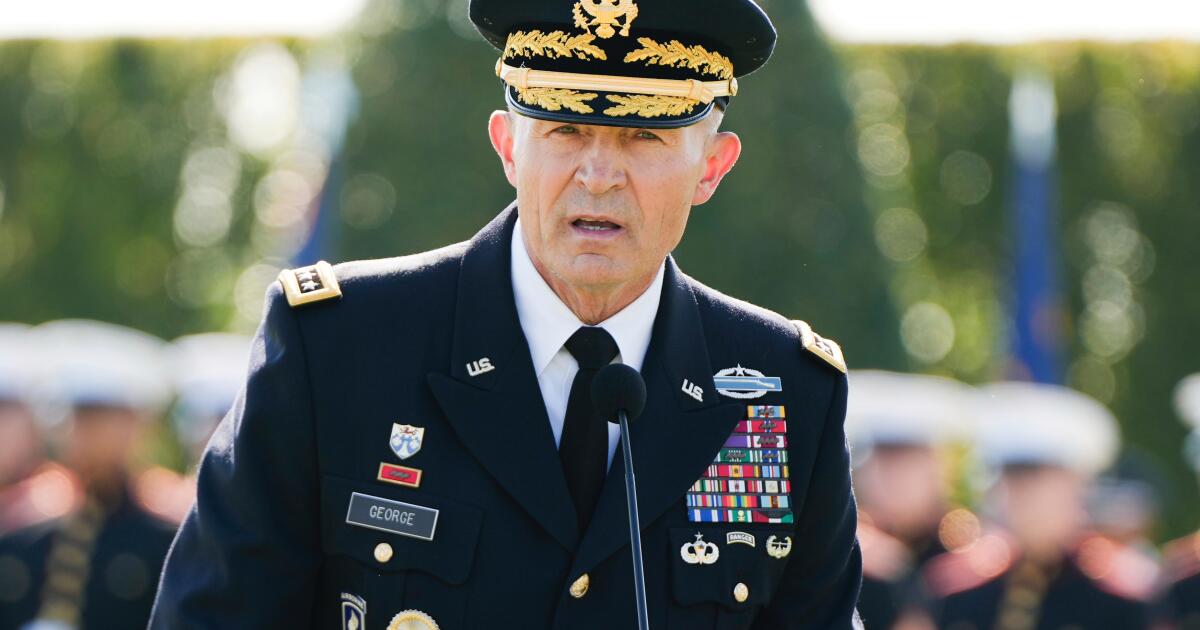
Letters to the Editor: We’re at real war, yet Hegseth’s busy fighting his ‘war on woke’
'The integrity of the military and its oath to the Constitution are the gold standard and have earned the trust of Americans for 250 years. Hegseth’s prosecution of a culture war on this professionalism will erode the apolitical nature of the military,' writes an L.A. Times reader.