
Russian advances slowing, thinktank’s data shows; 14 killed in Ukraine in massive drone and missile salvo. What we know on day 1,501Russia’s army recorded almost no territorial gains on the frontline in Ukraine in March for the first time in two-and-a-half years, according to analysis of data from the Institute for the Study of War (ISW) conducted by Agence France-Presse. The Russian army has been slowing in its advances since late 2025 – because of Kyiv’s localised breakthroughs in the south-east of the country. Across the entire frontline, the Russian army seized only 23 sq km (8.9 sq miles) in March, losing territory in some areas, according to the analysis. This figure excludes infiltration operations conducted by Russian forces beyond the frontline, as well as advances claimed by the Russian side but neither confirmed nor denied by the ISW.The Russian army made 319 sq km of gains in January and 123 sq km in February, which was then the smallest advance since April 2024. Its advance in March was the smallest since September 2023. The ISW attributed the slowdown to Ukrainian counteroffensives, but also to “Russia’s ban on using Starlink terminals in Ukraine” and “the Kremlin’s efforts to restrict access to Telegram”. The messaging app – very popular among Russians, including those fighting on the front – has been barely usable in recent months due to blocks imposed by the authorities. As in February, Russia lost ground on the southern section of the frontline, between the Donetsk and Dnipropetrovsk regions.Russian strikes killed 14 people in Ukraine on Friday, officials said, as Moscow launched the latest in an increasing number of daytime barrages. Moscow has been firing aerial broadsides at Ukraine throughout its more than four-year invasion, mostly at night, but in recent weeks has stepped up daytime attacks. The Russian military used more than 500 drones and dozens of missiles in its salvo on Friday, according to the Ukrainian air force.Russia’s Baltic oil export hubs at Ust-Luga and Primorsk remain unable to handle shipments after a series of Ukrainian drone attacks, prompting the country’s refineries to find alternative routes for export, industry sources said on Friday. The attacks have damaged port infrastructure and continued through the last two weeks of March, with at least five strikes on Ust-Luga in the space of 10 days. Sources said the export restrictions, along with disruptions at large refineries, could lead to a decrease in oil production in Russia. Traders said refineries had been unable to deliver diesel fuel to Primorsk for export since 22 March, leaving refineries in European Russia and Siberia without their most viable export route. Traders said refineries were having to consider more expensive rail transport routes to other export terminals.Zelenskyy has called on lawmakers to pass key legislation next week to avert a funding crisis, help Ukraine fight the war against Russia, and enact key reforms required for EU accession. Due to lagging reforms and slow legislative progress in late 2025 and early this year, Ukraine missed deadlines to unlock billions from its key lenders, economists said. With the need for external financing standing at $52bn this year – equivalent to about a quarter of annual economic output – the budget situation is desperate. “I have a list of key draft laws that are critical for securing funding,” the Ukrainian president said in remarks released on Friday. They range from strengthening the court system to reforming energy sector procedures. “I believe that members of parliament from all parties must understand the importance of these bills for Ukraine’s budget,” said Zelenskyy, who has a majority in parliament but its relations with his government have soured. Continue reading...
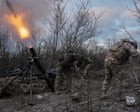
Ukraine war briefing: Russian army records almost no territorial gains for first time since 2023, analysis shows
Russian advances slowing, thinktank’s data shows; 14 killed in Ukraine in massive drone and missile salvo. What we know on day 1,501 Russia’s army recorded almost no territorial gains on the frontline in Ukraine in March for the first time in two-and-a-half years, according to analysis of data from the Institute for the Study of War (ISW) conducted by Agence France-Presse. The Russian army has been slowing in its advances since late 2025 – because of Kyiv’s localised breakthroughs in the south-east of the country. Across the entire frontline, the Russian army seized only 23 sq km (8.9 sq miles) in March, losing territory in some areas, according to the analysis. This figure excludes infiltration operations conducted by Russian forces beyond the frontline, as well as advances claimed by the Russian side but neither confirmed nor denied by the ISW. The Russian army made 319 sq km of gains in January and 123 sq km in February, which was then the smallest advance since April 2024. Its advance in March was the smallest since September 2023. The ISW attributed the slowdown to Ukrainian counteroffensives, but also to “Russia’s ban on using Starlink terminals in Ukraine” and “the Kremlin’s efforts to restrict access to Telegram”. The messaging app – very popular among Russians, including those fighting on the front – has been barely usable in recent months due to blocks imposed by the authorities. As in February, Russia lost ground on the southern section of the frontline, between the Donetsk and Dnipropetrovsk regions. Russian strikes killed 14 people in Ukraine on Friday, officials said, as Moscow launched the latest in an increasing number of daytime barrages. Moscow has been firing aerial broadsides at Ukraine throughout its more than four-year invasion, mostly at night, but in recent weeks has stepped up daytime attacks. The Russian military used more than 500 drones and dozens of missiles in its salvo on Friday, according to the Ukrainian air force. Russia’s Baltic oil export hubs at Ust-Luga and Primorsk remain unable to handle shipments after a series of Ukrainian drone attacks, prompting the country’s refineries to find alternative routes for export, industry sources said on Friday. The attacks have damaged port infrastructure and continued through the last two weeks of March, with at least five strikes on Ust-Luga in the space of 10 days. Sources said the export restrictions, along with disruptions at large refineries, could lead to a decrease in oil production in Russia. Traders said refineries had been unable to deliver diesel fuel to Primorsk for export since 22 March, leaving refineries in European Russia and Siberia without their most viable export route. Traders said refineries were having to consider more expensive rail transport routes to other export terminals. Zelenskyy has called on lawmakers to pass key legislation next week to avert a funding crisis, help Ukraine fight the war against Russia, and enact key reforms required for EU accession. Due to lagging reforms and slow legislative progress in late 2025 and early this year, Ukraine missed deadlines to unlock billions from its key lenders, economists said. With the need for external financing standing at $52bn this year – equivalent to about a quarter of annual economic output – the budget situation is desperate. “I have a list of key draft laws that are critical for securing funding,” the Ukrainian president said in remarks released on Friday. They range from strengthening the court system to reforming energy sector procedures. “I believe that members of parliament from all parties must understand the importance of these bills for Ukraine’s budget,” said Zelenskyy, who has a majority in parliament but its relations with his government have soured. Continue reading...
Editorial Policy
GlobalFront.News adheres to strict journalistic standards for world conflict reporting.
Related Stories

Artemis II astronauts pass 100,000 miles from Earth on voyage to the moon
After six-minute firing of capsule’s engine, crew on track to reach farthest distance travelled by humans in space The Artemis II astronauts are now halfway to the moon, Nasa has confirmed. Nasa released the crew’s first downlinked images on Friday, just one-and-a-half days into the first astronaut moonshot in more than half a century. Continue reading...
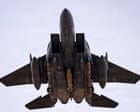
Middle East crisis live: US and Iranian forces race to recover missing pilot from downed jet; Israel bombards Beirut
Iran’s Revolutionary Guard Corps said it was combing an area near where plane came down in south-western Iran; Israeli military strikes ‘Hezbollah infrastructure’ in Lebanon capital US F-15E jet confirmed shot down over Iran as Tehran releases wreckage images We’re seeing images from the central Israeli city of Bnei Brak after Iran fired missiles on Saturday and the Israeli military said it was working to intercept them. Israel’s emergency service said a man, 45, was treated for minor injuries from glass shrapnel and taken to hospital. Continue reading...
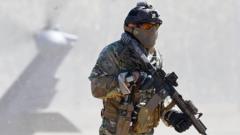
Rescue team in Iran face 'harrowing and dangerous' search for US crew member
A former US marine tells the BBC the priority of any recovery team would be to look for signs of life.
Pakistan announces free public transport after fuel price hike – as it happened
This blog is closed – our live coverage continues in a new blog here Authorities in Abu Dhabi have reported two incidents of debris falling from intercepted aerial threats in the UAE capital, with one sparking a fire at a gas facility, The official Abu Dhabi Media Office said authorities responded to an incident of falling debris at the Habshan gas facilities. “Operations have been suspended while authorities respond to a fire,” it said in a post on X, adding that no injuries were reported. Continue reading...